Free Shipping on Orders Over $50


A levitating lamp works thanks to an ingenious magnetic system that allows a bulb or lampshade to float in the air, without any visible support. This principle relies on electromagnetism and electronic stabilization, offering a spectacular visual effect. Let’s discover together how it works, what its advantages are, its uses, and tips for adopting it well.
Contenus
afficher
What is a levitating lamp?
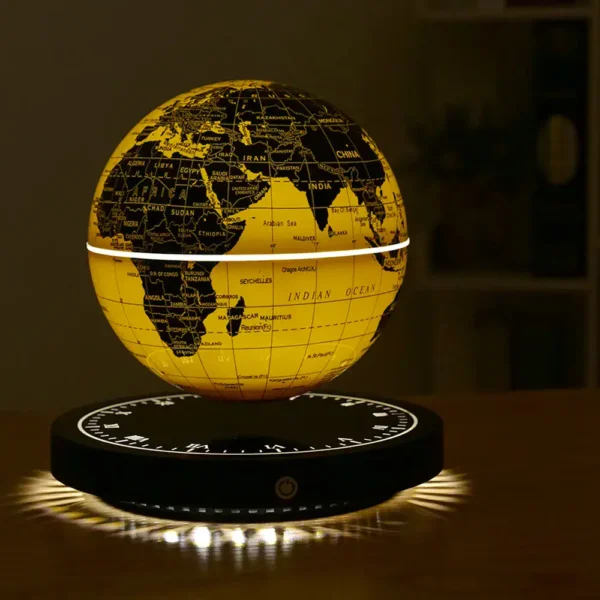
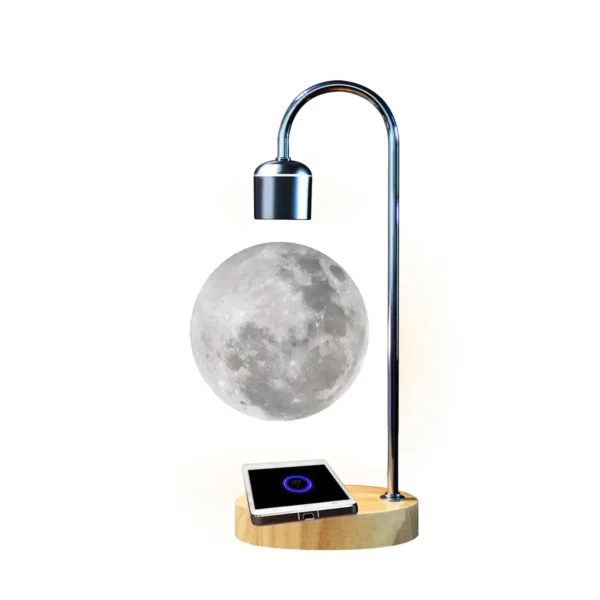
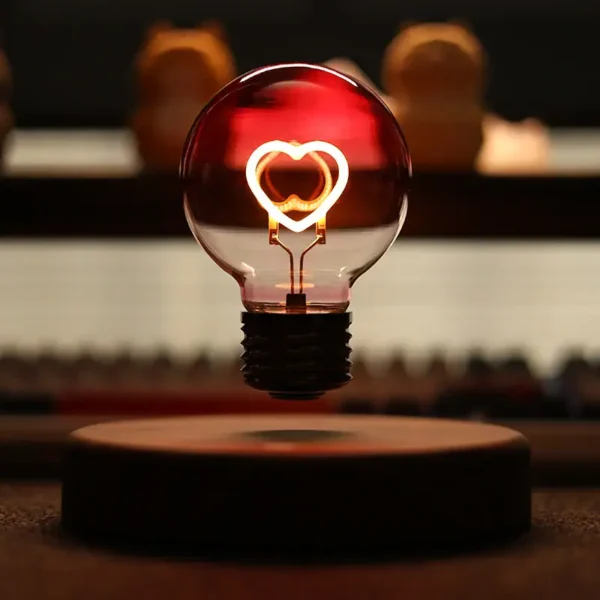
Definition and general principle
The levitating lamp is an object that is both designed, decorative, and technological. Its uniqueness lies in the fact that the light source — whether it’s a bulb or a lampshade — seems to float in the air, with no visible support. Unlike a traditional lamp that rests on a base, rod, or cable, the levitating lamp uses a magnetic field to keep the light element suspended. The result is a spectacular visual effect, giving the illusion that gravity no longer acts.
Different types of levitating lamps
Several variations exist today, each suited to different tastes and uses:
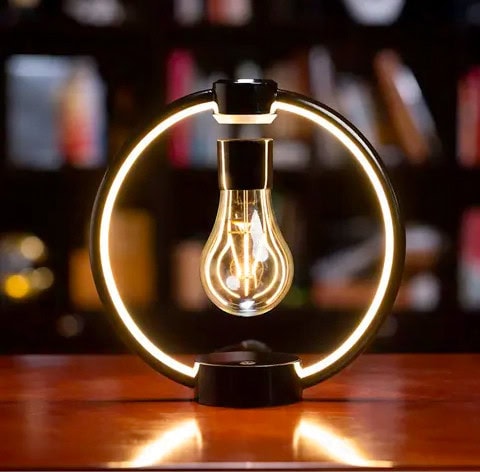
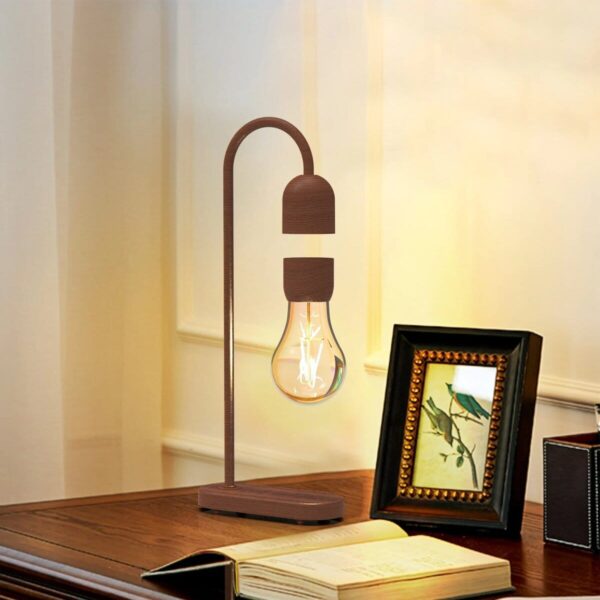
- The floating bulb lamp: the most common model, a low-energy LED bulb floats above the base thanks to electromagnetism. It lights up by induction, with no visible wires or contact.
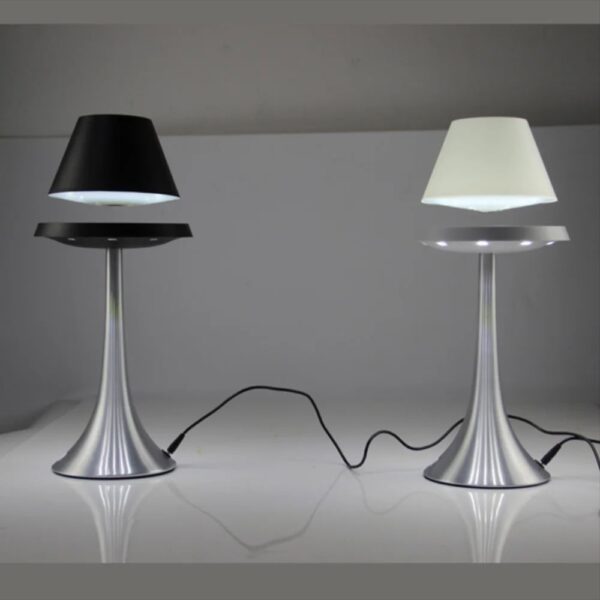
- The lamp with a floating lampshade: more original, it features a complete lampshade in suspension. The base contains the lighting, and the floating lampshade creates an even more surprising impression.
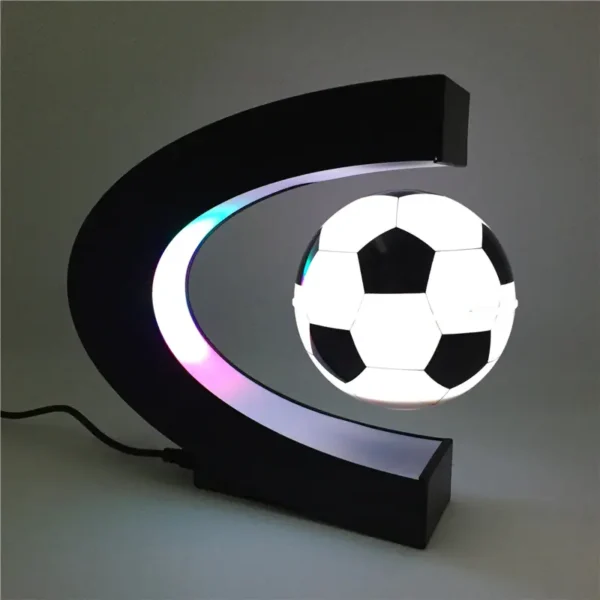
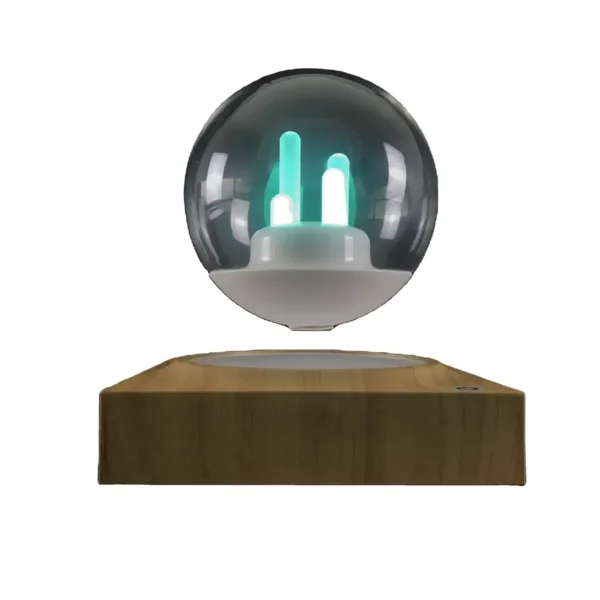
- Magnetic light globes: instead of a traditional lamp, some models offer a sphere or globe that gently spins, providing a futuristic ambiance.
- Hybrid variants: some manufacturers go further by combining magnetic levitation with features such as wireless smartphone charging or LED color variations.
Origins and popularity of this technology
Magnetic levitation is based on physical principles explored for decades in laboratories. Initially, this technology was studied in the field of futuristic transportation (such as magnetic levitation trains, or maglev), but it quickly found applications in the realm of design and decorative objects. Levitating lamps emerged in the 2010s, particularly thanks to crowdfunding projects that popularized this concept among the general public.
Today, these lamps have become a symbol of modernity and innovation. They appeal to both technology gadget enthusiasts and interior decoration lovers looking for an original and conversational piece. Their popularity is also explained by their versatility: they find their place in an office, a contemporary living room, or even in a bedroom as an ambient lamp. Popularized by high-tech gadgets and modern decorative objects, the levitating lamp now captivates with its innovative and aesthetic qualities.
How does a levitating lamp work?
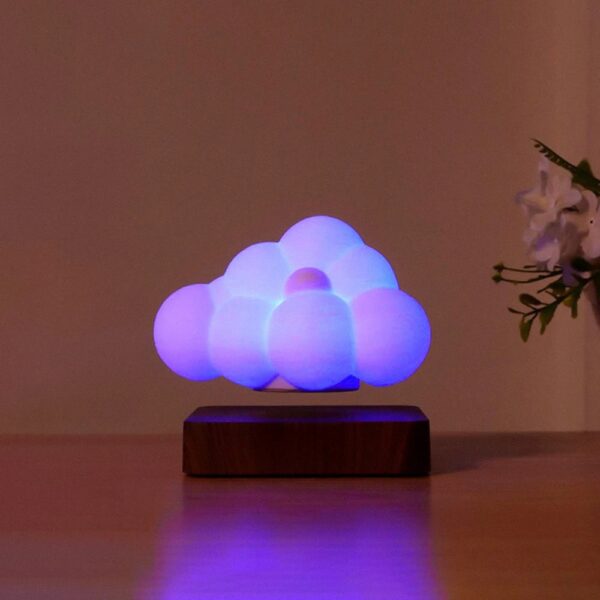
Levitating Cloud Lamp
$125.99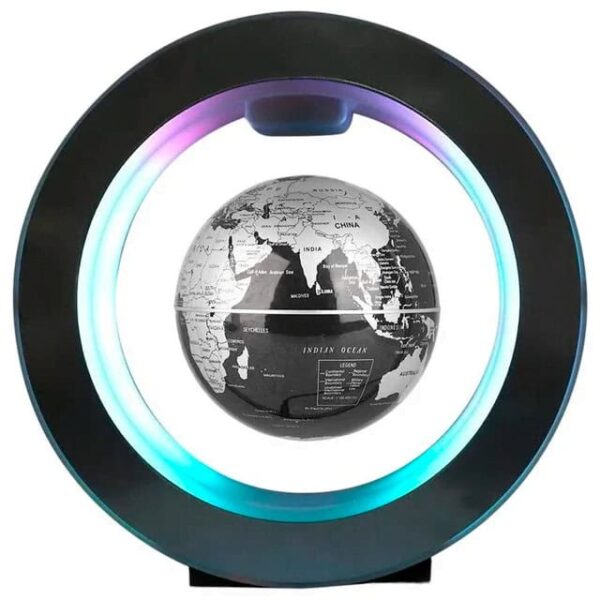
Select options
This product has multiple variants. The options may be chosen on the product page
Rainbow Levitating Lamp
$57.99
Select options
This product has multiple variants. The options may be chosen on the product page
Select options
This product has multiple variants. The options may be chosen on the product page
Levitating Lamp
$103.99The principle of magnetic levitation
The core of the operation relies on magnetic levitation. The base of the lamp is equipped with permanent magnets and electromagnetic coils. When the bulb (or lampshade) is positioned above, the opposing magnetic forces create a balance: gravity pulls the object down, while the magnetic field pushes it up. This magnetic repulsion effect keeps the light element suspended, giving the impression that it floats freely in the air.
Without this clever balance between attraction and repulsion, the bulb would fall or be ejected. It is therefore the precision of magnetic engineering that makes the illusion possible.
The role of electromagnetism and stabilization
For a levitating lamp to operate stably, simple magnets are not enough. The device includes a electronic stabilization system. Sensors continuously detect the exact position of the suspended object, and a microcontroller adjusts the electromagnetic field to correct any variations.
It is this active regulation that prevents the bulb from wobbling, sticking to the base, or falling. In other words, the lamp “reads” the position of the object and continuously adjusts to maintain perfect balance. This technology is similar to that used in some maglev trains or scientific demonstration devices.
Power supply and safety
Another technological feat is the wireless power supply for the bulb. Most levitating lamps use low-energy LEDs, which require little power. Electricity is transmitted by electromagnetic induction: the base generates a field that powers the suspended bulb, without any physical contact or visible wires.
This system has several advantages:
- Safety: no exposed wires or visible short-circuit risks.
- Durability: the LED generates little heat, which extends its lifespan.
- Aesthetics: the lack of visible connection enhances the lamp’s magical effect.
In summary, a levitating lamp combines magnetism, precision electronics, and induction to provide a unique visual experience, straddling the line between science and design. It perfectly illustrates how complex physical principles can be transformed into fascinating everyday objects.
Current applications and uses
Select options
This product has multiple variants. The options may be chosen on the product page
Levitating Picture Frame Lamp
$102.99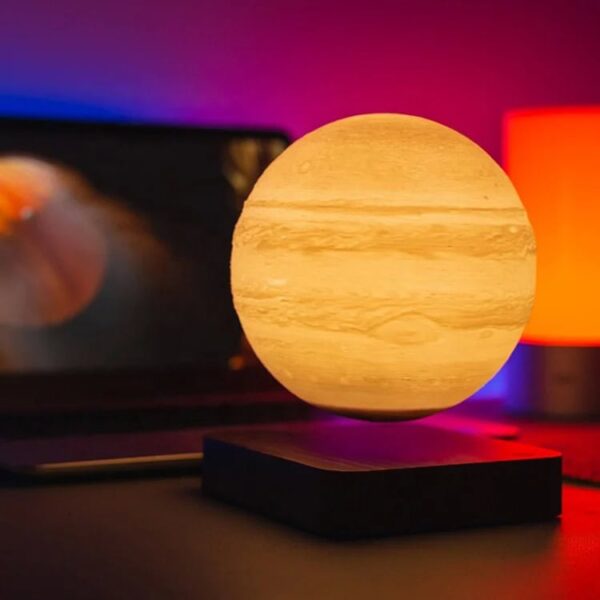
Select options
This product has multiple variants. The options may be chosen on the product page
Magnetic Levitating Bulb Lamp
$148.99Design and modern decorative object
The levitating lamp is primarily an exceptional decorative object. Placed in a living room, office, or bedroom, it immediately attracts attention with its surprising visual effect. It fits perfectly with contemporary, industrial, or minimalist interiors and adds a touch of futurism and originality. Its “wow” effect transforms it into a true focal point in a decor, often more admired than traditional light fixtures.
Some models offer additional options such as LED color changing, wireless smartphone charging, or even a touch function to vary the light intensity. These variants enhance its high-tech aspect and increase its daily utility.
Educational use to illustrate physics
Beyond its decorative aspect, the levitating lamp is a pedagogical and scientific tool of choice. Teachers, scientific mediators, and technology enthusiasts use it to illustrate:
- the role of the magnetic field and its interactions,
- the principle of electromagnetic stabilization,
- the electric induction and contactless energy transfer,
- the balance of forces between gravity and magnetism.
These concepts, sometimes abstract in textbooks, become visible and understandable thanks to the lamp. That’s why it is regularly used in educational workshops, science museums, or classroom demonstrations. It makes science concrete, accessible, and playful, while sparking the curiosity of younger audiences.
An original technological gift
The levitating lamp has also become a trendy gift. Giving this type of object is always surprising, as it combines aesthetic, innovation, and utility. Unlike a fleeting gadget, it remains functional while leaving a lasting impression. Whether for a birthday, housewarming, Christmas, or corporate event, it makes a memorable gift for design lovers, science enthusiasts, or technology aficionados.
Some customizable models (shapes, colors, light intensity) even allow it to be a tailored gift, adapted to the tastes of the recipient.
Advantages and limitations of levitating lamps
Select options
This product has multiple variants. The options may be chosen on the product page
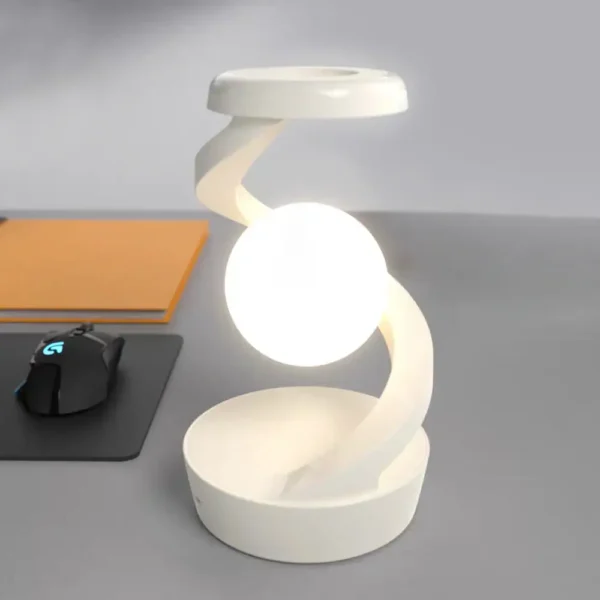
Rotating Spiral LED Lamp
$68.99Strengths (aesthetics, innovation, wow effect)
- Unique and futuristic design: impossible to overlook its floating effect.
- Innovative technology that intrigues and fascinates, ideal for science enthusiasts.
- Durability of LEDs: reduced consumption and lifespan of several tens of thousands of hours.
- Versatility: suitable for decoration as well as for educational tools or high-tech gifts.
Disadvantages (fragility, price, maintenance)
- Higher price than a traditional lamp, due to the technology used.
- Fragility to shocks, abrupt handling, or improper installation.
- Sensitivity to external magnetic fields that can disrupt stability.
- Maintenance required: regular dusting of the base and bulb is recommended to prevent dust buildup on sensors and magnets.
In summary, the levitating lamp offers an unparalleled visual and technological experience, but buying it should be considered in light of one’s budget and intended use. It appeals to those seeking an exceptional object, at the intersection of applied science and modern design.
Comparison table: levitating lamp vs other decorative lamps
Let’s compare the levitating lamp with some other popular models:
| Lamp Type | Technology | Advantages | Disadvantages | Average Price |
|---|---|---|---|---|
| Levitating Lamp | Magnetic levitation | Unique visual effect, modern appeal | High price, fragile | $80–200 |
| Designer LED Lamp | Low-energy LED lighting | Durable, affordable | Less impressive aesthetics | $30–100 |
| Plasma Lamp | Gas ionization | Fun, educational | Sensitive to impact | $20–50 |
Practical cases and expert advice
How to choose your levitating lamp wisely
Before buying a levitating lamp, take the time to analyze several essential criteria:
- Quality of magnets and stabilization system: a poorly made device can make levitation unstable and frustrating.
- Lifespan of the LED bulb: opt for models guaranteeing at least 30,000 hours of lighting.
- Safety certifications: look for products marked CE or equivalent, which indicates reliability and compliance with European standards.
- Design and materials: wood, metal, plastic, or glass, choose according to your interior style and desired durability.
- Additional features: light intensity variations, adjustable LED colors, wireless smartphone charging… all bonuses that can make a difference.
Maintenance and safety tips
To prolong the life of your lamp and ensure optimal operation:
- Avoid interference: do not place the lamp near sensitive electronic devices such as computers or powerful speakers.
- Regularly dust the base and bulb with a soft cloth to prevent dust from interfering with stabilization.
- Follow the installation instructions: carefully adhere to the manufacturer’s guidelines, especially when setting up the floating bulb.
- Never force the bulb into position, let it find its natural balance through magnetic forces.
Where to place a levitating lamp in your decor
The choice of location greatly influences the visual effect and decorative impact:
- On a modern desk: to impress your visitors and add a high-tech touch to your workspace.
- On a nightstand: to create a calming and original atmosphere in a bedroom.
- In a library or living room: the lamp becomes a focal point and catches the eye like a piece of contemporary art.
- In a showcase or showroom: to enhance a commercial space or exhibition, and highlight innovation.
Ideally, place the lamp in a clear and well-lit area, where its levitation effect can be admired without obstruction.
Mistakes to avoid with a levitating lamp
Using the lamp without following the guidelines
Forcing the bulb or ignoring instructions can lead to a malfunction of the magnetic system. Always take the time to position the bulb correctly and let the mechanism find balance.
Exposing it to external magnetic fields
Avoid placing the lamp near speakers, decorative magnets, or powerful electromagnetic devices. This can disrupt stabilization and cause the bulb to fall.
Choosing a low-end model
Cheap versions often lack precision in stabilization. This results in the bulb trembling, falling regularly, or the system wearing out quickly. For a reliable experience, invest in a certified and quality lamp, even if the price is higher.
By following these recommendations, you will fully enjoy your levitating lamp while avoiding the inconveniences associated with unstable or poorly maintained models.
FAQ: answers to frequently asked questions
How long does a levitating lamp last?
The average lifespan of an LED bulb is 30,000 to 50,000 hours. With normal use, the lamp can last for several years.
Is it dangerous to have a levitating lamp at home?
No. The technology is safe, and the emitted magnetic fields are weak and harmless to health.
Can the bulb of a levitating lamp be replaced?
Yes, some models allow the bulb to be replaced. However, it’s best to choose certified versions to avoid any incompatibility.
Where can I buy a quality levitating lamp?
You can find them on specialized websites for scientific and design objects, or at major high-tech decoration stores.
Conclusion
The levitating lamp is not just a simple gadget: it’s a meeting of science and design. Its fascinating visual effect, along with its decorative and educational uses, makes it a unique object. When well chosen and maintained, it will bring a touch of innovation and modernity to your home.