Free Shipping on Orders Over $50

What is an anti-gravity lamp?
Contenus
afficher
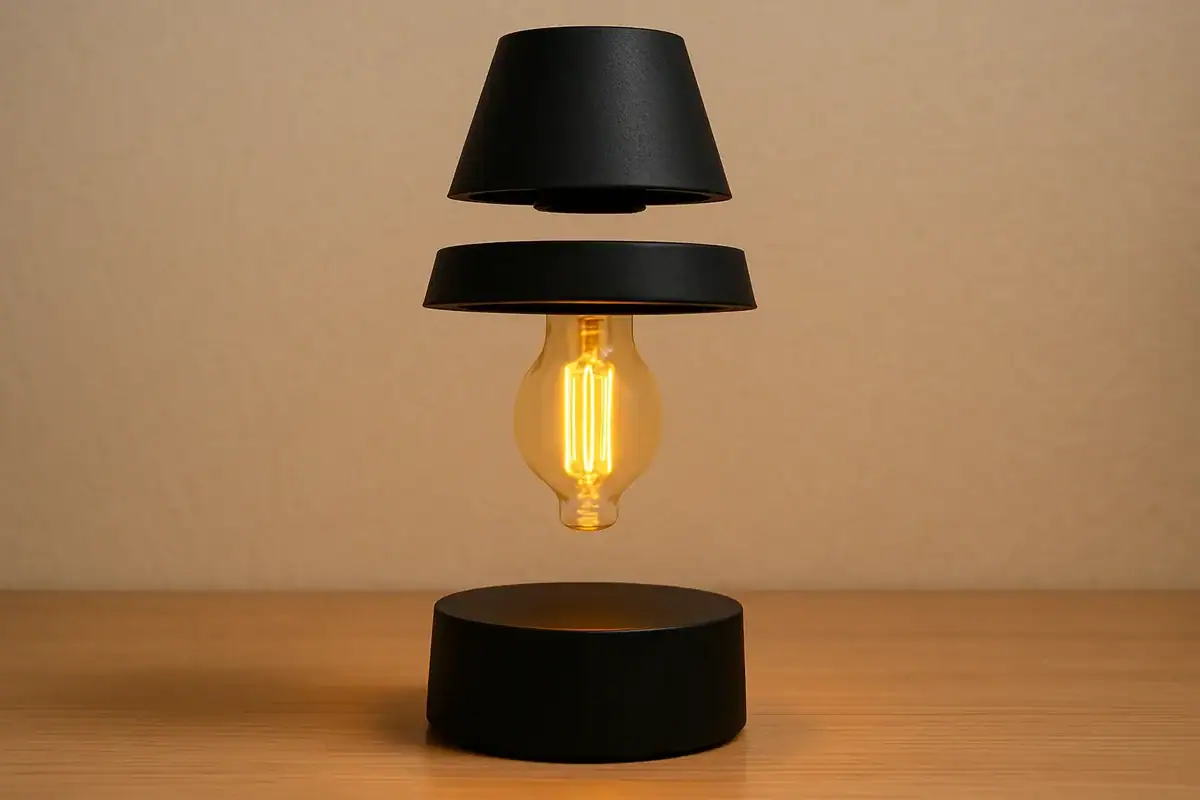
An anti-gravity lamp is a lighting object that creates the illusion that a part of its device – usually the bulb – is floating freely in the air. Contrary to what its name suggests, it does not eliminate gravity; it uses controlled physical phenomena (magnetism, optical effects, or airflow) to compensate for or simulate this natural attraction. The result is a surprising visual effect that immediately grabs attention. These lamps can be found at the intersection of several worlds: modern interior decoration, scientific demonstrations, and high-tech gifts.
The main families of “anti-gravity”
Select options
This product has multiple variants. The options may be chosen on the product page
Anti-Gravity Water Lamp
$390.99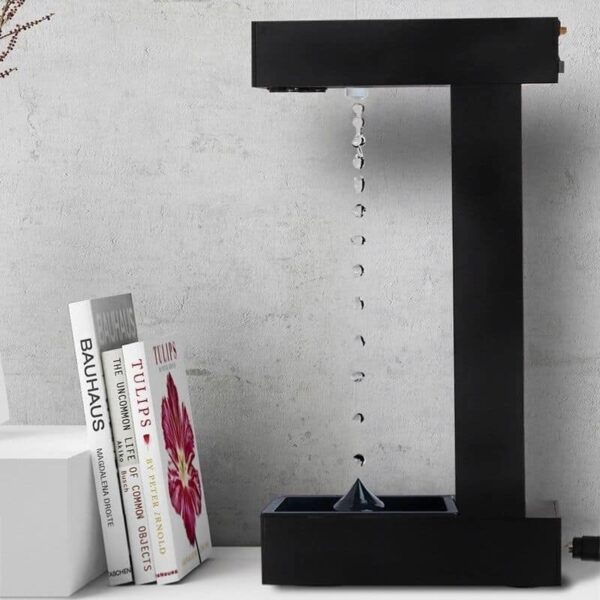
There are several technologies grouped under the term “anti-gravity lamp,” each with its specific characteristics:
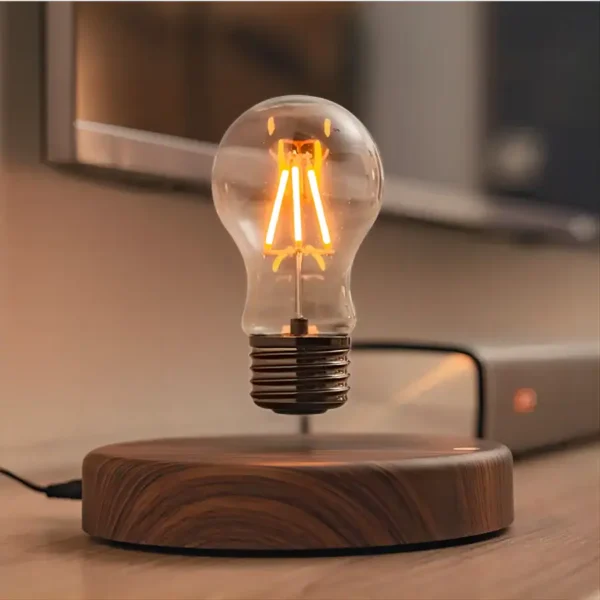
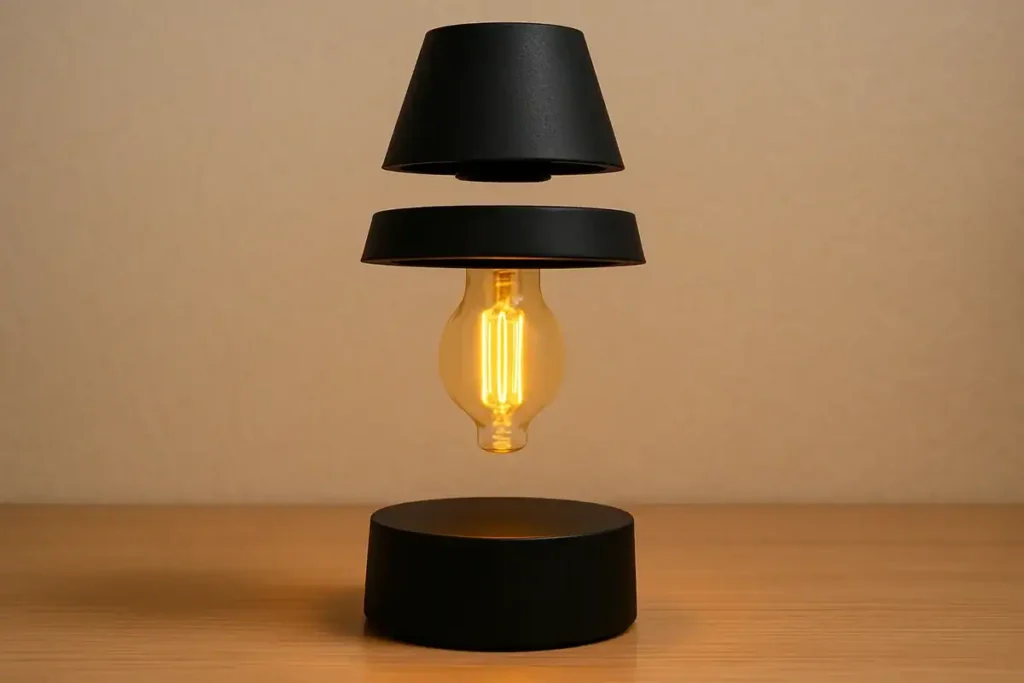
- Magnetic levitation: the most common and impressive, relying on the balance between magnets and an electronic stabilization system. It allows a bulb or decorative object to remain suspended in a real and tangible manner.
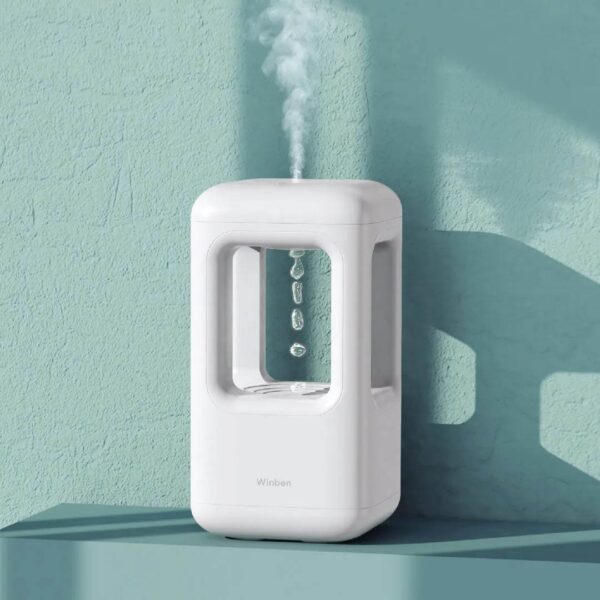
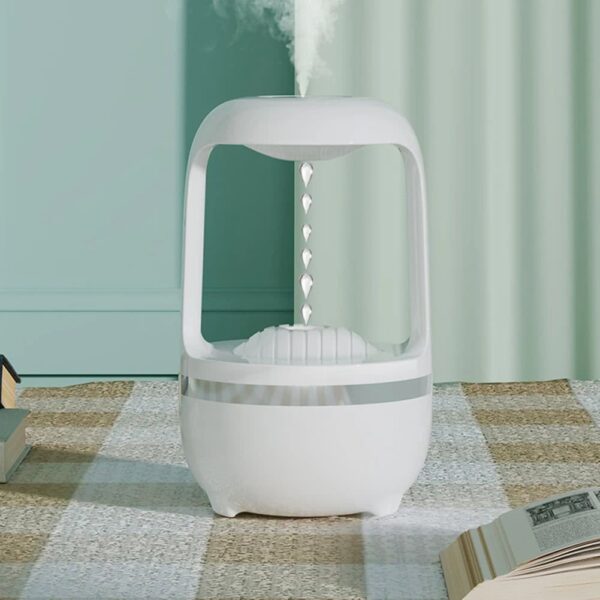
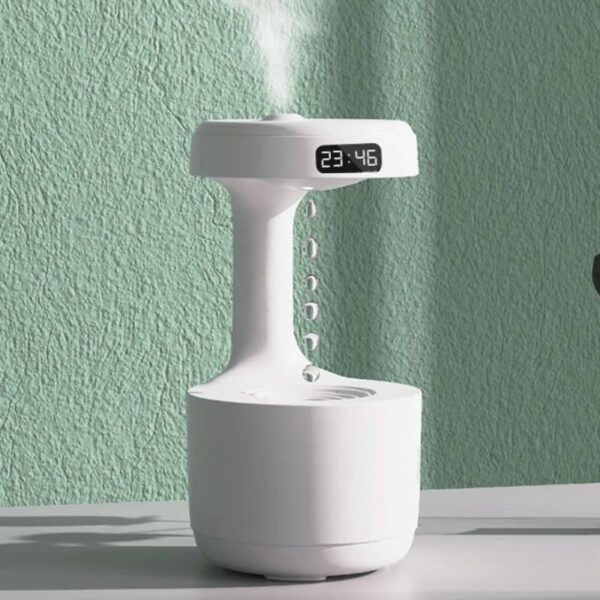
- Stroboscopic illusion: based on LEDs synchronized with the movement of water. The drops appear frozen, slowed down, or even as if they are rising, creating a stunning visual illusion.
- Fluid effects: thanks to a laminar airflow, a ball or small object remains suspended. This is a more playful technology, often used in gadgets or scientific toys.
Who is it for and what are the uses?
Anti-gravity lamps cater to various audiences:
Businesses and showrooms: placed in storefronts, they catch the eye and leave a lasting impression. They are used to create a unique ambiance in an office, a modern bedroom, or a shop window.
Design and decoration enthusiasts: they add a futuristic and original touch to a living room, bedroom, or office.
Science and technology enthusiasts: they concretely illustrate complex notions such as magnetism, induction, or optics.
Teachers and scientific mediators: these lamps serve as teaching tools to captivate student attention and simplify abstract concepts.
High-tech and unique object lovers: they make original gifts that always spark curiosity.
Operating principle of a magnetic levitation lamp
The majority of lamps referred to as “anti-gravity” use the principle of magnetic levitation. In practice, a bulb incorporating a permanent magnet is kept suspended thanks to a sophisticated system combining electromagnets, sensors, and electronic controllers. Here’s how it works in practice:
1. The physical basics: gravity pulls the bulb down, but this force is counterbalanced by the magnetic field generated by electromagnets positioned in the base. The balance is unstable, making it impossible to suspend without active control.
2. The role of sensors and the controller: Hall-type sensors continuously measure the exact position of the bulb. This data is transmitted to a microcontroller, which adjusts the intensity of the electromagnets in real-time via a feedback loop (often of the PID type). This allows for instant correction of micro-movements and prevents the bulb from falling.
3. Wireless power supply via induction: for an LED to operate wirelessly, energy is transmitted by electromagnetic induction. A coil integrated into the base generates an alternating field that is captured by a coil located in the bulb. This contactless transfer allows the lamp to be continuously powered without batteries or visible wires.
4. Safety and shielding: quality models incorporate several safety features. In the event of a loss of stabilization, the bulb gently falls back onto the base thanks to a stop magnetization system. Thermal protections prevent overheating, and shielding reduces interference with surrounding devices. Finally, compliance with CE and RoHS standards guarantees safe domestic use.
In summary, an anti-gravity lamp combines magnetism, electronics, and induction to create a visually magical but scientifically mastered suspension.

Material architecture of a levitating lamp
To understand why an anti-gravity lamp is both magical and technical, let’s examine its composition:
The base: the true “brain” of the lamp, it contains the electromagnets, Hall sensors, and control electronics. It continuously manages the stabilization.
The floating element: the bulb or suspended object contains a permanent magnet and an LED module. Its design is optimized to have a stable center of gravity and remain balanced.
The software and its settings: a microcontroller manages real-time corrections through a stabilization algorithm. This dynamic control makes durable suspension possible.
Selection criteria (buying guide)
Before buying an anti-gravity lamp, several points deserve special attention:
Stability and ease of initialization: a good model should allow you to quickly find the balance point without the bulb detaching with each attempt.
Light quality: prefer an appropriate wattage (expressed in lumens), a color temperature that corresponds to the desired ambiance (warm, neutral, or cool), and a high CRI for accurate color rendering.
Durability and warranty: a high-performing LED should offer over 20,000 hours of lighting. Also check the warranty and the reputation of the after-sales service.
Power consumption and noise: most consume between 10 and 20W. Quality models remain silent, while basic versions may emit a slight electrical hum.
Design, materials, and finishes: beyond the technique, these lamps are decorative objects. Wood, brushed metal, or ABS: each finish brings a different style and influences both durability and aesthetic integration.
Comparison table (models & technologies)
Synthetic comparison
| Technology | Visual Effect | Advantages | Limitations | Indicative Price |
|---|---|---|---|---|
| Magnetic Levitation | Suspended object | Realistic, stable, "wow" factor | High cost, more fragile | $80–200 |
| Stroboscopy | Frozen droplets | Spectacular, educational | Visual illusion, pump noise | $40–100 |
| Airflow | Floating ball | Fun, interactive | Noise, instability | $30–60 |
Reading the comparison
If you’re looking for a genuine lighting suspension, opt for magnetic levitation. For a fun or educational gadget, the other options suffice.
Practical cases & expert tips
To make the most of an anti-gravity lamp, a few simple actions and precautions can optimize its use and lifespan. Here are practical recommendations based on user experiences and expert feedback.
1. Properly initiating levitation (step-by-step procedure): place the bulb about 4 Inch above the base, then slowly lower it. You will feel a magnetic attraction zone. The secret is to let the bulb find its balance point by itself without forcing it. Gently release as soon as stabilization occurs. After a few attempts, the action becomes intuitive.
2. Optimal placement at home or the office: set the lamp on a flat and stable surface, away from vibrations. Avoid placing it close to sources of magnetic fields (speakers, large electronic devices) that may disrupt the system. For maximum visual rendering, place the lamp in an open space where it can be admired from multiple angles.
3. Noise and interference reduction: some entry-level models produce a slight hum due to the electronics. To limit this phenomenon, plug the lamp into a filtered power strip and avoid interference with other sensitive devices (routers, external hard drives, etc.). An anti-vibration mat can also improve sound comfort if the furniture is lightweight.
Measurable performance
Stability and recovery tests: a good anti-gravity lamp should withstand small jolts (moving table, light drafts). High-end models automatically regain their suspension if the balance is momentarily disturbed. This criterion is essential for daily use without frustration.
Power consumption and heating measurements: the average consumption is between 12 and 18 watts, equivalent to a standard LED bulb. The base may slightly heat up after several hours of use, but the temperature remains controlled thanks to the integrated thermal dissipation devices.
Perceived quality and noise level: premium lamps are nearly silent, providing an ideal immersive experience in an office or bedroom. In contrast, basic models may generate a slight hum, particularly noticeable in a very quiet room. For an optimal experience, prefer certified models tested for their acoustic comfort.
Design & decorative integration
Beyond its technological aspect, the anti-gravity lamp is also a true decorative object. Its futuristic design and magical suspension attract attention and quickly become a focal point in a room. To effectively integrate it into your interior, several elements should be considered.
Styles and materials: the current offering is varied and allows the lamp to be adapted to all decorative universes. – The minimalist models favor clean lines and understated finishes, often in brushed metal or matte white plastic, perfect for a Scandinavian or modern interior. – The futuristic versions focus on high-tech bases, bold geometric shapes, and shiny metallic finishes, ideal for a contemporary office. – The retro or vintage lamps are distinguished by bases made of wood or brass, contrasting with the floating bulb and adding a warm touch.
Light staging: the color temperature plays a key role in the ambiance. – A warm light (2700–3000K) creates a cozy atmosphere, perfect for a living room, bedroom, or library. – A neutral light (3500–4000K) adapts to versatile spaces like a study room or open space. – A cool light (5000K and above) highlights the technological aspect and suits high-tech offices or shop windows. You can also play with the placement: install the lamp on a bedside table, a shelf, or at the center of a desk to enhance the “curiosity object” effect.
Gift ideas & themes: an anti-gravity lamp is not just a light; it’s also an original gift that surprises with its visual effect. – For a geek or science enthusiast, it’s an object that is both aesthetic and educational. – For a designer or decorator, it’s a collectible piece that immediately catches the eye. – For a student, it adds a modern touch to a workspace. – In a commercial context (hotels, restaurants, showrooms), it becomes an atmospheric element that captures visitors’ attention.
In summary, the design of an anti-gravity lamp is not limited to its technology: it is a true versatile decorative element, capable of adapting to different styles and ambiances while adding a spectacular and innovative note.