Free Shipping on Orders Over $50


Kinetic Sculpture
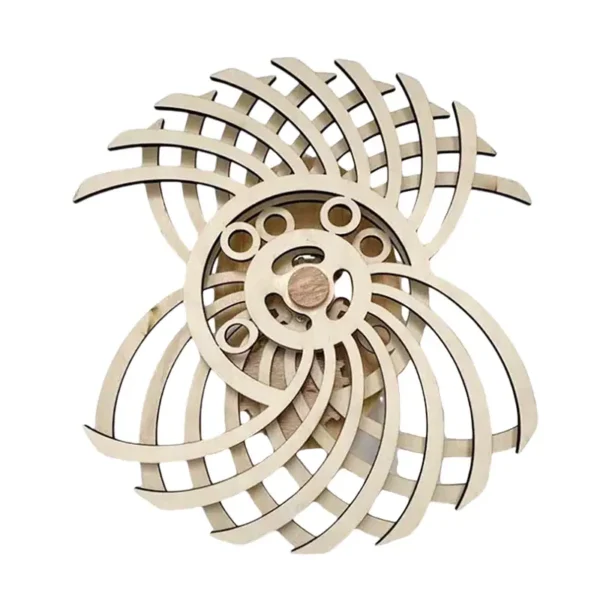
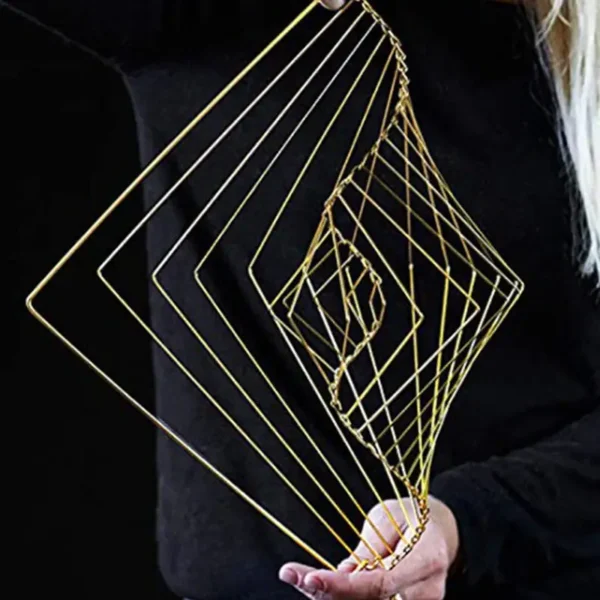
Kinetic Sculpture: When Movement Becomes Decoration
A kinetic sculpture is not just a decorative piece: it is a work that interacts with light, air, and the gaze. In the line of modern art and fine arts, kinetic art shook the 20th century by transforming abstraction into experience. On a shelf, a desk, or a coffee table, these sculptures play with balance, gravity, and visual vibrations to create an almost hypnotic effect, straddling contemporary art and scientific objects.
Why Kinetic Art is So Fascinating
Unlike a frozen classical sculpture, a kinetic sculpture invites the viewer to observe micro-variations: a spiral that unfolds, geometric shapes that seem to change depending on the angle, an optical dynamic that appears then disappears. It is this “interactive” aspect (without a screen) that recalls the precursors showcased in places like the Centre Pompidou, the Grand Palais, or certain modern art museums. Think of Calder’s mobiles, Tinguely’s poetic machines, and Vasarely’s research on illusion and perception. Here, the work does not impose: it suggests.
What to Expect: Materials, Balance, Visual Effects
Most models in this category emphasize a contemporary aesthetic: thin lines, rods, airy volumes, sometimes a rendering akin to wire or worked sheet metal. Depending on the design, the effect can be very “gallery” (minimalist, black and white, almost museum-like) or more demonstrative, with a stronger sense of motion. In terms of materials, one often encounters metal (sometimes stainless steel, nickel finish, or bronze appearance), chosen for its rigidity and ability to maintain precise proportions. Some designs may also evoke plexiglass or more “studio-like” contrasts depending on reflections.
Choosing the Right Model for Your Space
Before ordering, ask yourself these simple questions:
- Where will it live? Office, living room, library: a small piece draws the eye up close, a more “monumental” piece is appreciated from a distance.
- What style are you looking for? Abstract and clean, or more artistic and demonstrative, gallery-like.
- What type of movement do you like? Gentle rotation, oscillation, optical effect, “mobile” balance.
- What material presence do you want? Shiny metal, matte finish, very fine lines, denser sculpture.
In this selection, for example, you will find a “Kinetic art sculpture” designed as a statement piece, and a “Kinetic metal sculpture” that is more compact and easily integrates into modern interior decor.
Compare at a Glance
| Usage | Visual Impact | Format | Motion Effect | Ambiance |
|---|---|---|---|---|
| Creative Office | Precise and graphic, attracts attention without overwhelming | Compact, easily fits on a desk | Subtle and calming, ideal for focus | Clean design, encourages concentration |
| Contemporary Living Room | Spectacular, becomes the focal point of the room | Prominent presence, readable from a distance | Broad movement, visible from afar | Art gallery vibe, bold decor |
| “Art and Science” Gift | Unique and memorable, guaranteed to surprise | Easy to display and gift | Fascinating optical effect, invites observation | Poetic and conducive to conversation |
| Professional Space (Agency, Studio) | Strong visual signature, affirms the style of the space | Adaptable according to furniture and space | Subtle rhythm, presence without distraction | Avant-garde and contemporary, refined brand image |
FAQ
Are these sculptures motorized?
Most kinetic sculptures play with balance and air: movement comes from a light push, a draft, or movement around the piece. The interest lies precisely in this “natural” movement, silent and without electronics.
Where to place them to see the kinetic effect well?
Near a light source (window, lamp) and in a spot where people frequently pass by. Reflections and optical perception reveal themselves when changing angles, much like in an exhibition.
Is it fragile?
Like any piece of art, yes: some thin parts (rods, moving elements) should be handled carefully to avoid shocks. On a desk, choose a stable area, away from the edge and sudden movements.
What type of buyer appreciates a kinetic sculpture the most?
Contemporary art enthusiasts, designers, “maker” profiles sensitive to visual engineering, or anyone looking for unique interior decor that sparks genuine conversation.
How to maintain it without damaging it?
A gentle dusting will suffice: a clean microfiber cloth, light gestures, without harsh products. If the finish is shiny, avoid abrasive textiles to preserve the look of the metal.