Free Shipping on Orders Over $50

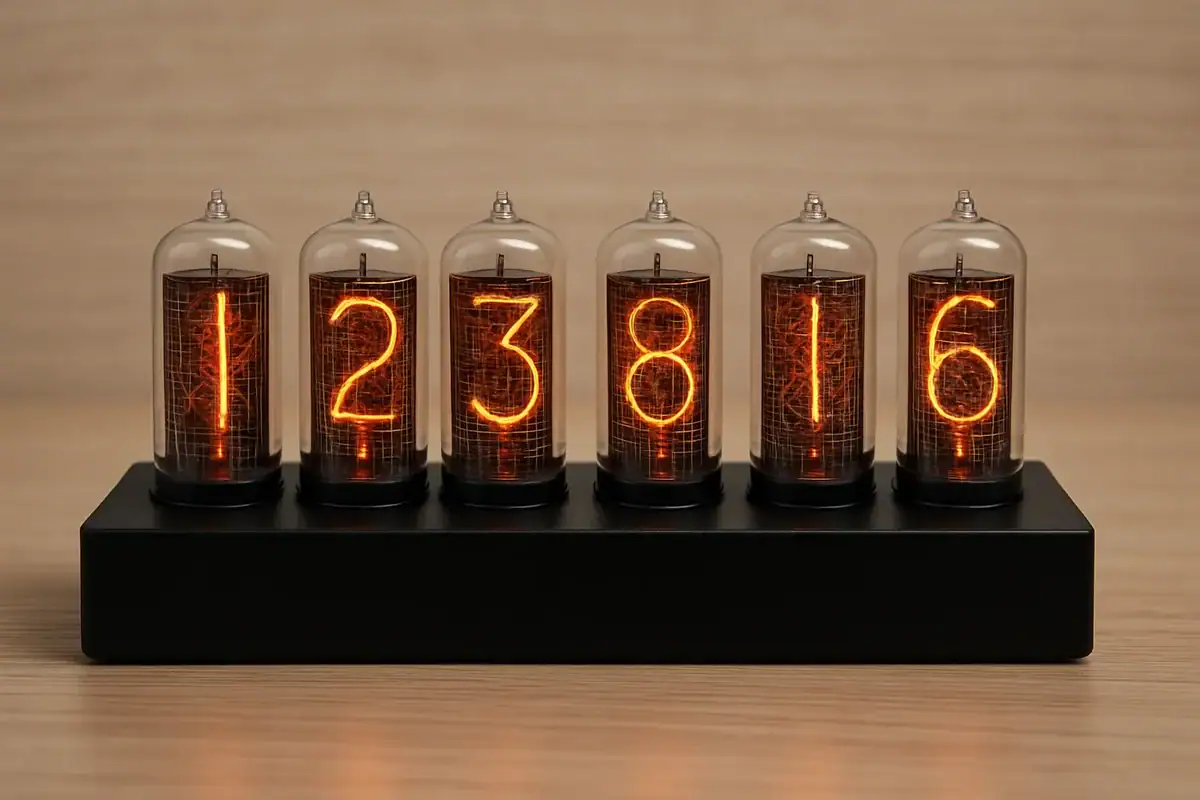
A Nixie clock works thanks to neon gas-filled tubes that light up when an electric discharge runs through them. Each digit is formed by a distinct cathode that lights up under high voltage. The result is a unique orange glow that fascinates both retro enthusiasts and science lovers. In this article, we will explore what a Nixie clock is, how it works, its modern uses, and the mistakes to avoid.
Contenus
afficher
What is a Nixie Clock?
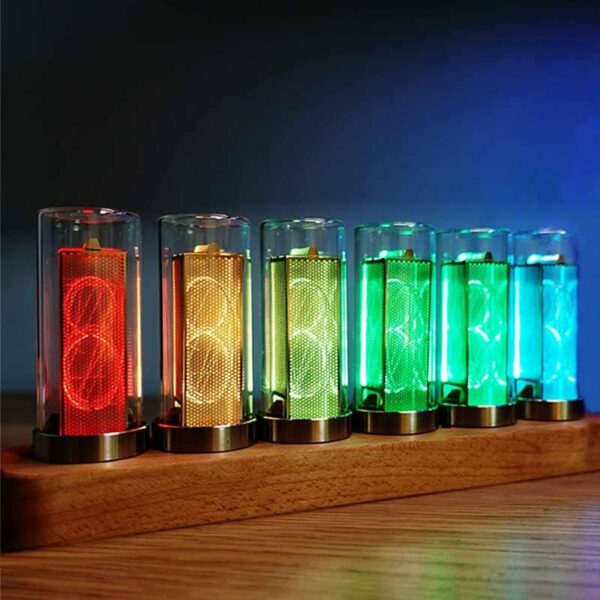
Nixie Tube Lamp Clock
$175.99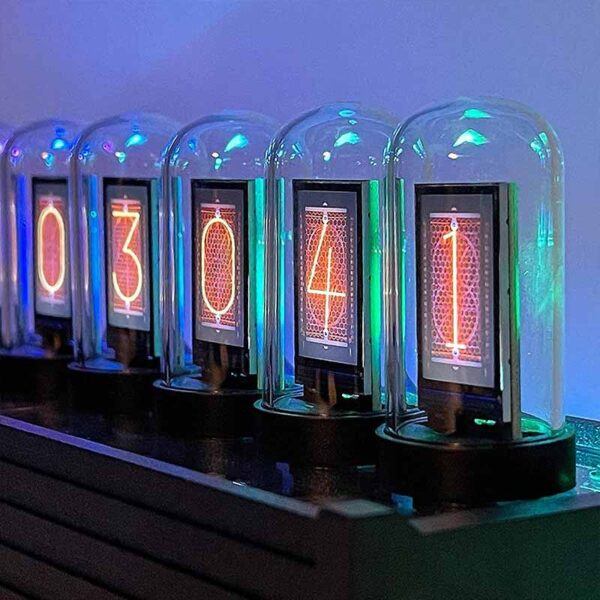
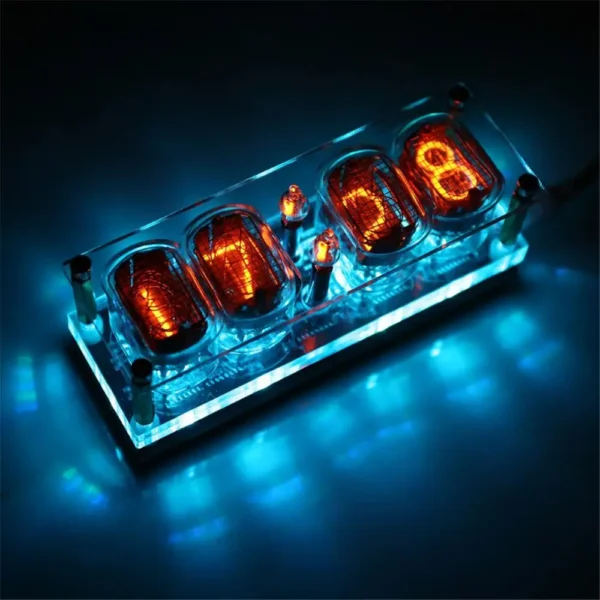
Nixie Digital Clock
$183.99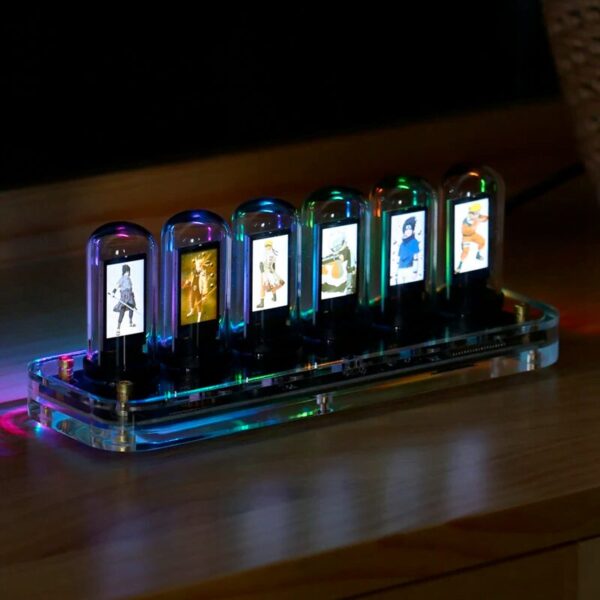
Select options
This product has multiple variants. The options may be chosen on the product page
Nixie IPS Wi-Fi RGB Clock Large
Price range: $149.99 through $160.99Definition and Origin of Nixie Tubes
Nixie tubes emerged in the 1950s thanks to the American company Burroughs Corporation. At the time, they were used as digital displays for calculators, scientific instruments, and early computers. Each tube contains multiple metallic cathodes shaped like digits (0 to 9), stacked in layers, immersed in a neon gas atmosphere. When a digit is powered, it glows with a characteristic orange light.
The word Nixie comes from the acronym Numeric Indicator eXperimental. Very popular in the 1960s and 70s, these displays were gradually replaced by more compact and economical LCD and LED screens.
Difference Between Nixie Tubes and Modern LED/LCD Displays
Unlike LED or LCD screens, which rely on semiconductors or liquid crystals, Nixie tubes use the principle of gas ionization. This technology gives them a unique visual depth, as each digit is a real metallic piece that lights up, not just a simple light projection.
- LED / LCD: compact, very durable, energy-efficient, but with a sometimes cold and impersonal visual rendering.
- Nixie: warm aesthetic, unique retro style, but more fragile, expensive, and energy-consuming.
In summary, Nixie tubes cannot compete with modern technology in terms of practicality, but they far surpass it in visual charm and originality.
Why Nixies Are Still Fascinating Today
Nixie clocks are increasingly popular not only among vintage collectors but also among design and electronics enthusiasts. Their rarity contributes to their value: tubes have not been mass-produced since the late 20th century, making them sought-after items.
What is particularly fascinating is their ability to blend old technology and modernity. Today, artisans and enthusiasts are designing connected Nixie clocks (synchronized via GPS or the Internet), combining retro aesthetics with contemporary functionalities. They thus become exceptional pieces that combine history, art, and science.
In a word, a Nixie clock is much more than just a display: it is a curiosity object, a symbol of technological nostalgia, and a true decorative work that transcends time.
Operating Principle of a Nixie Tube
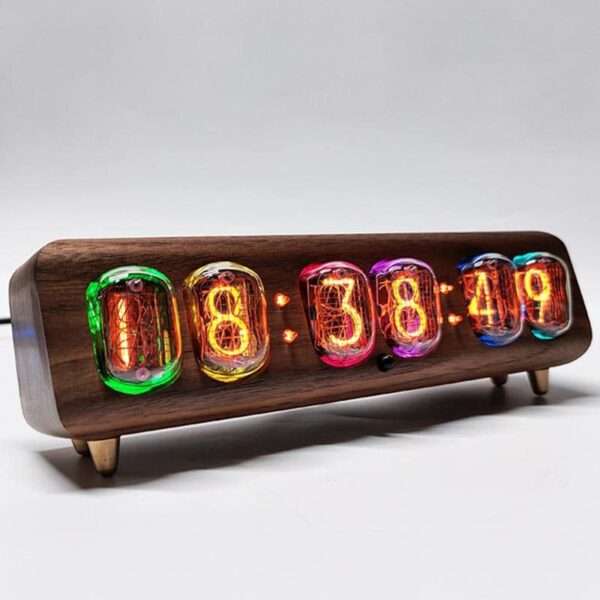
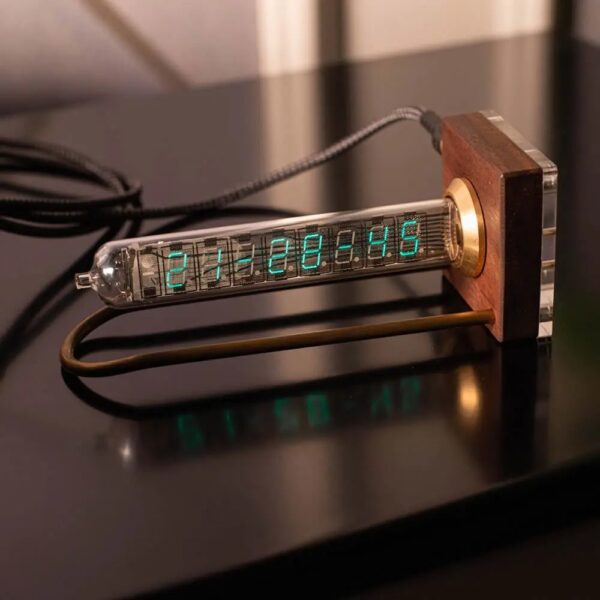
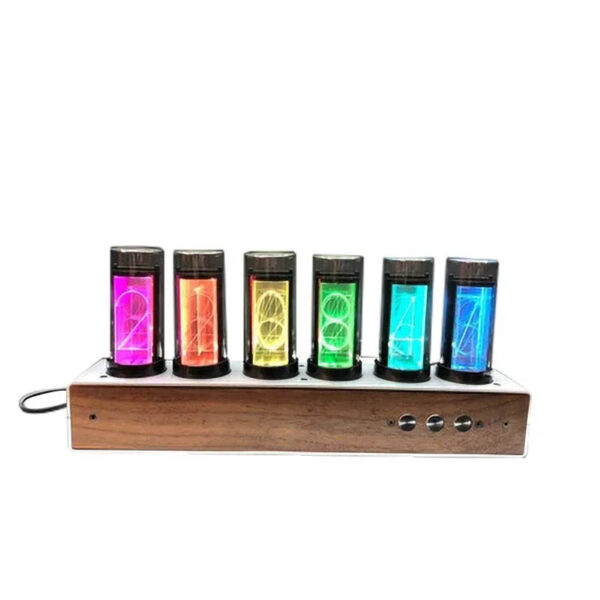
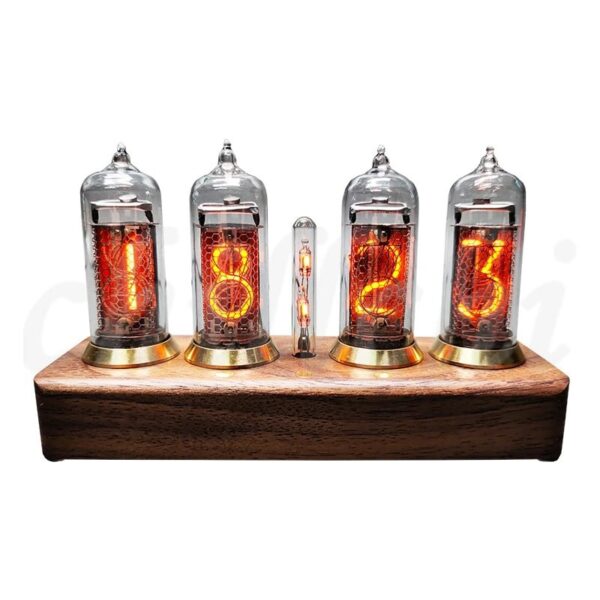
Internal Structure: Cathodes, Anodes, and Neon Gas
A Nixie tube is a gas discharge tube ingeniously designed. Inside, it contains:
- A grid-shaped anode, usually transparent, that serves to attract electrons.
- Several metallic cathodes shaped like digits (0 to 9), stacked one behind the other. Each digit is a distinct piece, precisely cut.
- A neon gas (sometimes mixed with a small amount of argon or mercury) at low pressure, which facilitates ionization and stabilizes the electric discharge.
When looking at a Nixie tube from the front, only the activated digit appears to “float” in a luminous atmosphere, giving a deep and three-dimensional effect that distinguishes this technology from modern displays.
The Role of High Voltage (Around 170V)
To excite the gas, it is necessary to apply a relatively high voltage, typically around 170 volts DC. Unlike LED diodes that operate on only a few volts, the Nixie requires this high voltage to initiate the electric discharge inside the tube.
When a cathode in the shape of a digit is connected to this voltage, electrons pass through it and collide with neon atoms. These atoms, changing energy states, release photons, creating visible light. This phenomenon is very similar to that used in fluorescent tubes or neon signs.
The Light Effect: Electric Discharge and Orange Glow
It is this controlled ionization of the gas that generates the characteristic glow of Nixie tubes. The orange color comes directly from the emission spectrum of neon, a noble gas that naturally emits in this hue when excited.
Each digit can be lit up independently by activating its specific cathode. The rest of the tube remains off, providing a clear and precise reading. This display, both scientific and aesthetic, is one of the main reasons why Nixie clocks continue to enchant.
Note: some experimental Nixie tubes have used other gases or alloys to slightly modify the emission color, but the orange neon has remained the standard and visual identity of these tubes.
How a Nixie Clock Displays the Time
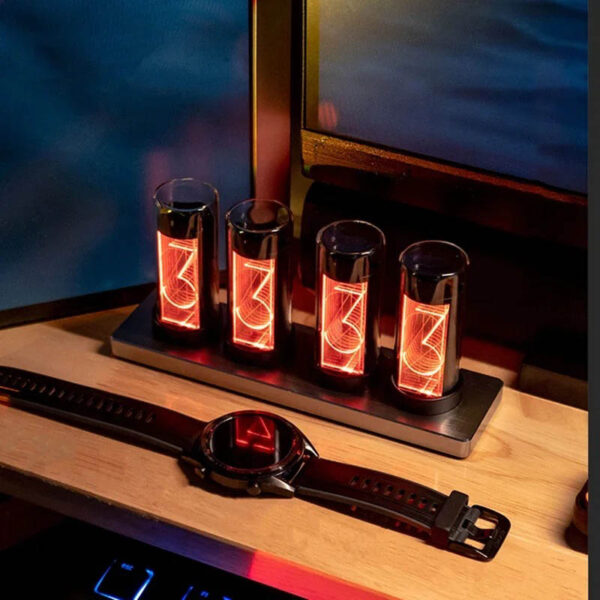
Wiring and Selecting Digits
Each Nixie tube contains ten metallic cathodes corresponding to the digits 0 to 9. When a cathode is activated, it lights up and displays the corresponding digit. To display the full time (for example, 12:34), typically four to six tubes are placed side by side.
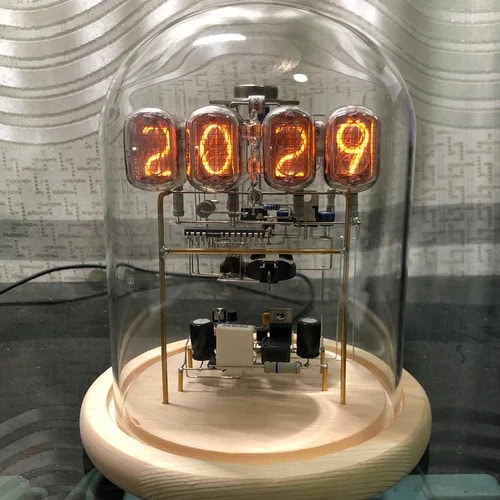
Controlling the cathodes requires high voltage switching circuits, known as drivers. In the early generations, specific integrated circuits were used, such as the 74141 (a BCD to Nixie decoder). Today, modern solutions allow for adapting the low voltage of microcontrollers (5V or 3.3V) to the high voltage required by the tubes (around 170V).
Two display modes are possible:
- Direct Display: each tube is controlled individually by its driver, requiring many connections.
- Multiplexing: the tubes are lit very quickly one after the other (several hundred times per second). The human eye perceives a continuous illumination, which allows for reducing the number of components and increasing the lifespan of the tubes.
The Role of Modern Microcontrollers
Today’s Nixie clocks are generally driven by programmable microcontrollers (Arduino, ESP32, PIC, STM32, etc.). They perform several functions:
- Display Management: selecting the digits to display based on the time.
- Fast Switching: controlling high voltage drivers, often via MOSFET circuits or shift registers.
- Visual Animations: transition effects like the “slot machine effect” (rapid digit scrolling before stabilization), which provides both an aesthetic rendering and avoids ghosting of the cathodes.
- Advanced Features: managing LED backlighting, adding alarms, temperature sensors, or automatic brightness adjustment according to the environment.
In other words, the microcontroller acts as the brain of the clock, translating the time into electrical signals understandable by the Nixie tubes.
Time Synchronization (Oscillator, RTC, GPS, Internet)
A Nixie clock is not limited to illuminating digits: it must also ensure time accuracy. Several systems exist:
- Quartz Oscillator: integrated into the microcontroller, provides a reliable time base but may drift by a few seconds per day.
- RTC (Real Time Clock): a dedicated real-time clock, powered by a battery, keeps the exact time even when the clock is unplugged.
- GPS Module: captures universal time from satellites, ensuring absolute accuracy.
- NTP Synchronization: models connected to the Internet use the NTP (Network Time Protocol) to adjust automatically.
Thanks to these technologies, a modern Nixie clock can be as accurate as a synchronized atomic watch, all while retaining its unique retro aesthetic.
Current Applications and Uses
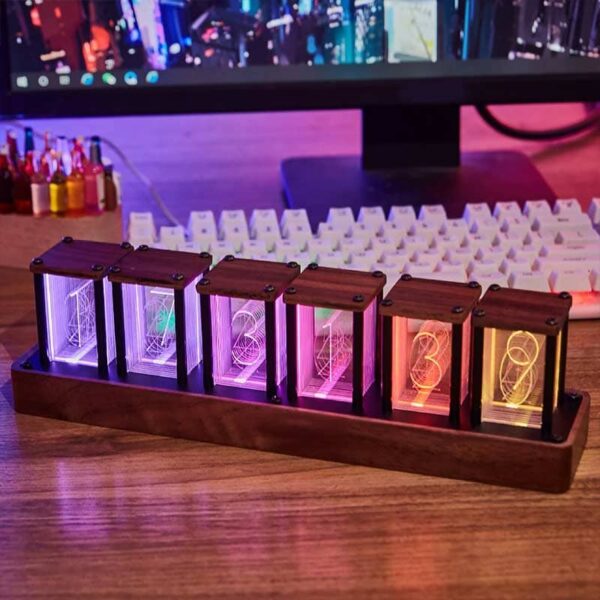
Select options
This product has multiple variants. The options may be chosen on the product page
Nixie Tube Clock Kit
Price range: $136.99 through $149.99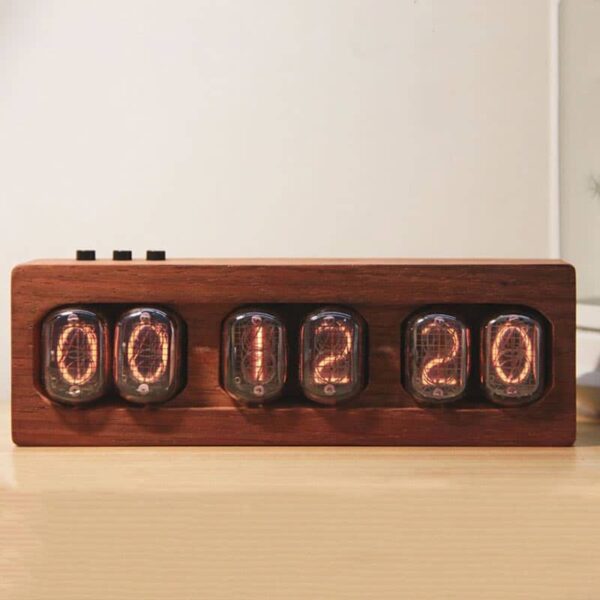
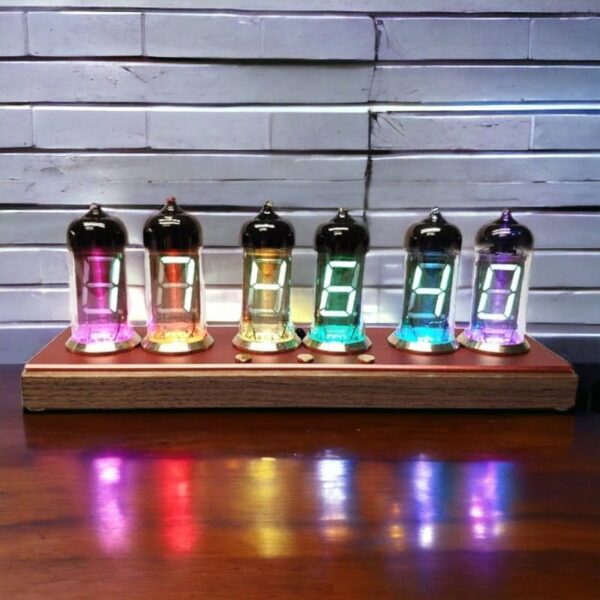
Nixie Bulb Clock
$229.99Decorative Objects and Retro Trends
Nixie clocks are no longer just technical devices: they have become true works of art and decoration. Their retro design blends perfectly into industrial, vintage, or high-tech style interiors. In an office, they add an elegant and original touch; in a living room, they become a centerpiece that immediately catches the eye.
Their nostalgic yet futuristic aspect makes them a sought-after accessory by design enthusiasts, as well as fans of steampunk culture or rare collectible objects. Some brands even offer limited editions where each clock is numbered, which enhances its unique and prestigious appeal.
Customized Clocks and DIY
The Do It Yourself movement has breathed new life into Nixie tubes. Many enthusiasts are venturing into the creation of customized clocks, using electronic kits or programmable circuits (Arduino, Raspberry Pi, etc.).
These projects provide great freedom of customization:
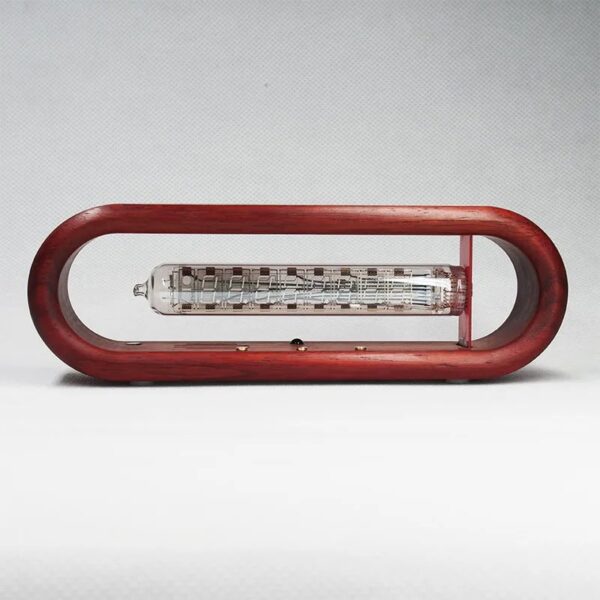
- Choice of case: solid wood, brushed aluminum, acrylic glass, 3D printing.
- Addition of visual animations: scrolling digits, transition effects like “slot machine.”
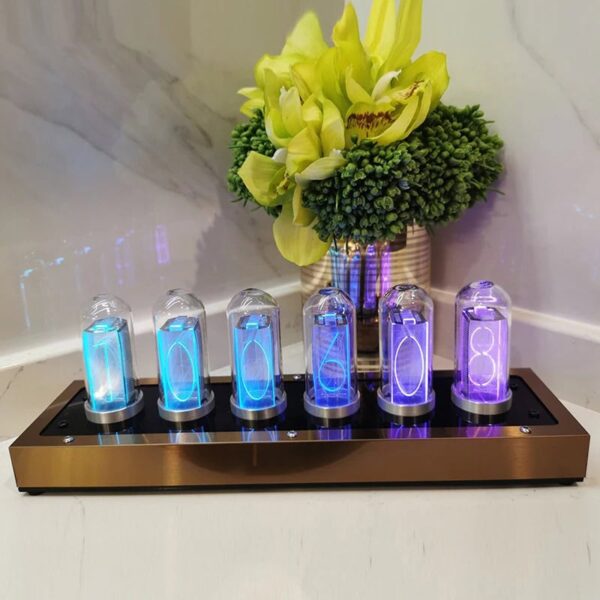
- Integration of LED lighting under the tubes to vary the ambiance (blue, purple, green, multicolored).
- Advanced functionalities: alarm, built-in thermometer, light sensor, Wi-Fi connection.
Building a Nixie clock by oneself is also a way to learn about applied electronics, develop technical skills, and create a unique object with high sentimental and aesthetic value.
Usage in Education and Electronics
Nixie tubes still play a role in the educational field. Many engineering schools and electronics clubs use them to:
- Explain the principle of electric discharges in gases.
- Illustrate the function of cathodes and anodes in an electronic system.
- Address concepts of high voltage, switching, and multiplexing.
In addition to their scientific aspect, Nixie clocks serve as experimentation tools in the design of printed circuits, programming of microcontrollers, and integration of modern modules (Wi-Fi, GPS, RTC).
Comparison Table: Nixie Clock vs Other Clocks
| Clock Type | Technology | Advantages | Disadvantages | Average Price |
|---|---|---|---|---|
| Nixie Clock | Neon tubes with cathodes | Unique retro design, high decorative value | Fragile, higher power consumption, expensive | $200–600 |
| LED Clock | Light-emitting diodes | Affordable, durable, highly visible | More ordinary aesthetics | $20–80 |
| Mechanical Clock | Gears and springs | Authentic, no electricity needed | Requires maintenance, less precise | $50–500 |
| Smart Clock | Electronic modules + Internet | Perfect accuracy, many features | Often standardized design | $50–200 |
Practical Cases and Expert Tips
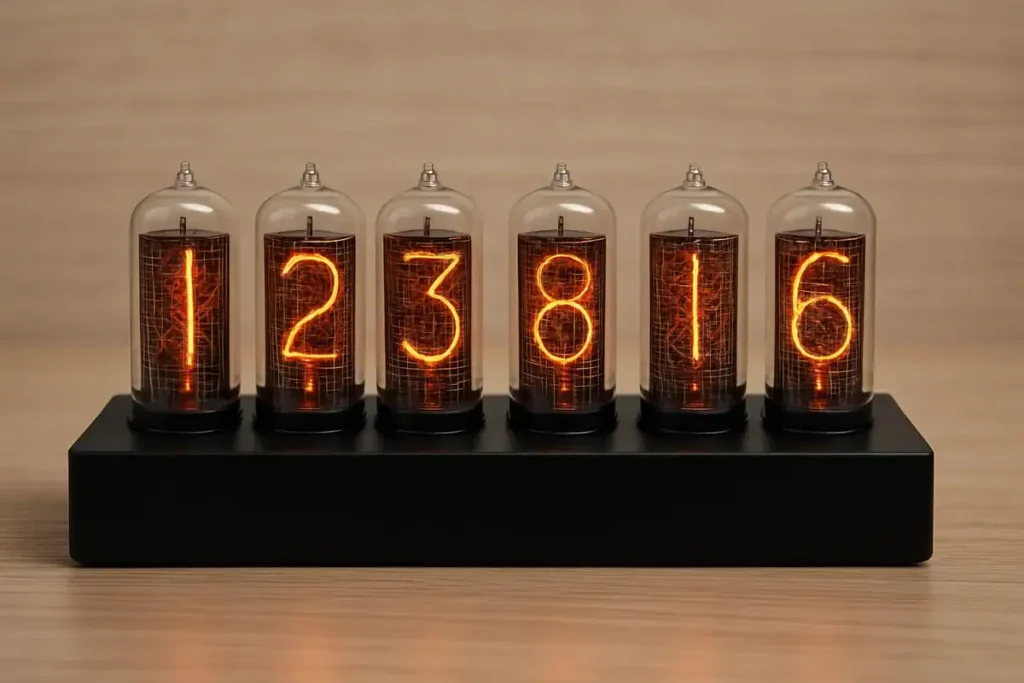
Building Your Own Nixie Clock Kit
There are many electronic kits available to assemble a Nixie clock yourself. An ideal experience for electronics and DIY enthusiasts.
Where to Buy Nixie Tubes Today?
Nixie tubes are no longer mass-produced. They are primarily found on specialty sites, platforms like eBay, or in specialty shops like ours!
Tips for Maintenance and Longevity
To prolong the lifespan of a Nixie clock, avoid leaving it on continuously and use an energy-saving mode (nighttime shutdown or alternating digit animation).
FAQ About Nixie Clocks
Are Nixie Tubes Still Being Made?
Production ceased in the 1990s, but there are still old stocks and a few modern reproductions available.
What Is the Lifespan of a Nixie Tube?
A well-used tube can last between 5,000 and 20,000 hours, depending on the conditions.
Can a Defective Nixie Tube Be Replaced?
Yes, but parts are rare and sometimes expensive. You should budget for possible replacements.
Why Are Nixie Clocks So Expensive?
Their price is explained by the rarity of the tubes, their technical complexity, and their decorative value.
Conclusion
Nixie clocks are at the crossroads of science and retro art. Their principle relies on an ancient yet still fascinating technology: the ionization of neon under high voltage. Whether for their unique aesthetics, educational value, or vintage charm, they continue to enchant collectors and electronics enthusiasts.