Free Shipping on Orders Over $50

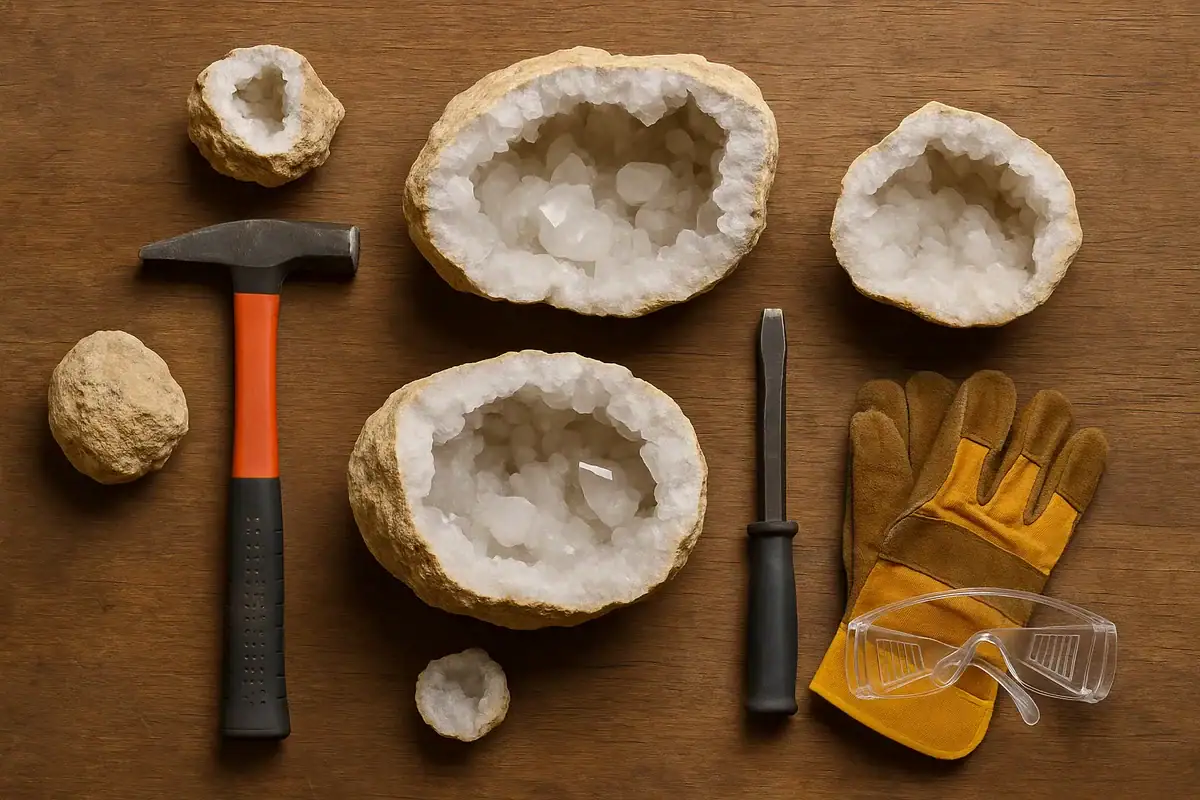
To break open a geode without damaging it, the safest method is to use a suitable tool like a geode cutter or a water saw. These techniques allow you to open the rock cleanly and preserve the crystals inside. In this article, we will explore in detail the different ways to open a geode, the precautions to take, and the mistakes to avoid in order to reveal its hidden beauty.
Contenus
afficher
What is a Geode and Why Open It?
A geode is an apparently ordinary rock on the outside, but it often holds a mineral treasure inside. These natural cavities form over millennia when minerals crystallize in lava bubbles or porous sediments. They can contain quartz, amethyst, calcite, or other rare crystals.
People break open a geode out of scientific curiosity, mineral collection, educational purposes, or for interior decoration. Each opening is a unique surprise: it’s impossible to know exactly what it contains until you open it.
Preparations Before Breaking Open a Geode
Select options
This product has multiple variants. The options may be chosen on the product page
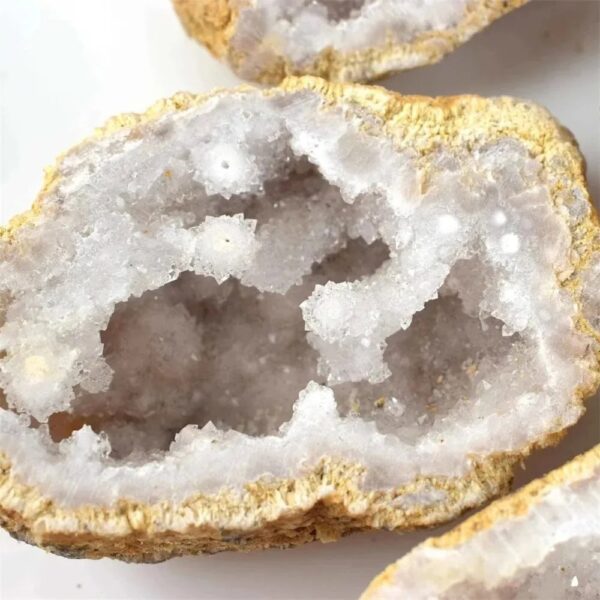
Rock Crystal Geode
Price range: $9.99 through $15.99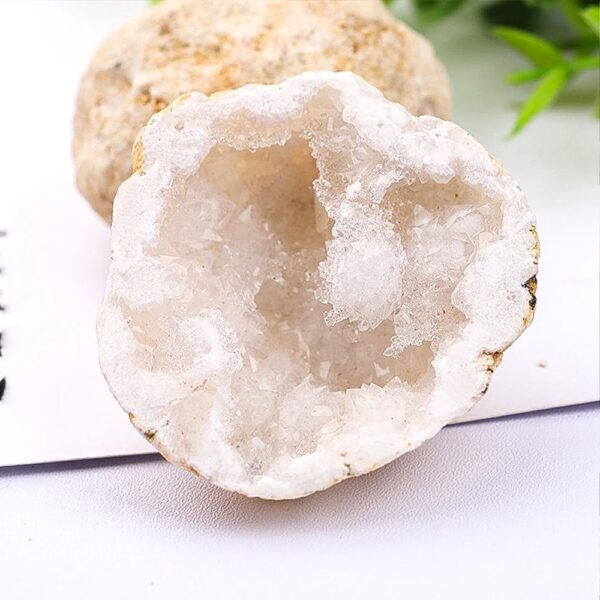
Select options
This product has multiple variants. The options may be chosen on the product page
Break-Open Agate Geode
Price range: $12.99 through $40.99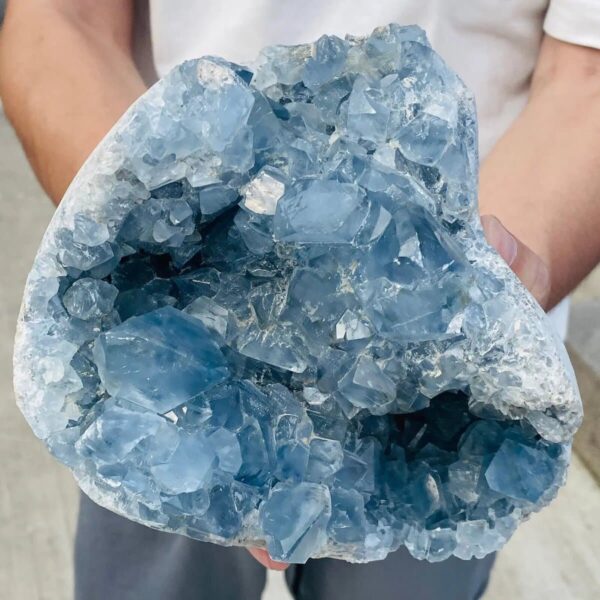
Select options
This product has multiple variants. The options may be chosen on the product page
Celestite Geode
Price range: $26.99 through $75.99
Select options
This product has multiple variants. The options may be chosen on the product page
Mini Rock Crystal Geode
$6.99Identify a Real Geode
Not all round stones are geodes. True geodes can be recognized by a bumpy exterior and sometimes a surprisingly light weight if they are hollow. Some even make a hollow sound when gently shaken.
Choose the Size and Type of Geode to Open
Small geodes (1.2 to 2.4 Inch) are ideal for a first experience. Larger ones require specialized tools. The type of mineral expected (white quartz, purple amethyst, golden calcite) can also influence the choice of opening method.
Safety Precautions (Gloves, Goggles, Work Surface)
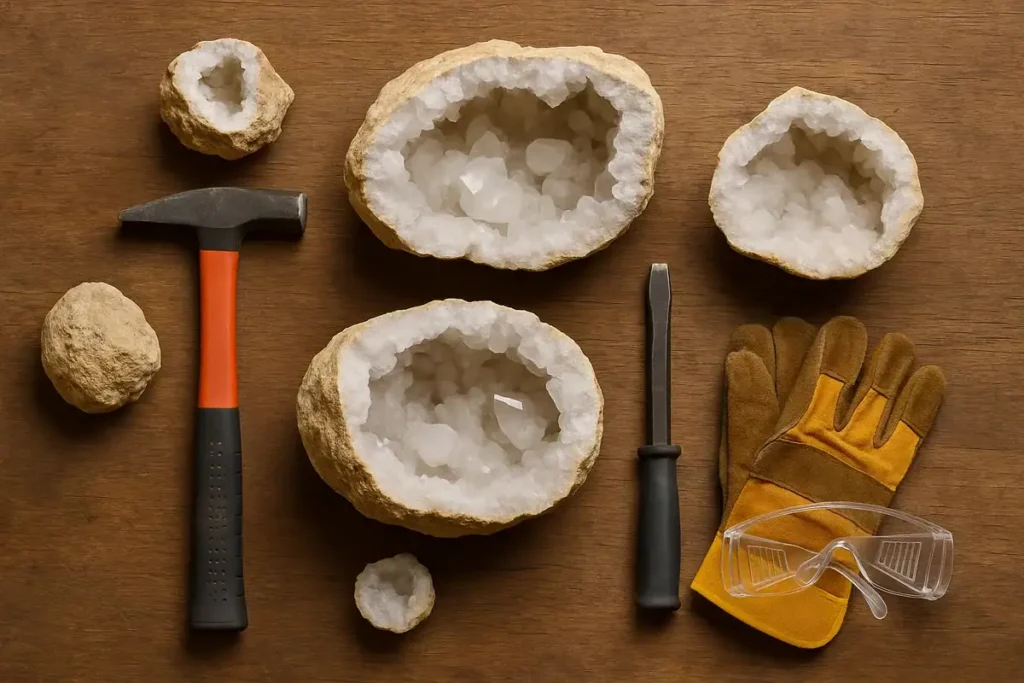
Before any handling, equip yourself with safety goggles and heavy-duty gloves. Place the geode on a stable surface (wooden board or vise). Never break a geode on a hard floor, as you risk damaging the interior crystals.
Methods for Breaking Open a Geode
The Hammer and Chisel Technique
This is the simplest and most accessible method. You draw a striking line all around the geode with a chisel, then gently tap with a hammer until it cracks. Random results: sometimes a beautiful split, sometimes several pieces.
Water Saw (Precise Method for Collectors)
The water saw allows for a clean and precise cut, ideal for collectors or museums. It perfectly preserves the interior but requires expensive equipment and a certain level of expertise.
The Geode Cutter (Specialized Tool)
The geode cutter is a mechanical device that encircles the stone with chains and then applies steady pressure until it opens. It is the most effective solution to break a geode cleanly and obtain two symmetrical halves.
Alternative Methods (Sock, Canvas Bag…)
An entertaining method involves placing the geode in a sock or a sturdy bag, then striking it with a hammer. This avoids the scattering of pieces, but the results remain unpredictable.
Comparison of Opening Methods
| Method | Precision | Cost | Safety | Difficulty |
|---|---|---|---|---|
| Hammer + chisel | Moderate | Low | Moderate | Easy |
| Water saw | Very high | High | Good | Difficult |
| Geode cutter | High | Medium to high | Very good | Easy |
| Alternative methods | Low | Low | Moderate | Very easy |
Practical Cases: Which Method to Choose According to Your Situation?
For Children and Educational Activities
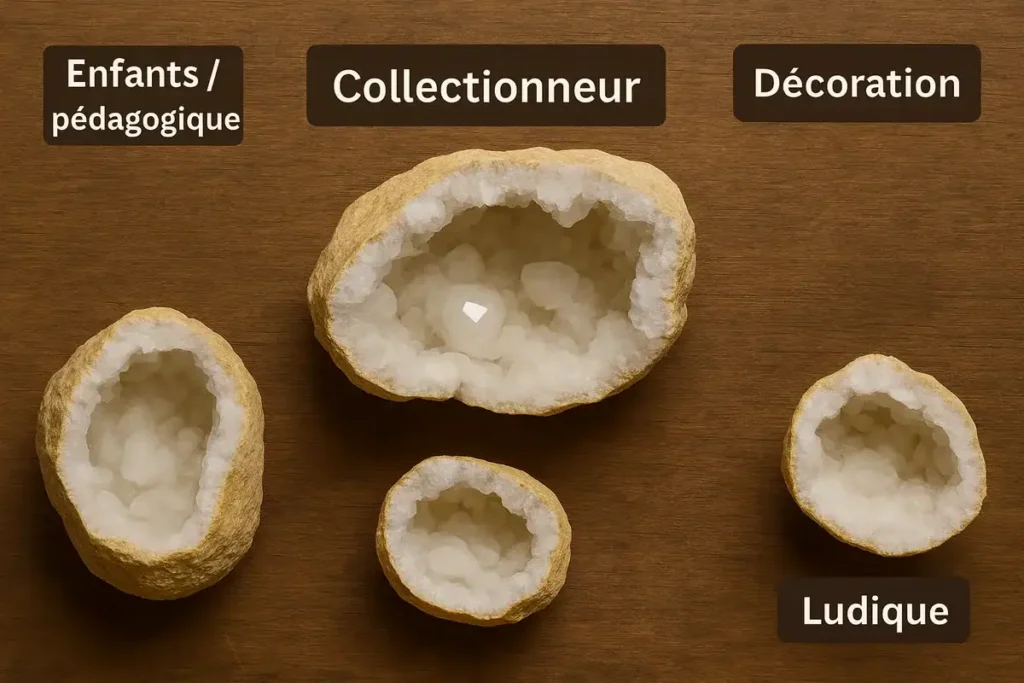
If you want to introduce children to the magic of minerals, choose small geodes, which are easier to handle and less dangerous. The sock method (placing the stone in a thick sock or a canvas bag before hitting it) is the most recommended. It minimizes flying debris and makes the activity fun. Kids love the suspense of the opening and the surprise of discovering the sparkling interior of the crystals.
In a school setting or during science workshops, this approach becomes a true educational experience: one can discuss rock formation, crystallization, and concretely demonstrate a fascinating geological phenomenon. It’s an activity that develops both scientific curiosity and observational skills.
For Discerning Collectors
Mineralogy and gemology enthusiasts seek perfect openings. In this case, specialized tools like the water saw or the geode cutter are essential. These methods allow for two symmetrical halves with a clean cut, showcasing the crystalline interior without the risk of fragmentation.
A collector can thus display their pieces in a showcase, categorize them by type of mineral, or even resell them with a better market value. The precision of these techniques makes them the benchmark for anyone looking to maximize the preservation of the natural beauty of their geodes.
For Decorative or Fun Use
If the goal is purely aesthetic, the hammer and chisel technique remains an excellent option. Although the result can sometimes be unpredictable, it often yields a raw and natural break that enhances the charm of the piece. These halves of geodes can then be placed on a piece of furniture, integrated into interior decoration, or used as curiosity items.
For an even more spectacular effect, it is possible to illuminate the geodes with a small LED lamp to make the crystals sparkle. This is a unique way to transform a simple rock into a one-of-a-kind decorative object, which catches the eye and sparks conversation.
Expert Tips for Successfully Opening a Geode
How to Prevent the Geode from Splitting into Too Small Pieces
The biggest frustration when breaking open a geode is seeing it reduce to small fragments instead of revealing two beautiful halves. To prevent this, it’s crucial to act with gradualness. Start by applying a series of light and steady taps all around the stone, rather than delivering one big direct hit. This gradual cracking technique allows you to guide the fracture and limit uncontrolled shattering.
Another tip is to maintain even pressure across the entire geode, whether using a hammer, chisel, or geode cutter. Too localized or too forceful pressure will shatter the rock and damage the internal crystals. Patience and consistency are your best allies.
Optimize the Break for an Aesthetic Result
To obtain two balanced halves, it is recommended to prepare a fracture axis. With a chisel or file, mark a slight notch all around the geode. This line of weakness will guide the break and increase your chances of achieving a symmetrical opening. The final result is not only more aesthetic but also better suited for display.
Collectors and decoration enthusiasts particularly appreciate this method, as it allows you to transform a simple stone into a stylish display object. Some even go so far as to lightly polish the edges after opening to enhance the beauty of the visible crystals.
Preserve and Showcase the Discovered Crystals
Once the geode is opened, maintenance is essential to enhance its beauty. Start by cleaning the crystals with clear water and a soft brush (like a toothbrush). Avoid aggressive chemical products that could dull or weaken the minerals. Allow to dry naturally in the air.
For showcasing, choose a light stand (LED lamp, illuminated base) that will make the crystals sparkle, especially if it is amethyst or translucent quartz. Small geodes can be placed in display cases or on shelves, while larger ones serve as true centerpieces of interior decoration.
Mistakes to Absolutely Avoid
Breaking Without Protection
Never handle a geode without safety goggles and proper gloves. The flying rock shards can cause injuries to the eyes or hands. Even with a small geode, the risk remains real.
Using Inappropriate Tools
A DIY hammer or a small chisel is more than sufficient. In contrast, a tool that is too heavy (masonry hammer, sledgehammer) can reduce the geode to dust. Likewise, avoid makeshift objects (stone, screwdriver, etc.) that do not allow for precise control of the break.
Neglecting the Stability of the Geode Before Striking
An improperly secured geode can slip and break uncontrollably. Always place it on a stable surface, ideally in a hollow wooden or rubber support, to prevent it from rolling. This enhances safety and increases your chances of achieving a clean result.
FAQ: Frequently Asked Questions About Opening Geodes
How to Tell if a Geode is Hollow Before Breaking It?
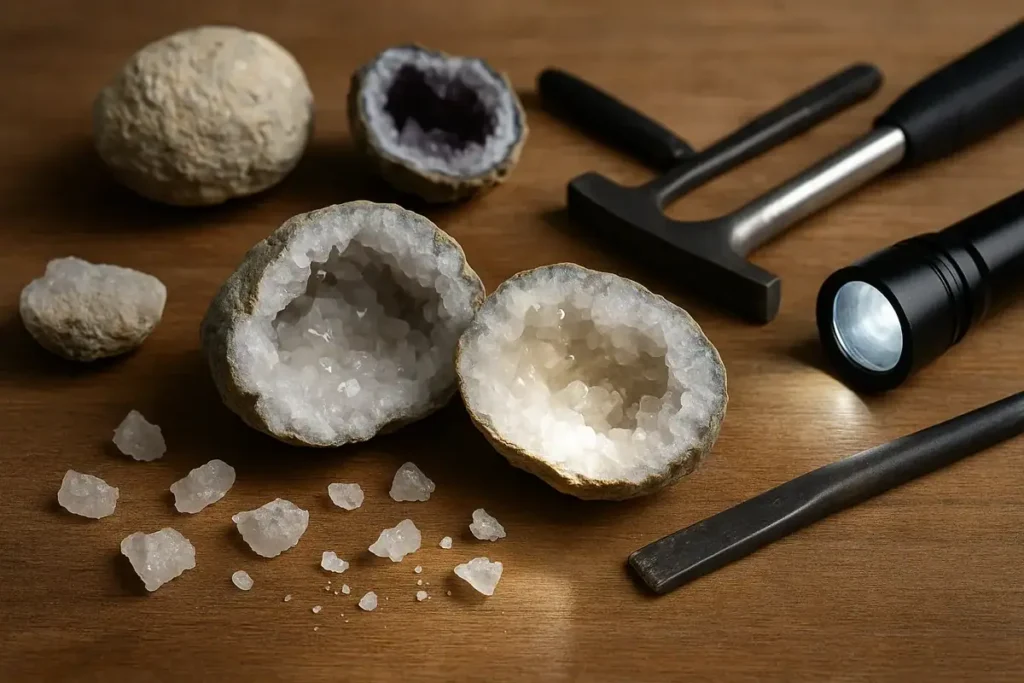
Two main clues: weight (a hollow geode is often lighter than a solid stone of the same size) and sound (gently shaking some geodes produces a distinctive hollow sound). In specialty shops, sellers can also use a lamp to guess the more translucent areas.
Can You Open a Geode Without Breaking It Apart?
Yes. Specialized tools like the water saw or the geode cutter allow you to open a geode into two perfectly clean halves. This is the ideal solution to preserve the interior crystals without the risk of loss.
What is the best method for a clean result?
The geode cutter is considered the most reliable method. It ensures consistent and gradual pressure, resulting in two symmetrical and clean halves, ideal for collectors and displays.
How Much Does a Geode Cutter Cost and Where to Find One?
An entry-level geode cutter costs between $110 and $220. Professional models can exceed $550, but they are intended for specialized workshops. You can find them in mineralogy stores, scientific tool shops, or on online sales sites dedicated to fossils and minerals.
Also discover what a geode is in more detail.