Free Shipping on Orders Over $50

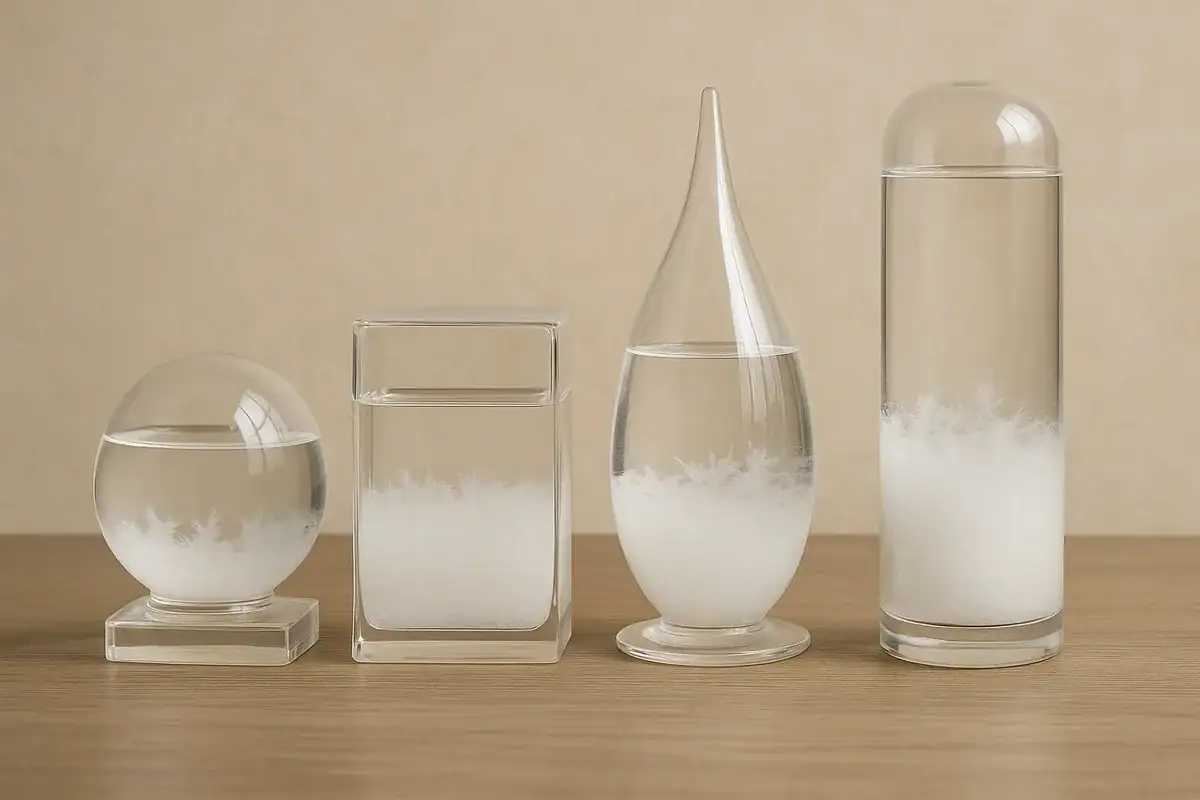
The crystal barometer, also known as the FitzRoy storm, is a fascinating object that allows one to predict the weather through the evolution of crystals contained in a liquid. Specifically, the crystals change shape according to atmospheric variations, providing a visual indication of the weather to come.
Contenus
afficher
In this article, we will discover what a crystal barometer really is, understand its scientific function, compare its performance to other weather instruments, and learn how to use it, maintain it, and avoid common mistakes. You will also find expert advice, practical cases, and a FAQ to answer the most frequently asked questions.
What is a crystal barometer?
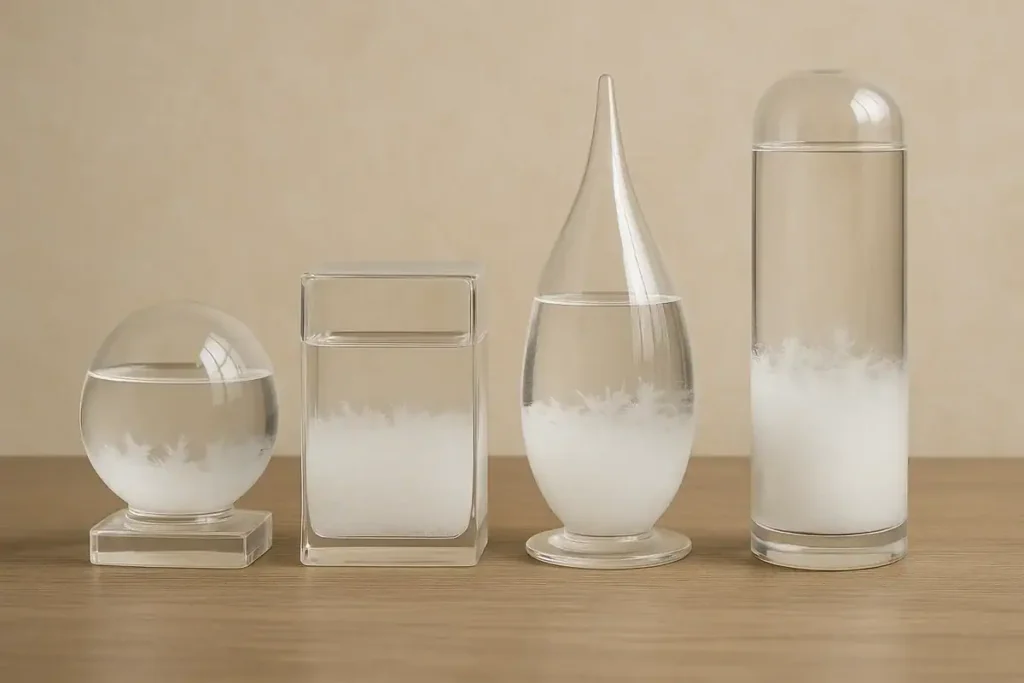
A crystal barometer, also known as a FitzRoy storm, is both a decorative object and a meteorological instrument. At first glance, it appears as an elegant vial or glass tube filled with a transparent liquid in which crystals of changing shapes appear. These crystals change based on atmospheric conditions, giving the impression of being able to anticipate the weather in a visual and intuitive way.
Its origin dates back to the 19th century, when British Admiral Robert FitzRoy used it aboard ships to predict storms. It is thanks to his observations and logbooks that the instrument became popular in Europe, becoming both a practical tool for sailors and a scientific curiosity object.
The crystal barometer relies on a specific chemical mixture (often based on camphor, alcohol, and various salts) that reacts to temperature variations, atmospheric pressure, and sometimes humidity. These reactions cause the formation or dissolution of visible crystals in the liquid, creating a real visual language:
- Clear solution: tendency towards stable and sunny weather.
- Small suspended crystals: risk of rain or high humidity.
- Large opaque crystals: arrival of cold, frost, or snow.
- Formation at the top of the container: sign of strong wind or disturbance.
Unlike traditional barometers (mercury, needle, or electronic), the crystal barometer does not provide precise numerical measurements. It remains primarily an indicative tool, blending aesthetics, scientific curiosity, and meteorological observation. This is why it is more appreciated today as a decorative and educational item than as a true forecasting instrument.
Select options
This product has multiple variants. The options may be chosen on the product page
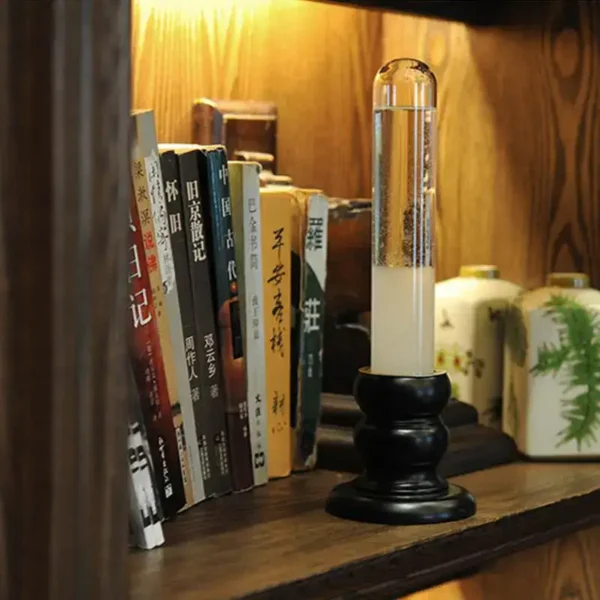
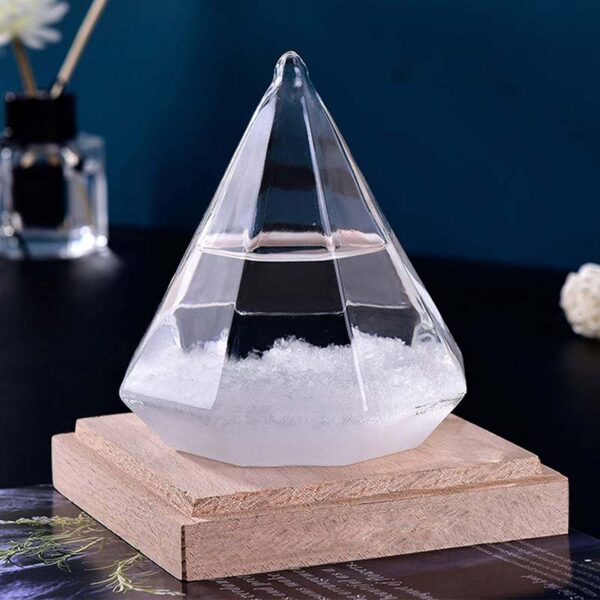
How does a crystal barometer work?
The crystal barometer operates on a simple yet mysterious principle: a chemical mixture contained in a glass vial reacts to atmospheric variations. This liquid, composed of distilled water, alcohol, camphor, and salts such as potassium nitrate or ammonium chloride, changes appearance based on temperature, pressure, and sometimes even humidity levels.
Specifically, when external conditions change, the chemical components of the mixture either combine or separate. This causes the formation of crystals visible to the naked eye or their dissolution in the solution. This reaction gives rise to a true visual language that the user learns to interpret.
The three main mechanisms at play
- The liquid solution: a mixture of solvents (water, alcohol) and salts that react to changes in ambient air.
- The formation of crystals: salts precipitate and solidify under certain pressure or temperature conditions.
- The visual reading: each crystal configuration translates a weather trend (rain, wind, frost, good weather).
Examples of crystal interpretation
- Clear solution: stable and sunny weather.
- Small dispersed crystals: high humidity and risk of rain.
- Dense and opaque crystals: indicates cooling or snow.
- Flakes at the top of the vial: sign of strong wind or storm.
- Filament formation: wet and overcast weather ahead.
An instrument between science and mystery
Although the phenomenon is explained by solubility and crystallization reactions, the exact link between the crystals and atmospheric variations remains partly empirical. This contributes to the mysterious aura of the crystal barometer. In practice, it is not as reliable a measuring instrument as a traditional barometer, but rather a visual indicator that allows one to observe trends and become familiar with atmospheric changes.
Comparison table: crystal barometer vs. other weather instruments
| Criteria | Storm Glass Barometer | Classic Barometer (mercury / aneroid) | Electronic Weather Station |
|---|---|---|---|
| Accuracy | Moderate: visual reading, no precise figures. | Good: reliable atmospheric pressure measurement. | Very high: multiple sensors (pressure, humidity, wind, temperature). |
| Design / Decoration | Highly decorative, scientific curiosity piece. | Understated, functional, traditional style. | Varies: modern design, sometimes connected. |
| Price | Affordable: $20 to $80. | Medium to high: $50 to $200. | High: $50 to $300 for full models. |
| Maintenance | Occasional cleaning, avoid direct sunlight. | Nearly none. | Battery replacement or regular recharging. |
| Durability | Several years if well maintained, sensitive to thermal shock. | Very durable, some models last decades. | Average lifespan 5 to 10 years depending on sensors. |
| Educational Value | High: allows observation of crystallization and introduction to weather. | Moderate: teaches atmospheric pressure. | High: modern learning tool with precise data. |
| Portability | Fragile, not well suited for transport. | Compact, sturdy, and portable. | Depends on model: fixed (station) or portable sensors. |
| Main Use | Decorative, educational, weather trend observation. | Reliable local weather observation. | Accurate and comprehensive forecasts. |
How to use a crystal barometer in daily life?
Where to place your barometer for reliable readings
The placement of the crystal barometer is crucial for obtaining a relevant interpretation. Avoid placing it near a heat source (radiator, fireplace, direct sunlight window) or an artificial cold spot (air conditioning, ventilation). These local variations distort the liquid’s reactions and yield inconsistent results.
The ideal location is:
- In a temperate room, bright but without direct sunlight.
- On a stable surface, away from vibrations and drafts.
- At eye level, to facilitate visual reading of the crystals.
A well-positioned barometer provides indications more closely reflecting the actual outdoor conditions while remaining decorative on a daily basis.
Visual interpretation: rain, sun, wind, frost
The main interest of the crystal barometer is its visual language. Each aspect of the liquid solution corresponds to an atmospheric trend:
- Clear solution: stable weather, clear sky, sunny.
- Small suspended crystals: increasing humidity, probability of rain.
- Formation of thick crystals: imminent cooling, frost, or snow.
- Flakes at the top of the liquid: strong wind, disturbances, storm coming.
- Filaments or veils in the liquid: overcast weather, heavy and humid atmosphere.
These observations are indicative: they reflect a general trend rather than an instantaneous forecast like an electronic weather station.
Stabilization time and trend observation
A crystal barometer is not operational immediately after installation. It requires a stabilization time to adapt to its environment:
- Average duration: 24 to 48 hours before a reliable first reading.
- New location: wait several days if you move the instrument.
- Optimal observation: monitor crystal changes over at least a week to identify consistent trends.
The effectiveness of the barometer relies more on continuous analysis and regular observation than on a one-time reading.
Tip: some enthusiasts keep a small weather journal where they note the state of the crystals and the actual weather the following day. This helps to learn how to interpret your own barometer better over time.
Expert tips to optimize its use
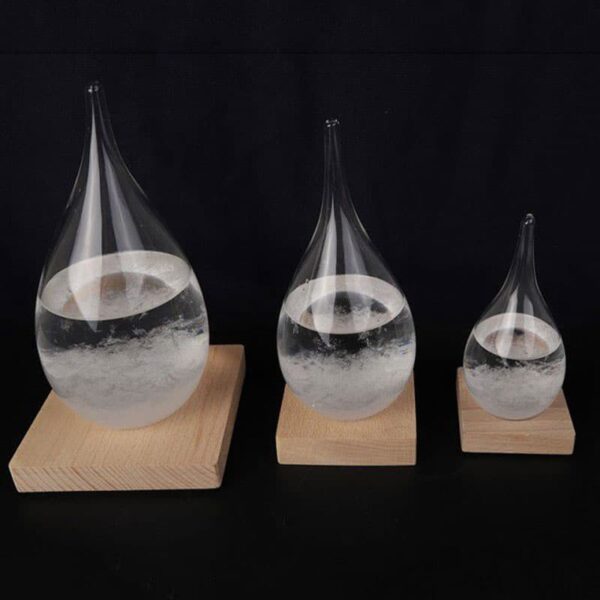
Select options
This product has multiple variants. The options may be chosen on the product page
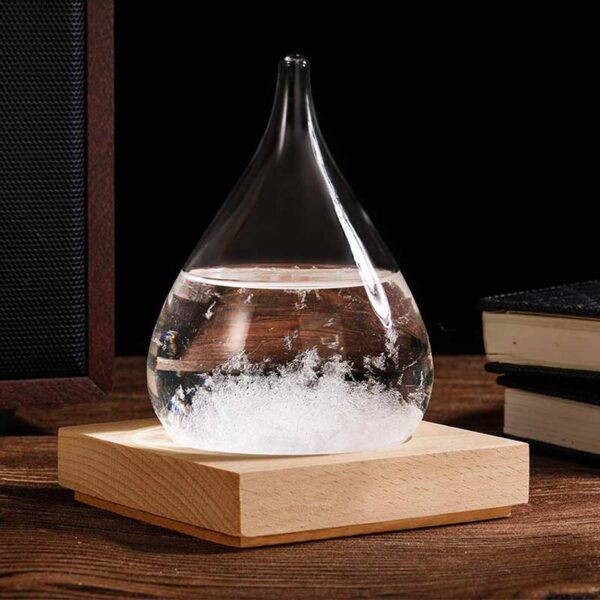
Raindrop Crystal Storm Glass Barometer
Price range: $34.99 through $57.99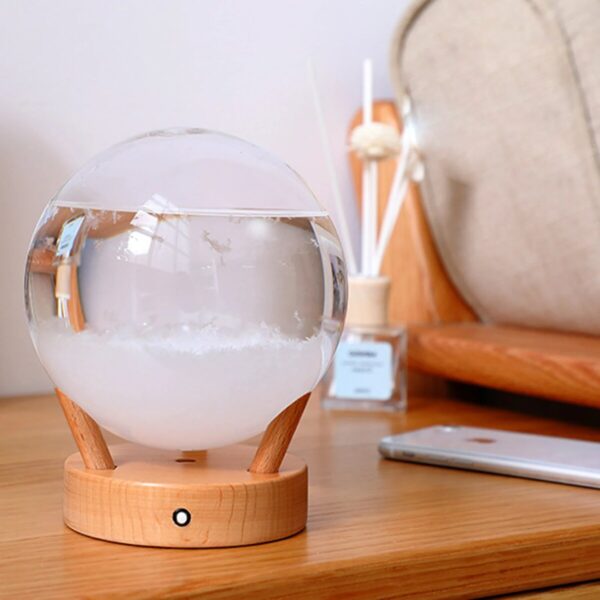
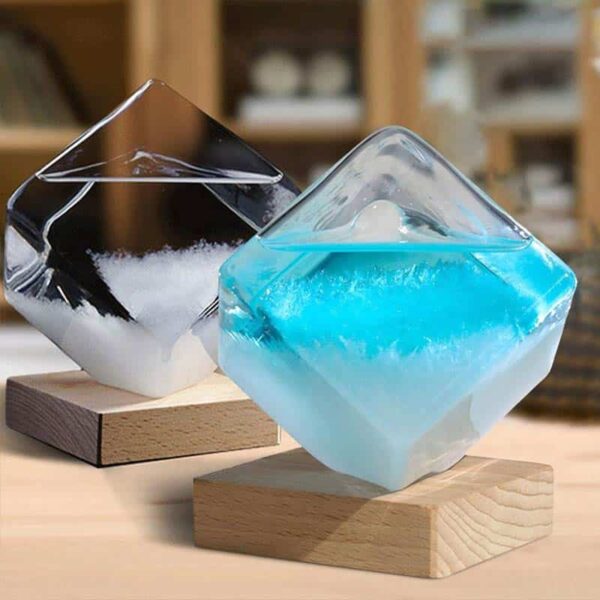
Select options
This product has multiple variants. The options may be chosen on the product page
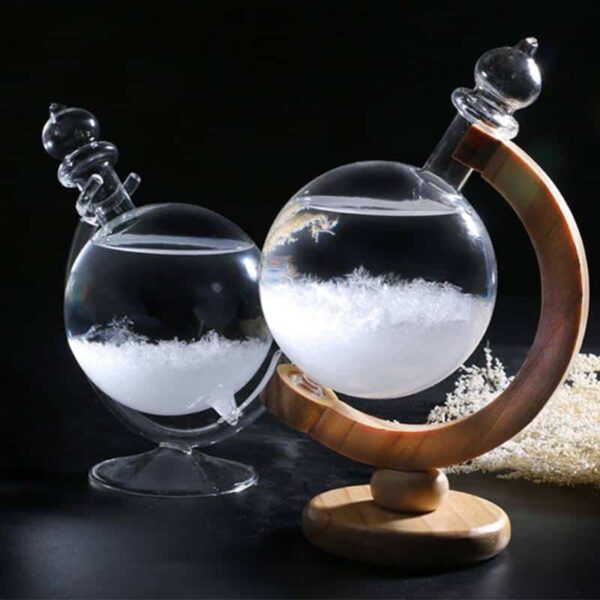
Original Crystal Barometer
Price range: $34.99 through $57.99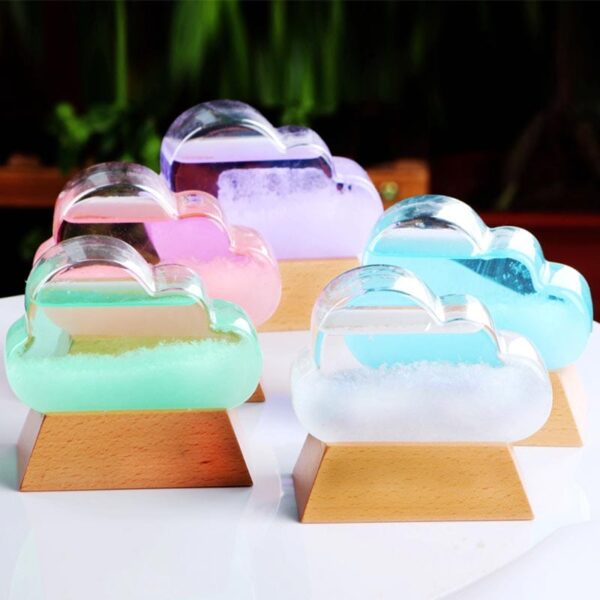
Select options
This product has multiple variants. The options may be chosen on the product page
Cloud Crystal Barometer
$40.99Adapt interpretation according to the season
The behavior of the crystals varies greatly depending on the time of year. In winter, crystal formation is more frequent, as low temperatures and humidity amplify the chemical reactions. In summer, the solution often remains clear and limpid, indicative of a stable and drier atmosphere. Always keep this seasonal aspect in mind to avoid misinterpretation.
Regularly check ambient temperature
The crystal barometer reacts to both indoor conditions and changes in outdoor weather. Thus, a room that is too heated, air-conditioned, or too well insulated can limit or even nullify any visible variation in the solution. In some modern homes, which are perfectly airtight, it is common to see very little change from day to day.
To improve the reliability of observations:
- Maintain a stable temperature between 64 and 77 °F.
- Avoid rooms without air renewal, too insulated, or airtight.
- Favor temperate and airy places (living room, office), away from kitchens or bathrooms.
Combine the barometer with other weather tools for more reliability
A crystal barometer remains primarily a visual indicator. To enrich your observations and make them more relevant, it is advisable to combine it with modern instruments:
- Electronic barometer: precise measurement of atmospheric pressure.
- Connected weather station: detailed data on humidity, wind, and precipitation.
- Indoor/outdoor thermometer: useful for comparing crystal changes with temperature variations.
This combination provides a more complete view of the weather and helps to learn to decode more finely the reactions specific to your barometer.
Expert tip: if you record your observations (state of the crystals + actual weather the next day) in a small tracking table, you will develop your own benchmarks and significantly improve the relevance of your readings.
Practical cases: actual readings and interpretations
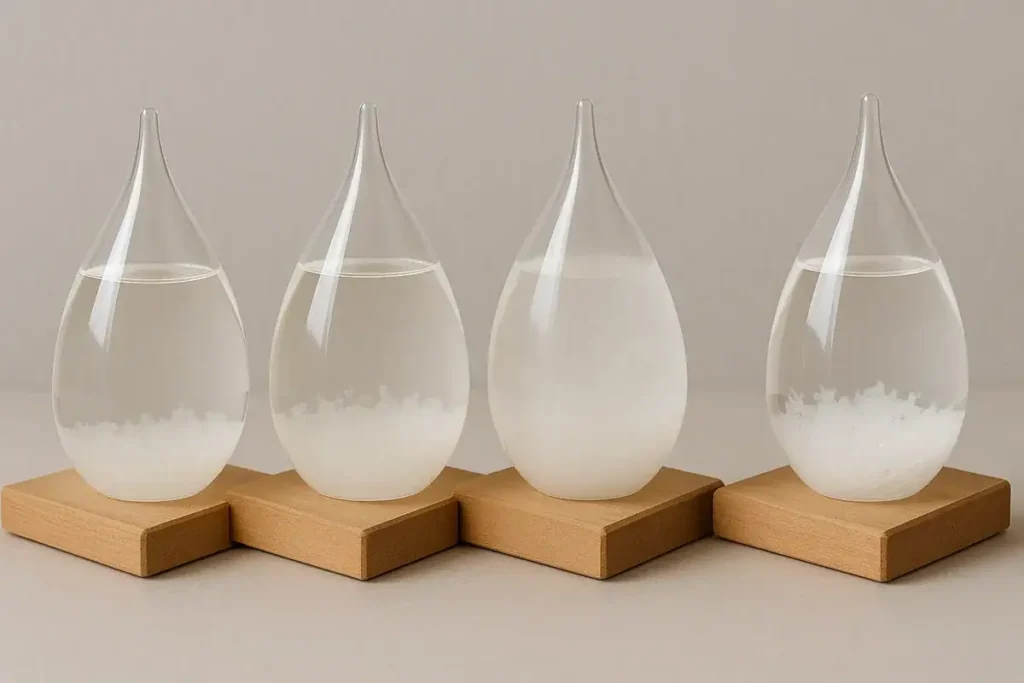
Example in winter: dense and frosty crystals
In winter, the barometer often presents thick and opaque crystals, sometimes resembling frost. This indicates a marked cooling and may signal the arrival of snow or intense frost. These signals are particularly visible during a cold front passage.
Example in summer: clear solution and clear sky
When the solution remains completely clear, without suspended crystals, this corresponds to a stable atmosphere, often associated with nice summer weather. This type of reading is common during anticyclonic periods when the air is dry and warm.
Example before a storm: suspended crystals
Floating disorderly crystals or filaments dispersed in the liquid often appear before an atmospheric depression. They are considered a harbinger of strong winds or a sharp change in pressure, typical of a storm.
Practical tip: to refine your readings, always compare the state of the barometer with the actual weather the next day. This allows you to learn how to interpret the signals specific to your model.
Maintenance and durability of the crystal barometer
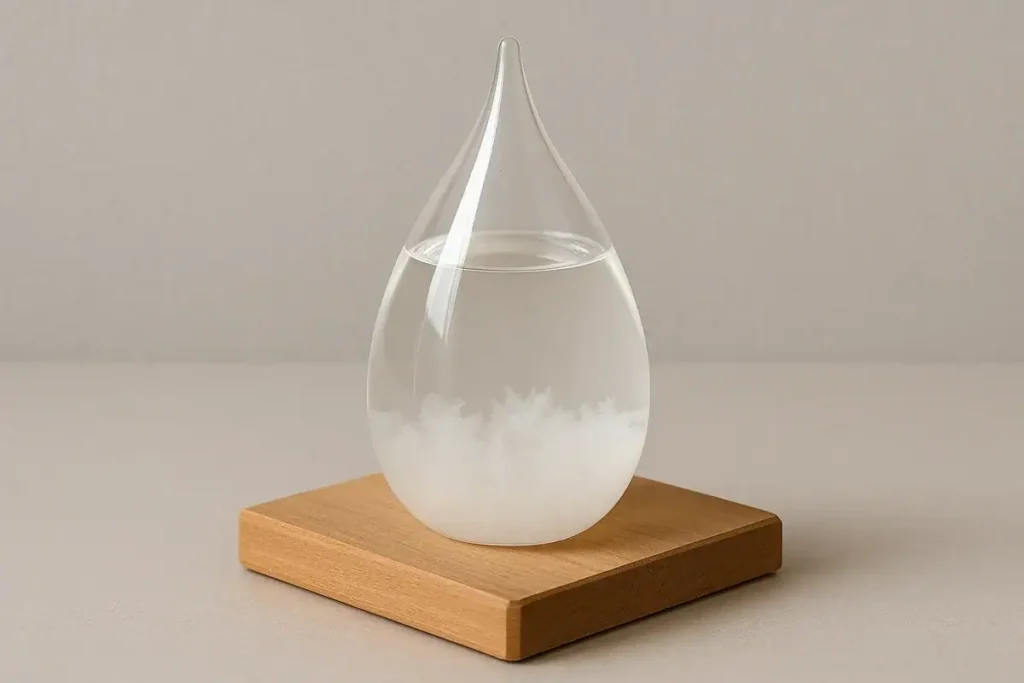
How to clean and maintain the clarity of the liquid
Minimal maintenance is enough to keep your barometer in good condition. Clean the glass with a soft cloth (microfiber) to avoid scratches. Protect it from direct sunlight, which can alter the chemical composition of the liquid and promote cloudiness.
Average lifespan and wear factors
A well-maintained crystal barometer can last many years. However, the liquid may gradually lose transparency over time, especially if the object is exposed to extreme temperature variations. The initial quality of the mixture also plays a significant role in the longevity of the instrument.
Precautions to take to avoid alterations
- Do not shake the instrument: crystals form naturally and should not be disturbed.
- Avoid thermal shocks (sudden changes from hot to cold).
- Keep it in a room with a stable temperature to maintain the chemical reaction.
Mistakes to avoid
Confusing forecast and immediate observation
The crystal barometer does not provide a real-time forecast. It gives trend indications about the evolution of the weather, to be observed over time.
Placing the instrument near a heat source
A radiator, fireplace, or direct sunlight completely distorts the liquid’s reaction. Result: the crystals evolve artificially and become unusable for weather reading.
Not considering the stabilization time of the crystals
A newly installed or moved barometer needs 24 to 48 hours to stabilize. Drawing conclusions too quickly leads to incorrect interpretations.
FAQ about the crystal barometer
Is the crystal barometer really reliable?
It is indicative but not as reliable as a modern weather station. It is primarily an educational and decorative tool.
Can you make a crystal barometer yourself?
Yes, but the recipe is delicate (camphor, alcohol, salts). Commercial models are more stable and aesthetic.
What is the difference between decorative and scientific?
Decorative versions focus on design. The rare scientific versions are calibrated but remain limited.
Is it sensitive to altitude variations?
Yes, because atmospheric pressure directly influences the solution.
Conclusion: between science, aesthetics, and curiosity
The crystal barometer is a unique object at the intersection of decoration and popular science. It is not intended to replace modern instruments, but remains an excellent way to spark curiosity, learn to observe one’s environment, and add an elegant touch to one’s interior.