Free Shipping on Orders Over $50

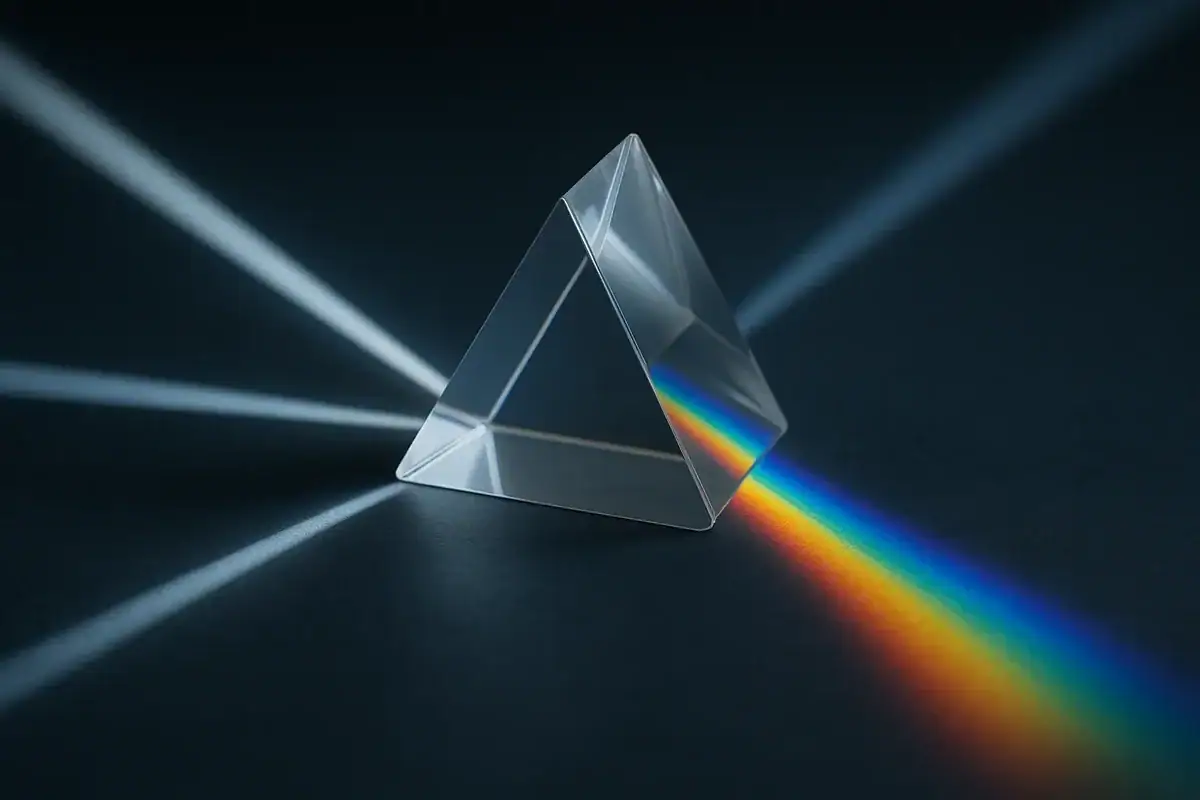
An optical prism is a transparent object made of glass or crystal that has the ability to deviate, reflect or decompose light. A true scientific tool, but also a playful and decorative object, it appeals to both physics enthusiasts and photography lovers, as well as the curious who enjoy playing with colors. In this article, we will discover how it works, its main uses, and the mistakes to avoid to fully enjoy its benefits.
Contenus
afficher
Understanding the Functioning of an Optical Prism
What is an Optical Prism?
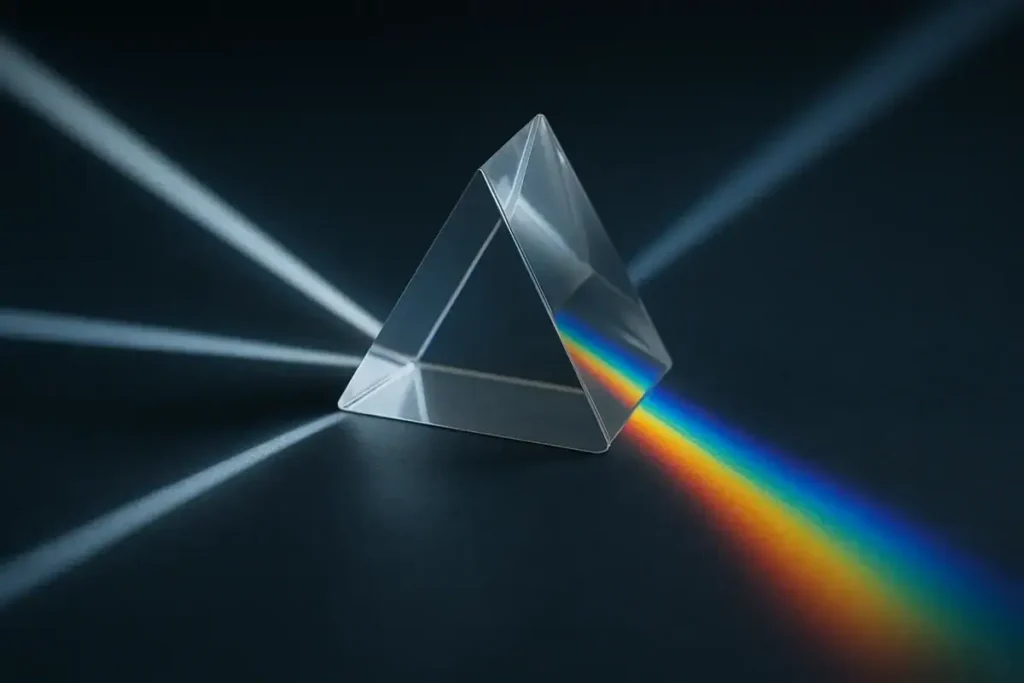
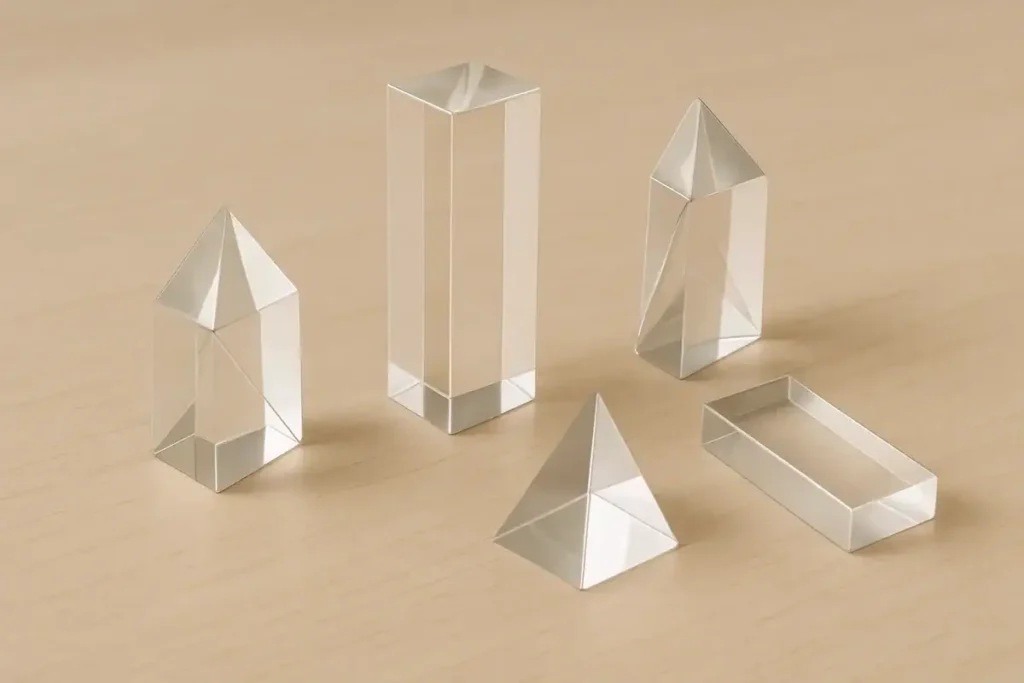
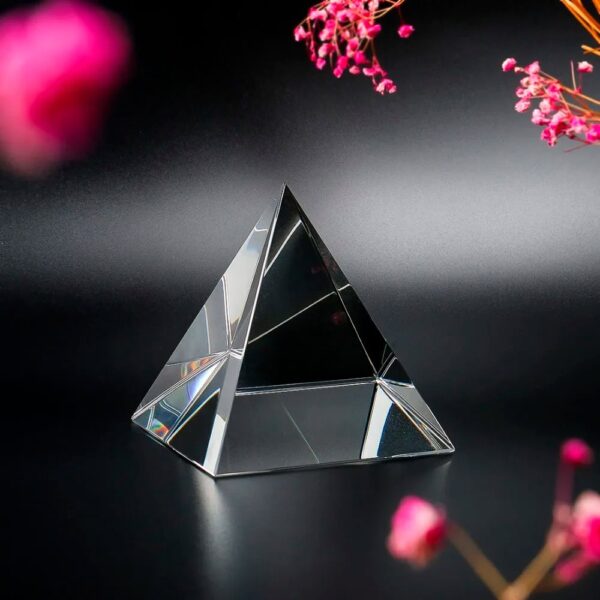
An optical prism is a transparent geometric solid whose faces are flat and polished. Its most well-known shape is the triangular prism, but there are also rectangular, pentagonal, or right-angle prisms, each having specific uses. The most commonly used materials are borosilicate glass, quartz, and optical crystal, chosen for their purity and ability to transmit light without excessive distortion.
This particular design allows the prism to modify the path of light rays. Depending on its inclination and the nature of the material, the light passing through it can be deviated, reflected, or dispersed. This makes the prism an essential scientific and educational instrument, but also an aesthetic and playful object that intrigues both science enthusiasts and the general public.
Principle of Refraction and Dispersion of Light
When a ray of light passes from one medium to another (from air to glass, for example), it undergoes refraction: its direction changes. This phenomenon is related to the difference in the speed of light propagation in each medium. However, not all colors travel at the same speed: short wavelengths (violet, blue) are deviated more than long wavelengths (red, orange).
This process causes the dispersion of white light, which then decomposes into a complete color spectrum: violet, indigo, blue, green, yellow, orange, and red. In other words, a simple ray of white light can transform, thanks to a prism, into a beautiful artificial rainbow. The sharpness of this spectrum depends on the refractive index of the material, the optical quality of the prism, and the angle of its apex.
This same phenomenon explains the appearance of rainbows in nature: water droplets act as tiny prisms, decomposing sunlight.
Difference Between Refraction, Reflection, and Dispersion
- Refraction: it is the deviation of light when it passes through a transparent medium. Example: a light ray entering a prism changes angle at the entrance and exit.
- Reflection: it is the return of light when it hits a surface. In some cases, a prism can produce total internal reflection, returning the ray without using a mirror.
- Dispersion: it is the separation of the different colors that compose white light. The prism highlights that white is actually a mixture of multiple wavelengths.
These three phenomena are complementary. A well-designed prism allows for easy observation and explanation of them, making it a unique educational tool. This is also what explains its popularity among the general public: it combines scientific rigor with visual beauty.
The Main Uses of an Optical Prism
In Physics and Scientific Research
Prisms are used to decompose light and analyze its composition. In spectroscopy, they serve to identify the chemical elements present in a light source. Although more sophisticated instruments exist today, the prism remains a simple and educational tool to understand the basics of optics.
In Astronomy
Some telescopes and spectroscopes use prisms to study the light of stars. This allows astronomers to determine the composition, temperature, and even the movement of celestial bodies. For public use, it is mainly a way to understand how science observes the universe.
In Photography and Cinema
The prism has become a creative accessory highly valued by photographers and videographers. Placed in front of the lens of a camera or smartphone, it produces unique visual effects: reflections, colored halos, artistic distortions. In cinema, it was long used to generate light illusions before the digital age.
In Education
In school or at home, the prism is an essential educational tool for explaining that white light is composed of several colors. Accessible and safe, it makes physics lessons more lively and allows students to concretely see abstract laws.
In Decorative and Artistic Objects
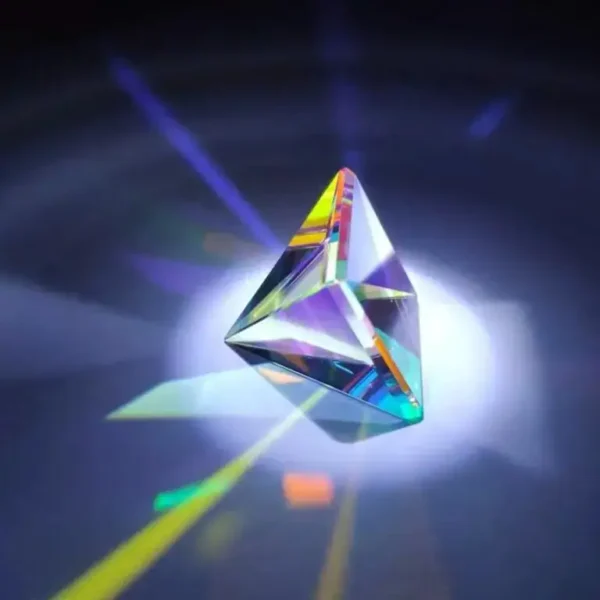
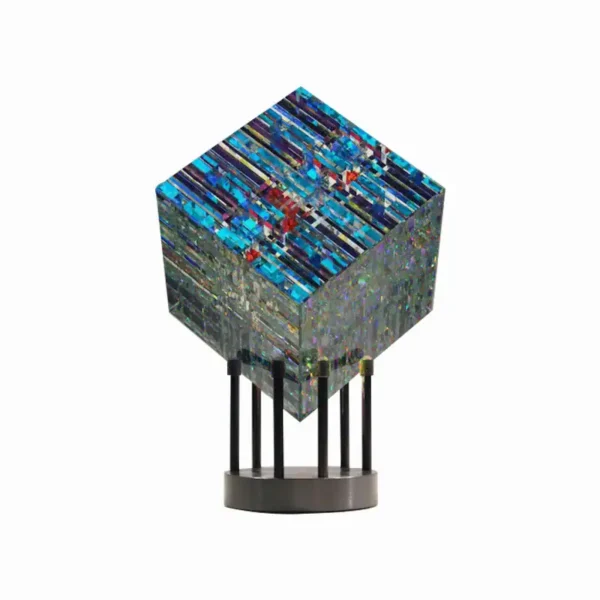
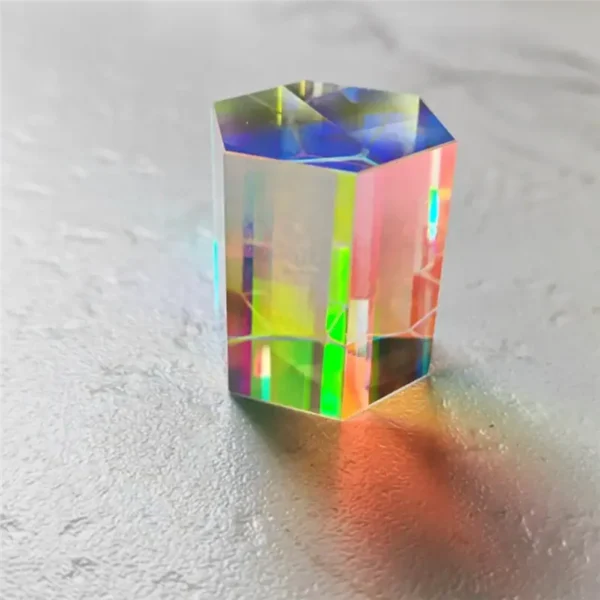

Outside of laboratories, the prism also takes its place as a decorative object. On a desk or shelf, it captures natural light and creates soothing color plays. Some use it as an object for meditation, while others use it as a modern design element.
Comparison Table: Optical Prism vs Other Optical Instruments
| Instrument | Principle | Main Uses | Average Price |
|---|---|---|---|
| Optical Prism | Refraction and dispersion | Experiments, photography, decor, education | $10–40 |
| Lens | Convergence or divergence | Microscopes, glasses, cameras | $5–100 |
| Mirror | Reflection | Observation, decor, optics | $5–30 |
| Optical Filter | Selective absorption | Photography, glasses, research | $10–70 |
Practical Cases and Expert Advice
Select options
This product has multiple variants. The options may be chosen on the product page
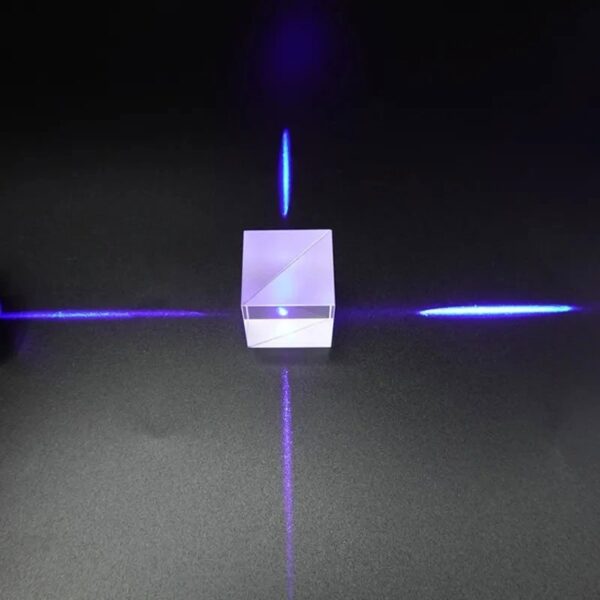
Cubic Optical Dispersion Prism
Price range: $32.99 through $203.99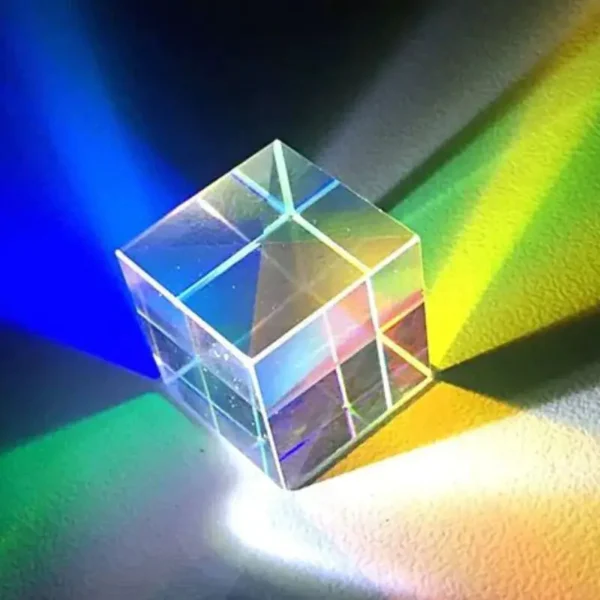
How to Choose an Optical Prism for Teaching?
For school use, prioritize a high-quality glass prism that will produce a clear light spectrum. For workshops with young children, a plastic prism is preferable: it is more resistant to falls and less dangerous.
Using a Prism for Home Experiments
Here are some simple and fun ideas:
- Place a prism in front of a flashlight to observe a mini rainbow.
- Project indirect sunlight onto a white wall for a spectacular effect.
- Experiment with different angles to see how the spectrum evolves.
This is a great activity to awaken children’s scientific curiosity.
Photographing with a Prism
Photographers often use a prism to add creative effects to their shots. By placing the prism in front of the lens, you can create reflections, duplicates of images, or artificial rainbows. It’s a simple way to give an artistic touch to your photos, without editing software.
Mistakes to Avoid with an Optical Prism
Using an Inappropriate Light Source
Insufficient or colored lighting will not yield a clear spectrum. Favor intense white light to fully enjoy the experience.
Confusing Prism and Lens
An optical prism decomposes light, while a lens concentrates or diverges it. These are two different objects, often confused by beginners.
Exposing a Low-Quality Prism to the Sun
A low-end prism may contain impurities that distort the spectrum. Furthermore, when placed in direct sunlight, it can concentrate rays and present a burn risk on certain surfaces. Use it with caution.
FAQ: Answers to Frequently Asked Questions
Why Do We See a Rainbow with a Prism?
Because the prism separates white light into several colors. It is exactly the same phenomenon as in a natural rainbow.
What Type of Prism to Choose for School Use?
A plastic prism is ideal for young children, while a glass prism offers better quality for more advanced physics classes.
Can a Prism Replace a Spectroscope?
No. The prism is ideal for introduction and visual experiments, but the spectroscope is more precise and used in scientific research.
Where to Buy a Quality Optical Prism?
You can find them in specialized scientific object shops, in educational stores, or online, on sites dedicated to curious and science enthusiasts.
Conclusion
The optical prism is much more than just a simple piece of triangular glass. It is a fascinating scientific tool, a unique decorative object, and an accessible educational support for everyone. Whether for playing with light, captivating students, beautifying photos, or simply decorating a desk, it has multiple applications. By using it correctly and avoiding common mistakes, anyone can enjoy the beauty and secrets of light.