Free Shipping on Orders Over $50

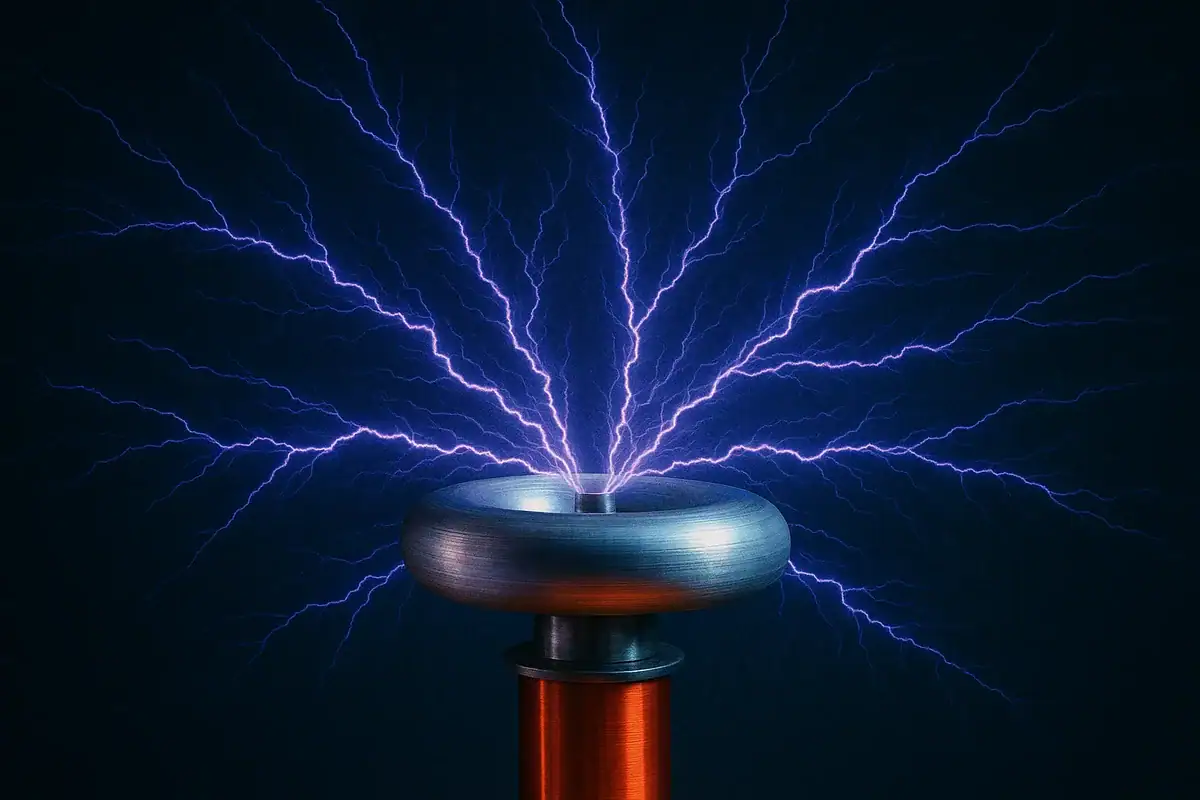
The Tesla coil, a flagship invention of Nikola Tesla at the end of the 19th century, is a device capable of generating extremely high voltages and spectacular electrical arcs. From its inception, it has marked the history of science through its role in popularizing electricity and researching waves. Even today, it continues to captivate, between scientific heritage and modern curiosity.
Contenus
afficher
In this article, we will explain what a Tesla coil is, detail its operation, its applications, its advantages and limitations, while highlighting its dangers and the precautions to be taken. We will conclude with practical cases, common mistakes to avoid, as well as a FAQ to answer the most frequent questions.
What is a Tesla coil?
Select options
This product has multiple variants. The options may be chosen on the product page
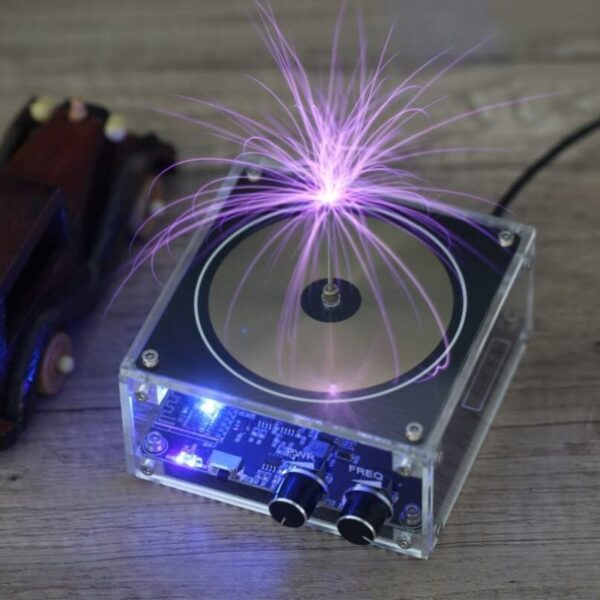
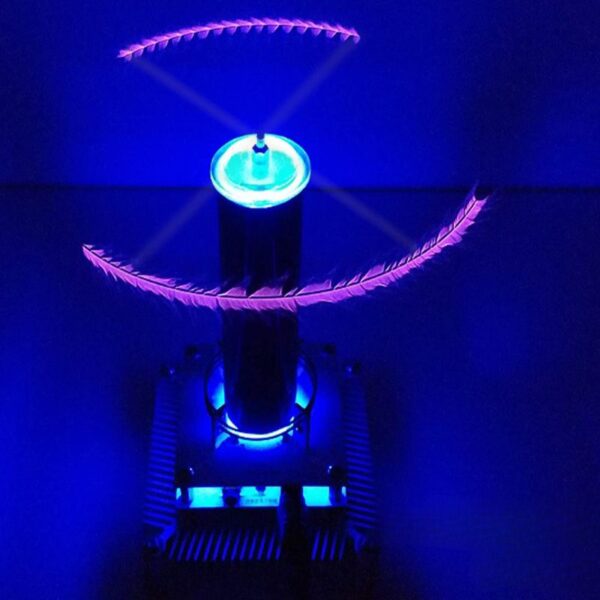
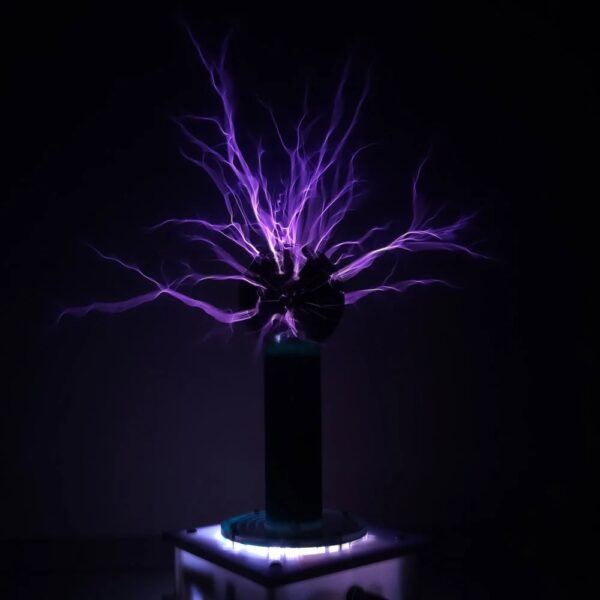
Miniature Tesla Coil
$114.99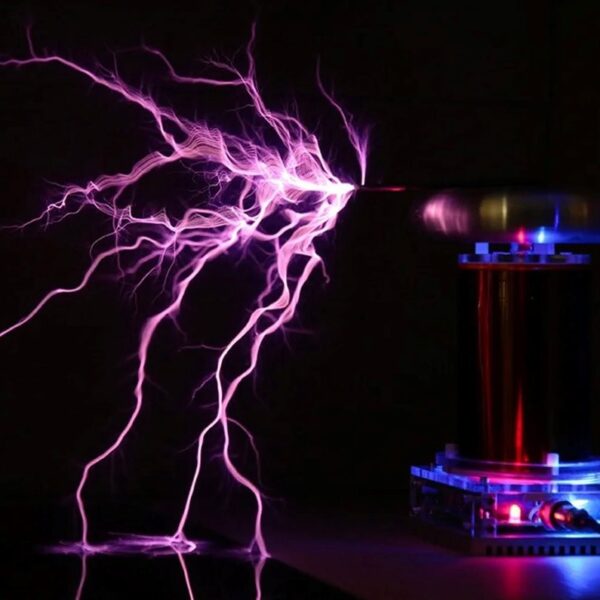
Definition and historical origin
A Tesla coil is an electrical device invented at the end of the 19th century by Serbian-American engineer Nikola Tesla. It is a resonant transformer, meaning it is a system capable of significantly increasing electrical voltage by exploiting the phenomenon of resonance between two coupled circuits. Thanks to this property, a relatively low power supply can be transformed into voltages of several hundred thousand volts, producing spectacular electrical discharges visible to the naked eye.
Designed in 1891, the Tesla coil had a dual purpose: to explore wireless energy transmission and to visually demonstrate the power of electromagnetic fields. At a time when electricity was still mysterious to the general public, this device helped make science both understandable and fascinating.
Nikola Tesla and the invention of the coil
Nikola Tesla, an iconic figure in the history of science, saw in his coil a tool to realize his dream: to power the world wirelessly. By manipulating high voltages and radio waves, he laid the groundwork for many modern technologies, from radio to wireless telecommunications. His public demonstrations, where large blue and violet lightning bolts erupted from his devices, contributed to his reputation as an “inventor-magician.”
Although his projects for large-scale energy transmission (like the famous Wardenclyffe Tower) never came to fruition, the Tesla coil remains one of the major symbols of his visionary creativity and lasting influence on modern science.
Why has this device become iconic?
The Tesla coil has established itself as a mythical device for several reasons:
- A unique visual effect: its giant electrical arcs, bright discharges, and rumbling sounds impress both experts and spectators.
- A scientific legacy: it embodies pioneering research on electromagnetic waves and energy transmission.
- A cultural object: beyond laboratories, the Tesla coil has become a recurring element in popular culture, appearing in films, concerts, video games, and exhibitions.
- An educational tool: used in museums and universities, it spectacularly illustrates complex concepts like resonance or air ionization.
Even today, the Tesla coil symbolizes the blend of science, innovation, and spectacle. It inspires both engineers and artists and remains a living tribute to Nikola Tesla’s inventive genius.
How does a Tesla coil work?
The main components: capacitor, primary coil, secondary coil
The operation of a Tesla coil relies on a sequence of specific components that interact with each other:
- The capacitor: it acts as an energy reservoir. By accumulating electric charges and then releasing them suddenly, it creates rapid and powerful electric oscillations.
- The primary coil: wound around a few thick copper turns, it receives energy from the capacitor and transforms it into a variable magnetic field.
- The secondary coil: composed of hundreds or even thousands of very fine turns, it captures this magnetic field and amplifies the voltage through the phenomenon of electromagnetic induction.
In summary, the Tesla coil operates as a dual resonant system: a low-voltage primary circuit providing power to a very high-voltage secondary circuit.
The principle of electrical resonance
The key to the device is resonance. When the primary circuit (capacitor + primary coil) and the secondary circuit (secondary coil) oscillate at the same frequency, the energy transfer is maximized. This phenomenon, similar to the resonance of a guitar string or a glass vibrating under a specific sound, allows achieving colossal voltages with a relatively modest initial power supply.
In a medium-sized Tesla coil, one can thus achieve discharges exceeding 100,000 volts. The largest coils, called “magnifiers,” can generate sparks several meters long.
The generation of high voltages and electric arcs
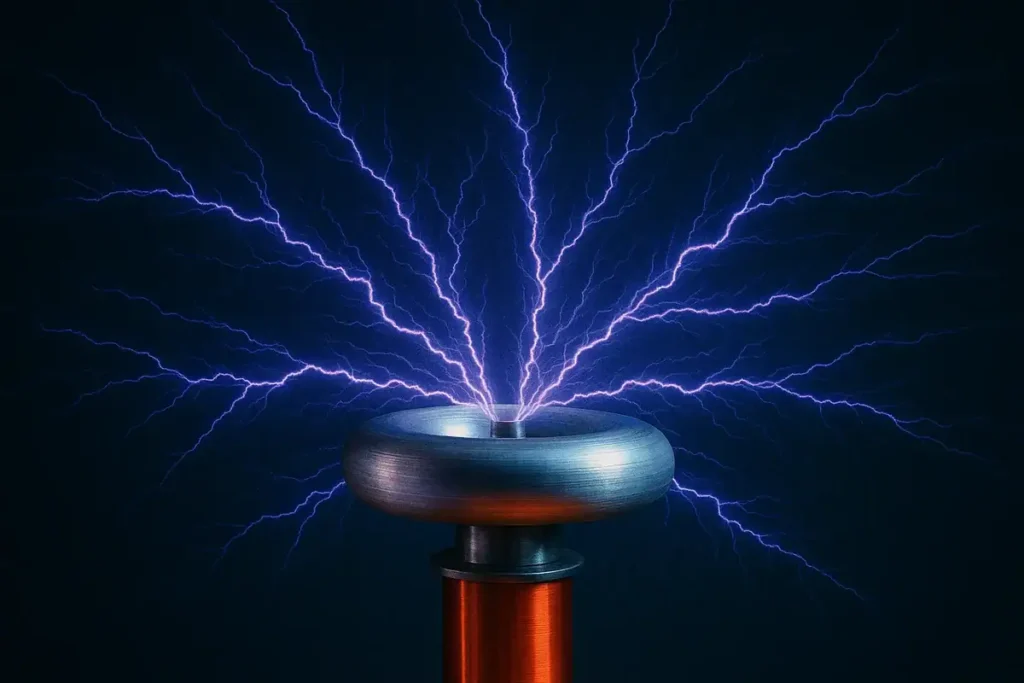
Once resonance is achieved, the secondary coil accumulates energy such that the surrounding air becomes conductive. This phenomenon, called ionization, enables the creation of spectacular purple and blue electric arcs. These arcs are not just aesthetic: they reflect the coil’s ability to exceed the dielectric breakdown of air, in other words, to force air to conduct electricity.
In addition to the visible arcs, the Tesla coil also emits a powerful electromagnetic field that can ignite fluorescent lamps from a distance or disrupt electronic devices placed nearby.
Comparison with a standard transformer
The Tesla coil is sometimes referred to as a “resonant transformer,” but it differs significantly from a traditional industrial transformer:
| Characteristic | Standard Transformer | Tesla Coil |
|---|---|---|
| Main Purpose | Convert voltage in a stable and controlled manner | Produce very high unstable voltages for experiments and demonstrations |
| Voltage Type | Alternating current at low or medium frequency (50/60 Hz) | Extremely high voltages, often at high frequency (kHz to MHz) |
| Voltage Level Generated | From a few volts to several hundred thousand volts (usable) | Up to several million volts, but unstable and not industrially usable |
| Output Current | Stable, suitable for powering devices | Very low current, unable to directly power equipment |
| Applications | Power grids, device power supply, electronics | Educational demonstrations, science shows, experimental research |
| Operating Principle | Simple electromagnetic induction between two coils | Induction + electrical resonance between two tuned circuits |
| Visible Effects | No notable visual effect | Electric arcs, blue/purple lightning, remote lamp ignition |
| Safety | Relatively safe with industrial protections and standards | Very dangerous without precautions: electrocution risk, burns, interference |
| Modern Use | Essential to electricity distribution worldwide | Use limited to education, science communication, and visual art |
| Cost and Accessibility | Standardized products, cost varies depending on power rating | Niche device, often custom-built or sold as kits |
In other words, where a transformer is a reliable industrial tool, the Tesla coil remains primarily an experimental and demonstrative machine.
Applications and uses of a Tesla coil
Tesla coils have been used for over a century to captivate and amaze the public. In museums, universities, or science festivals, they serve as educational tools by making normally invisible electrical phenomena visible. Their spectacular aspect makes them a unique tool for popularization.
Beyond their educational role, they have also had a major historical impact: long before Marconi, Tesla was already using them to test wireless energy transmission. These experiments contributed to the birth of radio and the understanding of electromagnetic waves.
Today, their use has expanded. They can be found in artistic performances (electronic concerts, light shows) and in educational laboratories where they continue to illustrate the laws of electricity. There are also miniature versions accessible to the general public. Sold for between €50 and €200, these compact Tesla coils can produce small electric arcs (2 to 4 inches), ignite fluorescent tubes from a distance, and serve as unusual decorative objects or scientific gadgets. They appeal to both physics enthusiasts and the curious, but they remain high voltage devices requiring caution and supervision.
On the other hand, they have no modern industrial applications. Too unstable and dangerous to be used in engineering, Tesla coils are now limited to demonstration, teaching, and scientific culture.
Advantages and limitations of the Tesla coil
Advantages:
- Impressive visual and pedagogical effect.
- Essential historical tool for understanding electricity.
- Facilitates scientific popularization.
Limitations:
- Few practical modern applications.
- High risk if mishandled.
- Unstable and inefficient production for industrial uses.
Risks and safety precautions
Handling a Tesla coil is not trivial:
- Electrocution: even at low intensity, the arcs can cause serious injuries.
- Burns: the discharges ionize the air and heat locally.
- Interference: they can disrupt electronic devices.
It is essential to maintain a safe distance, use protective devices (Faraday cage, insulating gloves), and never handle without expert supervision.
Practical cases and expert advice
Some concrete examples:
- School demonstration: use a mini Tesla coil to show light arcs and air ionization.
- Artistic experiment: integrate a Tesla coil into a concert or light installation.
- Expert advice: prefer smaller models for educational use, and always secure the perimeter.
Mistakes to avoid with a Tesla coil
- Confusing Tesla coil with industrial transformer.
- Underestimating the risks associated with electric arcs.
- Attempting to build a coil without solid knowledge of electronics.
FAQ about Tesla coils
Can a Tesla coil kill?
Yes, if it is high-powered. Even if the intensity is often low, the danger of electrocution and burns remains very real. (this is not the case for small Tesla coils sold to the general public)
Can one make one oneself?
Yes, there are now small Tesla coil kits readily available online or in our store. They are designed to be used in an educational and playful context, for example, to show teenagers the principles of electromagnetism or ignite a fluorescent tube from a distance. They do not pose a vital danger, but it is still advisable to handle them with care: avoid touching the arcs directly, keep sensitive electronic objects away, and use the device under adult supervision.
What is the difference between a Tesla coil and a Van de Graaff generator?
The Van de Graaff generator produces electrostatic charges, while the Tesla coil relies on electrical resonance. The former is safer, the latter more spectacular.
Why do we see purple/blue arcs?
These colors are due to the ionization of air: nitrogen and oxygen emit blue/violet light when excited by high voltage.
Is it legal to use a Tesla coil at home?
Yes, but under certain conditions. It must not cause electromagnetic disturbances or endanger others. In some countries, a declaration may be necessary.
Conclusion
The Tesla coil embodies both the genius of Nikola Tesla, a spectacular tool for popularization, and a reminder of the beginnings of electrical research. Although it no longer has direct industrial applications, it remains a fascinating educational and artistic object. However, its use must be strictly secured so that science remains a source of wonder without danger.