Free Shipping on Orders Over $50

Definition and Origin of Perpetual Motion
Contenus
afficher
The concept of perpetual motion refers to the idea of a mechanism that, once set in motion, would continue to operate indefinitely without requiring external energy input. Historically, this notion has fascinated many inventors and scientists who sought to challenge the laws of thermodynamics. However, perpetual motion remains to this day a scientific myth, as it directly contradicts these fundamental laws.
The origin of the quest for perpetual motion dates back to antiquity, where early philosophers and scholars questioned the possibility of eternal motion. Over the centuries, this idea has evolved and become more complex, accompanying advancements in science and generating both interest and skepticism. Despite this, no device has ever been scientifically validated as a true perpetual motion machine.
Types of Perpetual Motions
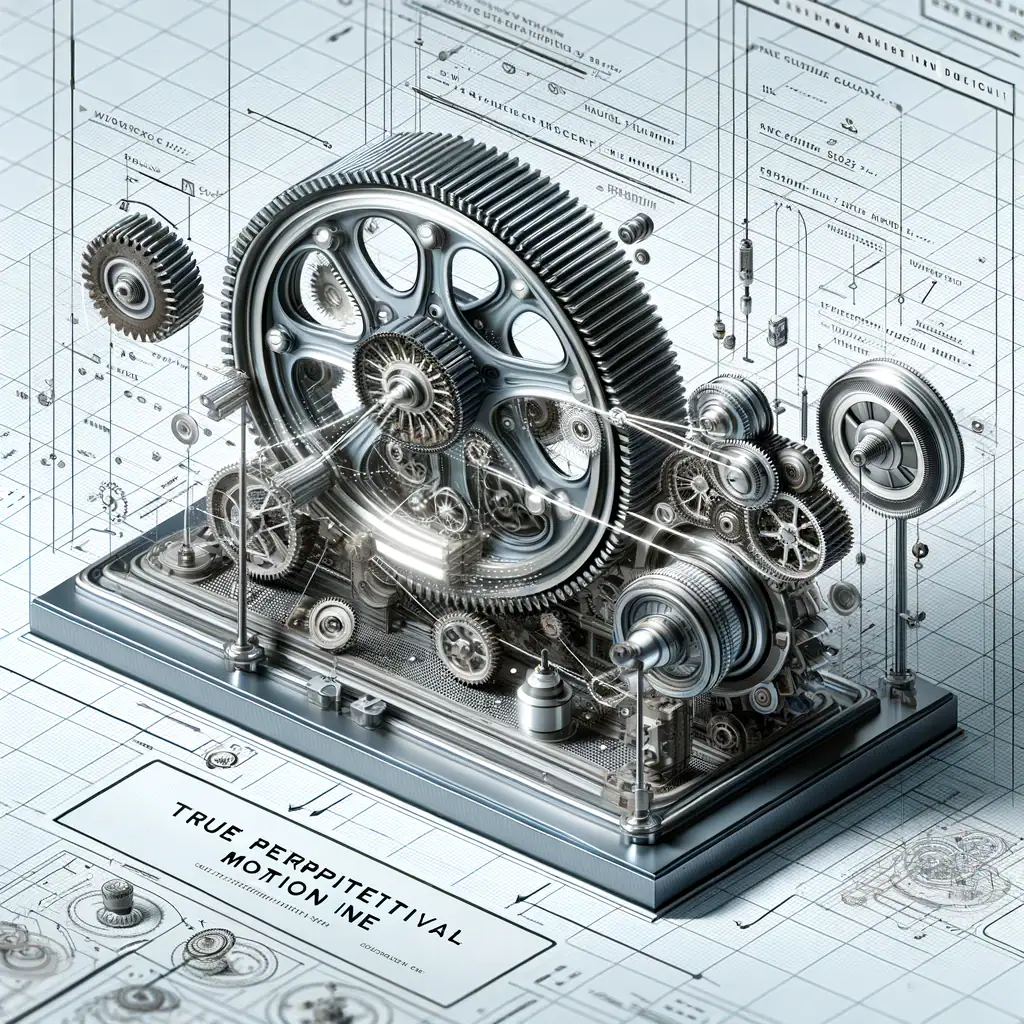
There are several categories of perpetual motion theorized over time. First kind machines claim to operate without any energy loss, which violates the first principle of thermodynamics. Second kind machines, on the other hand, claim to violate the second principle of thermodynamics by generating work without heat input. Finally, third kind machines would supposedly be able to operate indefinitely without friction or resistance, a scenario that is also impossible according to current knowledge.
Each of these types represents a challenge to known physical laws, and none have been realized. Despite the scientific impossibility, the attraction to these concepts persists, feeding the collective imagination and stimulating creative research in fields as diverse as renewable energy or quantum mechanics.
The Laws of Physics and Perpetual Motion
The laws of physics, particularly those of thermodynamics, set clear limits on the realization of perpetual motion. The first principle, which states the conservation of energy, prohibits a system from producing more energy than it receives. Similarly, the second principle, which deals with entropy, implies that no system can convert all thermal energy into mechanical work entirely.
These laws are fundamental to understanding why perpetual motion remains in the realm of utopia. Although modern science has made great strides in understanding energy phenomena, it has also reinforced the conviction that perpetual motion is an impossibility. Thus, any device claiming to achieve such a state is considered, until proven otherwise, as an attempt to defy the basic principles of physics.
Historical Attempts to Create Perpetual Motion Machines

Select options
This product has multiple variants. The options may be chosen on the product page
Premium Newton’s Cradle
Price range: $34.99 through $80.99
Giant Newton’s Cradle
$206.99
Newton’s Cradle Stick
$160.99
Medieval Inventions and Perpetual Motion
In the Middle Ages, the idea of creating a perpetual motion machine captured the imagination of many inventors. Designs and models of varying complexities were proposed, often based on configurations of wheels, unbalanced weights, or hydraulic mechanisms. However, none of these devices ever demonstrated perpetual functionality, as each inevitably encountered the limits imposed by physical laws.
These medieval inventions, although doomed to fail, played an important role in the history of science. Their study contributed to a better understanding of mechanical principles and highlighted the need for a rigorous and scientific approach in the search for technological innovation.
The Industrial Era and Perpetual Motion
With the advent of the industrial age, interest in perpetual motion experienced a resurgence. Inventors such as Johann Bessler, known as Orffyreus, claimed to have created machines capable of perpetual motion, sparking curiosity and controversy. Although some of these inventions seemed promising, none withstood careful scrutiny and repeated experiments, ultimately demonstrating their inability to provide truly perpetual motion.
This period was marked by a profusion of ideas and prototypes, each seeking to transcend energy constraints. However, the growing understanding of thermodynamic laws gradually dismissed the possibility of such a realization, steering research towards more realistic and sustainable energy sources.
Contemporary Scientific Theories and Perpetual Motion
In the 20th century and beyond, advancements in theoretical physics have given rise to new perspectives on motion and energy. Quantum physics, in particular, with its perplexing particles and subatomic phenomena, has opened up a vast field of exploration. Nevertheless, even within this framework, the principles of uncertainty and quantum decoherence prevent the emergence of perpetual motion as it is traditionally conceived.
Contemporary theories, while acknowledging the practical impossibility of perpetual motion, have nevertheless deepened our understanding of the universe. They have also inspired technological innovations such as nuclear fusion reactors or systems utilizing renewable energy, which aim to optimize energy use rather than challenge its limits.
The Impact of Perpetual Motion on Science and Society
The Energy Implications of Perpetual Motion
The idea of perpetual motion has always been associated with the search for an unlimited and clean energy source. In a world facing energy and environmental issues, this quest resonates particularly. Although the realization of perpetual motion is scientifically unfounded, the interest it generates reflects the importance of seeking alternative and sustainable energy solutions.
Research in fields such as solar, wind, or tidal energy, although fundamentally different from perpetual motion, carries the same aspiration to reduce our dependence on fossil fuels and minimize the environmental impact of our energy consumption. Thus, the myth of perpetual motion continues to inspire advancements beneficial to society.
Perpetual Motion and Quantum Theory
Quantum physics, with its exotic and counterintuitive phenomena, offers a new way to think about energy and motion. Although some aspects of quantum mechanics may evoke ‘perpetual’ characteristics, such as the apparently incessant movement of electrons around the atomic nucleus, this does not constitute perpetual motion in the classical sense. The laws of thermodynamics remain valid even at the quantum level.
However, the study of quantum systems has led to the development of revolutionary technologies such as quantum computers and secure communications based on quantum entanglement. These advancements are part of a continuous technological progress approach, influenced by human curiosity and the desire to push the boundaries of knowledge, including those related to motion and energy.
Perpetual Motion in Popular Culture
Perpetual motion has also found its place in popular culture, where it fuels the imagination of science fiction writers, filmmakers, and artists. It is often used as a metaphor or narrative element to explore themes such as energy autonomy, human ingenuity, or the consequences of bold scientific manipulations.
From literature to movies to video games, perpetual motion continues to fascinate and inspire. It serves as a catalyst for the creation of stories that, while fictional, prompt reflection on the real issues of our time. Thus, well beyond its status as a scientific chimera, perpetual motion remains a powerful engine for human creativity.