Free Shipping on Orders Over $50

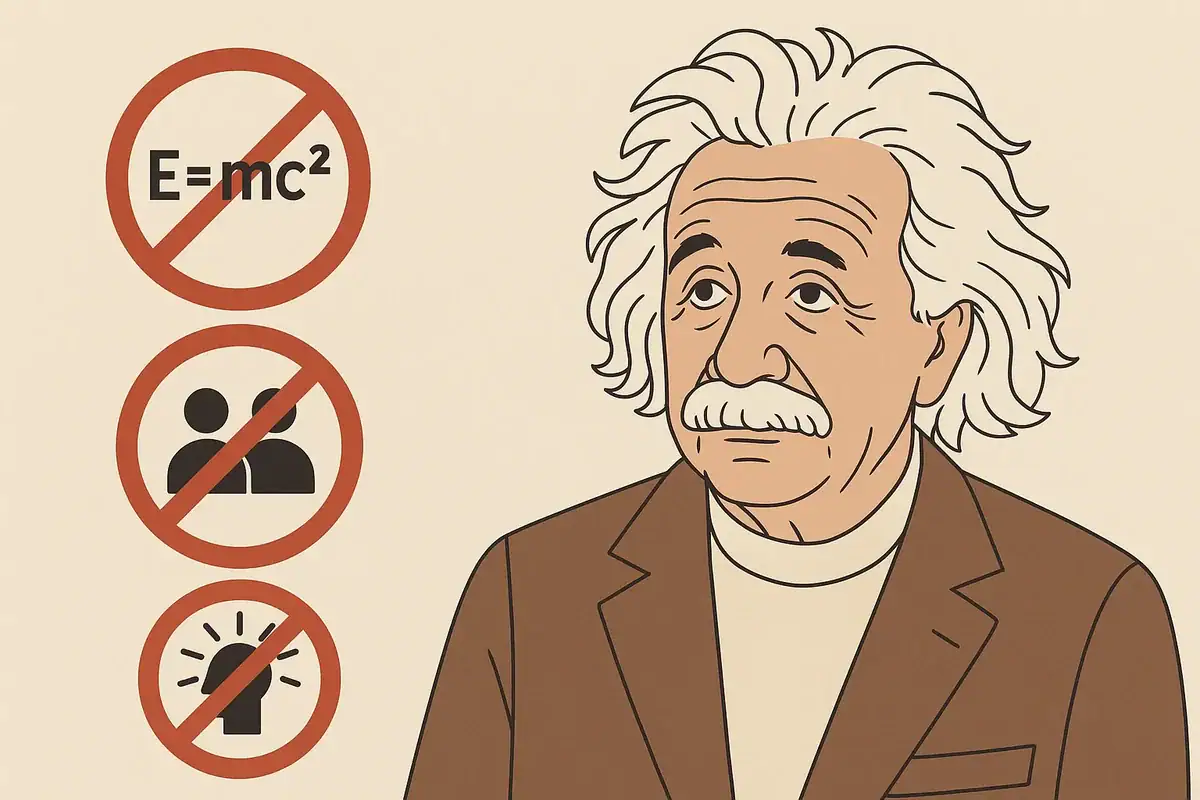
Albert Einstein became famous mainly due to his revolutionary discoveries in physics, particularly the theory of relativity which changed our understanding of space and time. But his influence goes beyond science: his personality, commitments, and historical context helped make him a true global icon. Let’s explore in detail why his name is synonymous with genius today.
Contenus
afficher
Einstein’s Beginnings: An Unconventional Journey
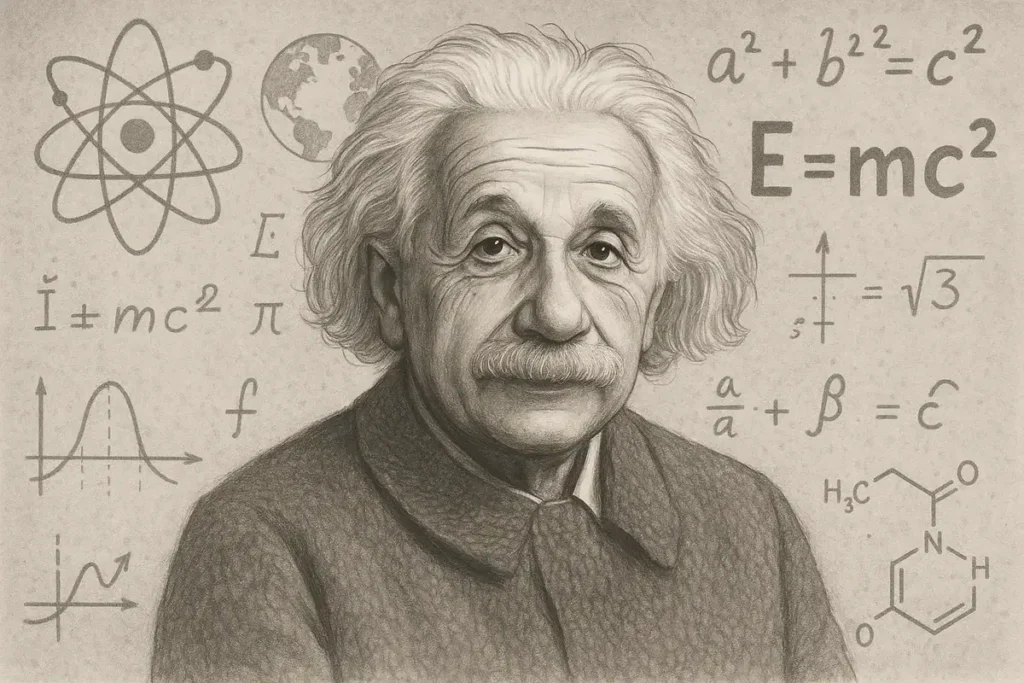
Childhood and Early Academic Struggles
Contrary to popular belief, Einstein was not a “bad student.” He already displayed a curious and independent mind, but his rebellious nature made him incompatible with the rigidity of German schools at the time. His interest in science emerged early, despite some delays in language learning.
Studies and Passion for Physics
After a complicated start in school, Einstein continued his studies in Switzerland at the Polytechnic Institute of Zurich. It was there that he developed his passion for theoretical physics and began to question the laws established by Newton and Maxwell.
Position at the Bern Patent Office
Not immediately finding a university position, Einstein became an examiner at the patent office. Paradoxically, it was in this job, far from academic research, that he published in 1905, his “miraculous year,” several scientific papers that would mark history.
The Scientific Discoveries That Made Him Famous
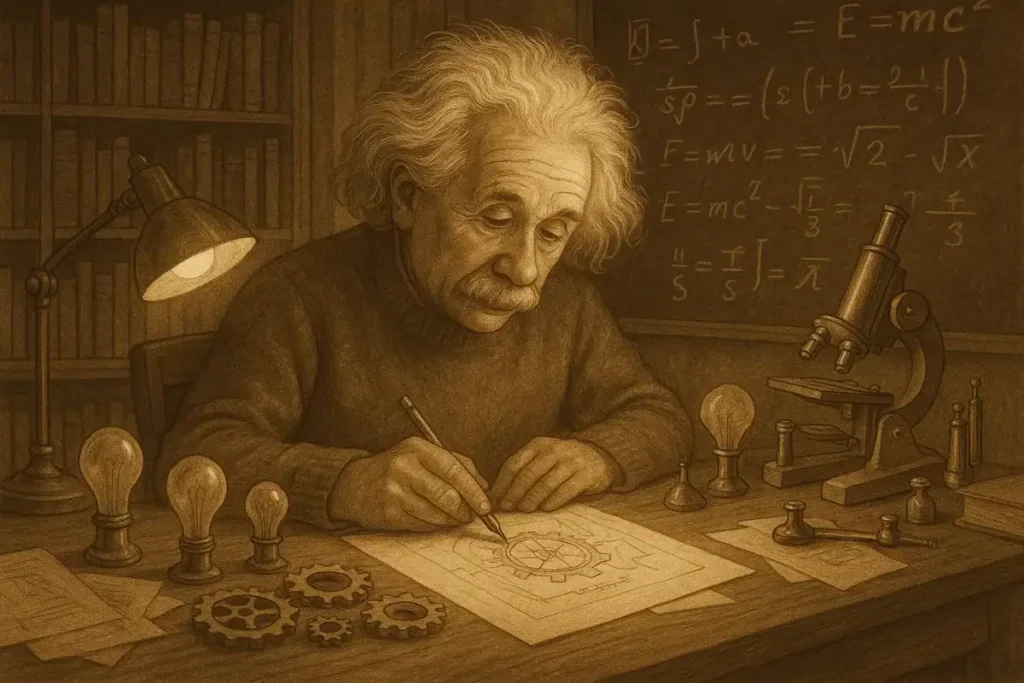
Special Theory of Relativity (1905)
Einstein revolutionized physics by asserting that space and time are relative and depend on the speed of the observer. A radical idea that calls into question the classical view inherited from Newton.
The Equation E = mc² and Its Impact
This equation, which has become a universal symbol of scientific genius, establishes the equivalence between mass and energy. It would later be crucial in the development of nuclear energy.
General Theory of Relativity (1915)
Einstein expanded his thinking and demonstrated that gravity is not a force, but a curvature of space-time. This theory would be confirmed by astronomical observations and forever change cosmology.
Confirmation by Eddington’s Experiment in 1919
During a solar eclipse, astronomer Arthur Eddington confirmed Einstein’s predictions. This historic moment propelled Einstein to the status of global celebrity and opened the doors to international media.
A Scientist Publicized on a Global Scale


Newton’s Cradle Stick
$160.99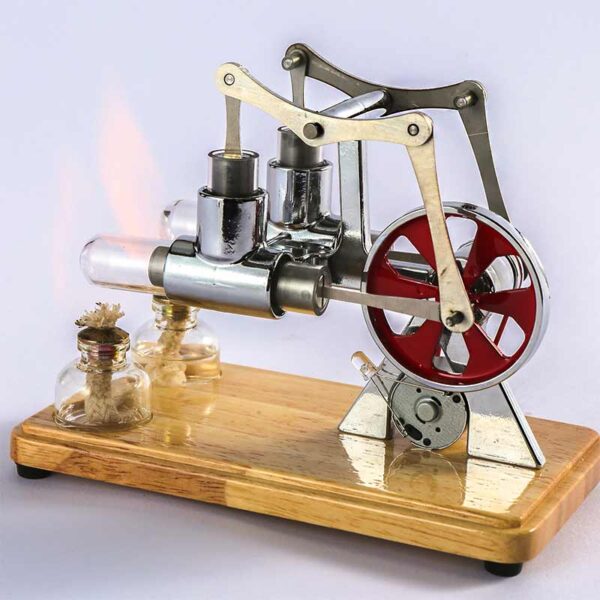
Select options
This product has multiple variants. The options may be chosen on the product page
Stirling Engine Wood
$91.99Why the 1919 Eclipse Marked a Turning Point
Eddington’s results were not only a scientific validation but also a media event. Newspapers reported that “Newton’s laws are collapsing,” and Einstein became a household name.
The Press and the Construction of the Einstein Myth
The media helped shape the image of Einstein: a distracted genius with messy hair, yet capable of unraveling the mysteries of the universe. This image persists to this day.
A Face and Personality Easily Recognizable
His humor, charisma, and unconventional style contributed to his fame. The famous photo of him sticking out his tongue symbolizes his free and nonconformist spirit.
His Commitments Outside of Science
Einstein was not just a scientist confined to his equations. He expressed his views on numerous issues: pacifism, civil rights, Zionism, critique of Nazism. His social and political influence enhanced his renown.
Comparative Chart: Einstein vs. Other Great Scientists of His Time
| Scientist | Main Field | Major Contribution | Media Impact |
|---|---|---|---|
| Albert Einstein | Theoretical physics | Relativity | Very high |
| Marie Curie | Physics & Chemistry | Radioactivity | High |
| Niels Bohr | Atomic physics | Atomic model | Moderate |
| Isaac Newton | Physics & Mathematics | Laws of gravitation | Less publicized (17th century) |
Practical Cases: How His Discoveries Impact Our Daily Lives
GPS and Relativity
The GPS system would not work without relativity, as satellite clocks must be corrected to account for the effects of gravity and speed.
Nuclear Energy
The equation E = mc² is fundamental to the development of nuclear energy, whether for electricity generation or atomic weapons.
Modern Technologies Inspired by His Work
Numerous applications in astrophysics, telecommunications, and space exploration rely on his theories, confirming that his discoveries are not just theoretical but practical and useful in everyday life.
Mistakes to Avoid When Discussing His Fame
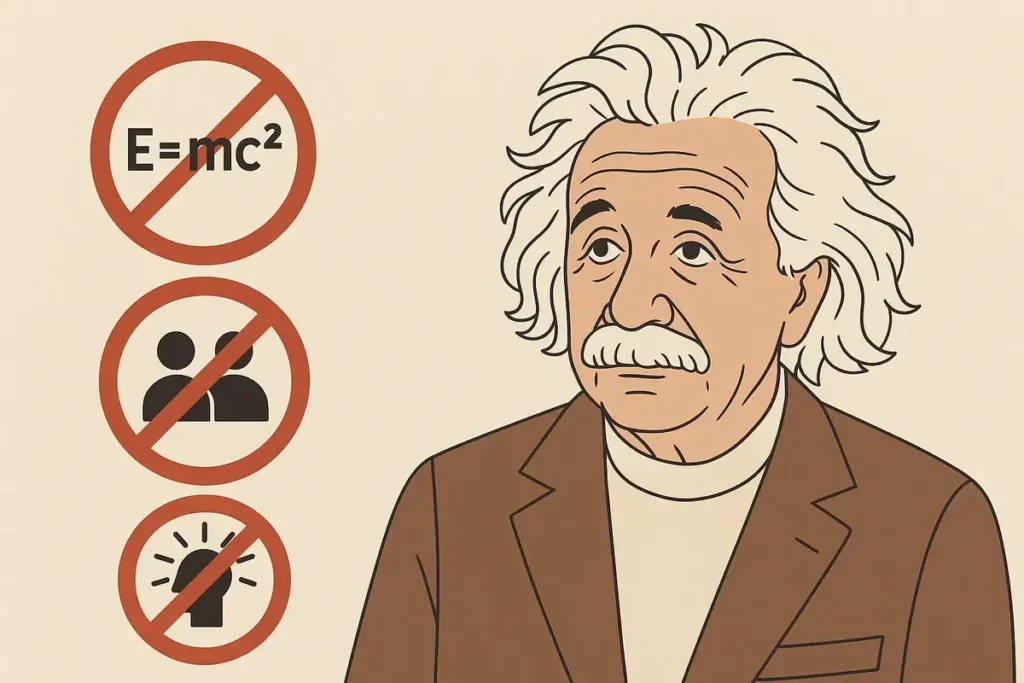
Reducing Einstein Solely to E = mc²
His fame is not limited to a single equation. It is the entirety of his work and its experimental validation that built his reputation.
Forgetting His Social and Political Role
Einstein was not a scientist isolated from the world: his positions had a considerable impact on public opinion.
Confusing Science with Popular Myths
Often, quotes or discoveries that are not his are attributed to Einstein. It is essential to distinguish real scientific contributions from the legends that surround his figure.
FAQ: Answers to Frequently Asked Questions
Did Einstein win the Nobel Prize for relativity?
No. He won the Nobel Prize in 1921 for his work on the photoelectric effect, a discovery that paved the way for modern electronics.
Was he a good student in school?
Contrary to the myth, Einstein was an excellent student in math and science. He simply struggled with authority and subjects that did not interest him.
Why has his image become iconic?
His appearance, messy hair, humor, and intellectual independence have marked the collective imagination. Einstein has become a universal figure of genius.
Conclusion
Albert Einstein became famous for his theories that transformed physics, but also because he embodied an era, a spirit, and an attitude towards the world. His notoriety stems as much from his discoveries as from his role as an engaged intellectual. Even today, his name remains synonymous with creativity, curiosity, and scientific genius.