Free Shipping on Orders Over $50
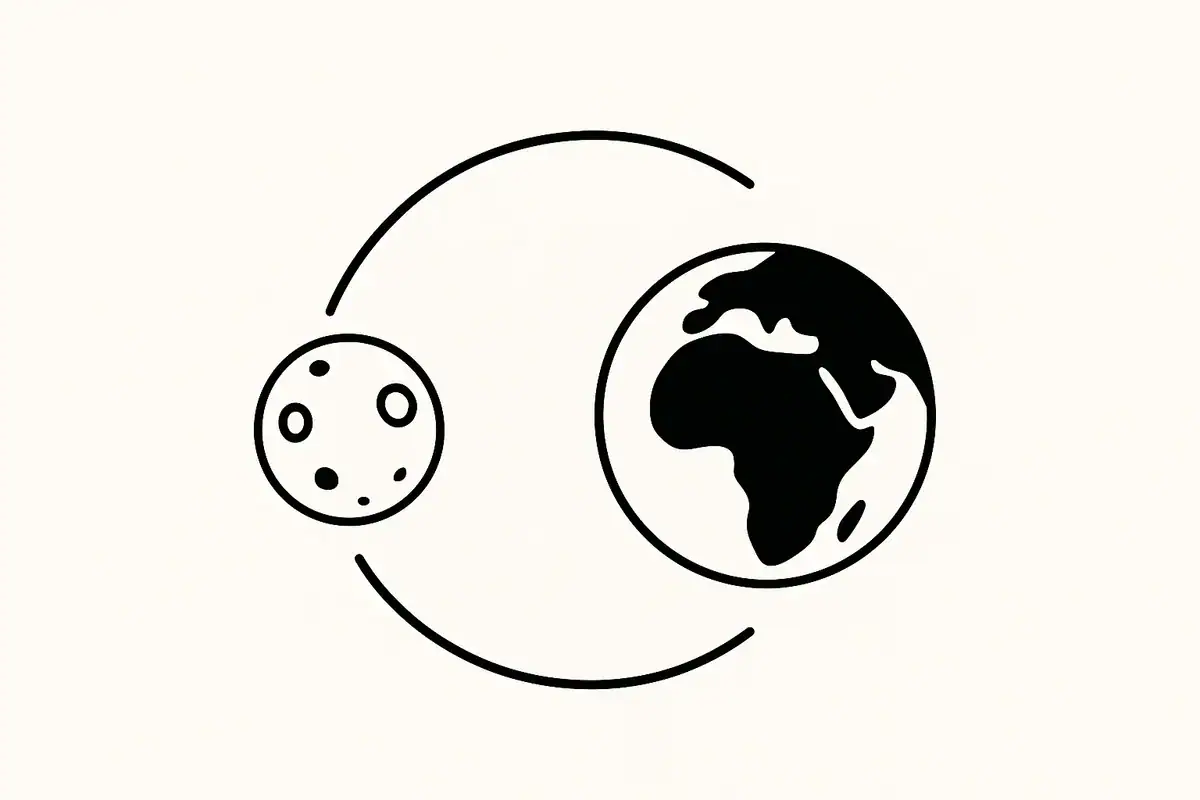
No, the Moon is not a planet: it is a natural satellite of Earth. However, its impressive size, topography, and daily influence (tides, calendar, sky observation) often lead to confusion. In this comprehensive guide, we will clarify its astronomical status, compare it to the planets, trace its origin, and answer the most frequently asked questions from the curious.
Contenus
afficher
Definition and Astronomical Status of the Moon
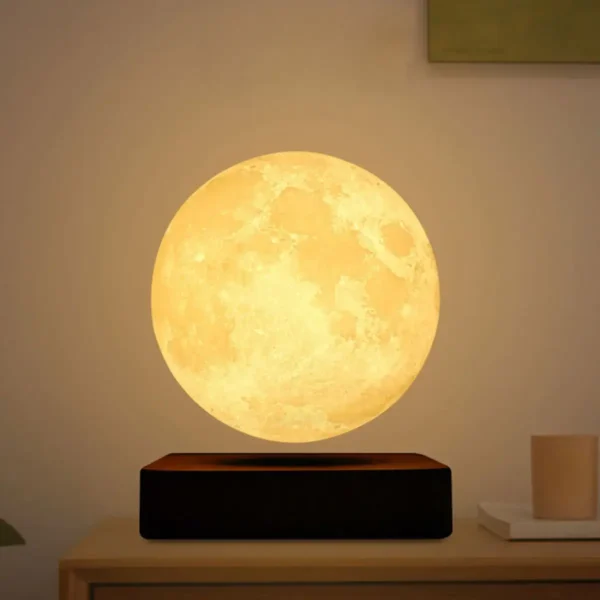
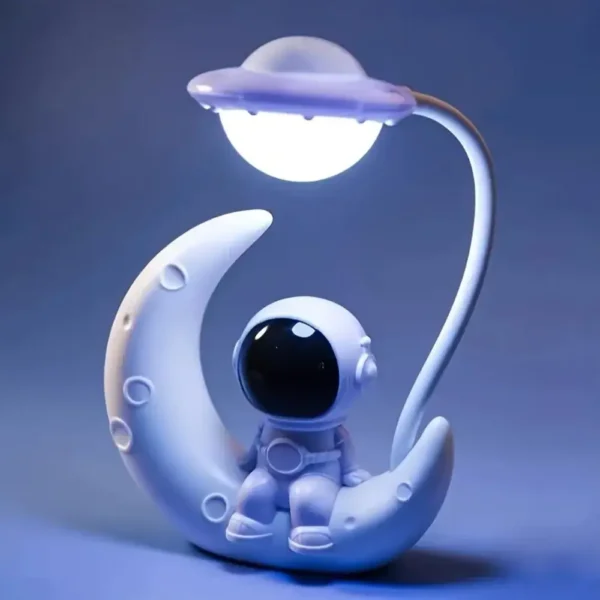
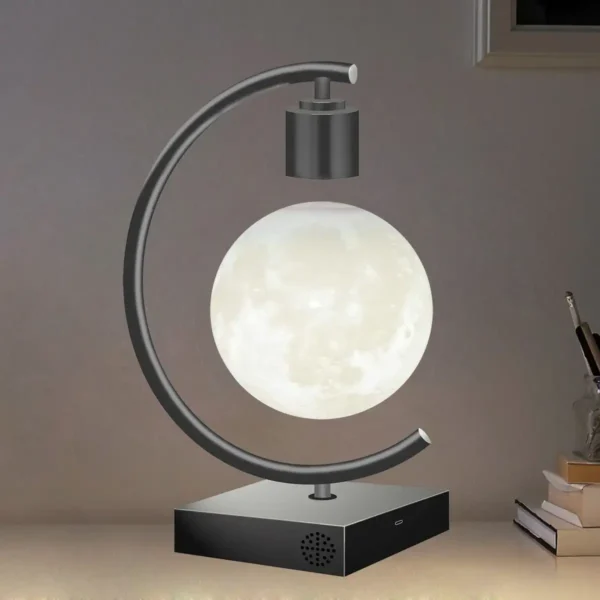
3D Magnetic Moon Lamp
$303.99
Select options
This product has multiple variants. The options may be chosen on the product page
Magnetic Moon Lamp Warm LED
$121.99What is a Natural Satellite?
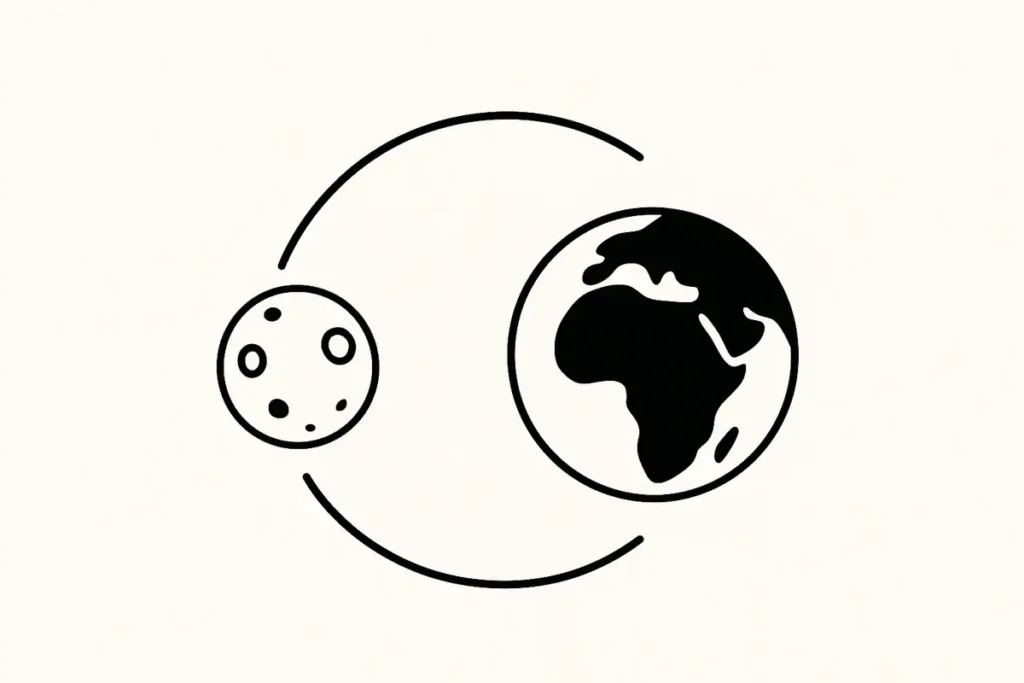
A natural satellite is a celestial body that orbits around a planet. It does not generate its own light but reflects that of a star. The Moon is therefore gravitationally bound to Earth, unlike the planets that orbit directly around the Sun.
Why the Moon is Classified as a Satellite and Not as a Planet
The Moon does not meet the criteria defining a planet: it does not orbit directly around the Sun, but around Earth. Its role is therefore different. Despite its impressive size (a quarter of Earth’s diameter), it remains a satellite.
The Difference Between a Planet, Moon, and Asteroid
A planet is a celestial body orbiting a star, sufficiently massive to be spherical and having cleared its orbit. A moon is a satellite of a planet, while an asteroid is a small rocky body often irregular in shape, with no stable orbit around a planet.
Comparison Between the Moon and the Planets
At first glance, the Moon shares similarities with terrestrial planets: solid surface, craters, mountains, plains. However, it is distinguished by its lack of a dense atmosphere and its weaker gravity. Unlike Mars or Mercury, the Moon does not have a global magnetic field or active plate tectonics.
Unique Characteristics of the Moon
The Moon is not a planet, but it has fascinating properties:
- Synchronized rotation: it always shows the same face to Earth.
- Lunar phases: a cycle of 29.5 days that regulates our calendar.
- Gravitational influence: responsible for tides and stabilizing Earth’s axis.
Without the Moon, our planet would have a much more unstable climate and seasons.
Comparison Table: Moon vs Planets
| Characteristics | Moon | Planet (e.g., Earth) |
|---|---|---|
| Astronomical Status | Natural satellite | Planet |
| Diameter | 2,159 mi | 7,918 mi |
| Atmosphere | Nearly nonexistent | Dense (nitrogen, oxygen…) |
| Gravity | 1,62 m/s² | 9,8 m/s² |
| Orbit | Around Earth | Around the Sun |
Origin and History of the Moon
The dominant theory is that of a giant impact: about 4.5 billion years ago, a protoplanet is believed to have collided with Earth, ejecting debris that coalesced to form the Moon. Since then, its status has evolved in human knowledge: from ancient myths to modern space explorations, the Moon has always been at the heart of our inquiries.
Practical Cases and Educational Explanations
How can we simply explain that the Moon is not a planet? We can say: “The Earth orbits the Sun, and the Moon orbits the Earth”. Just as the planets have satellites, Earth has its own. Other planets like Jupiter or Saturn have dozens of moons, some larger than ours (like Ganymede or Titan).
Common Errors and Confusions
- Thinking that the Moon is a small planet: its size can be misleading.
- Equating the Moon with an asteroid: in reality, its structure is much more complex.
- Cultural misconceptions: some beliefs still consider the Moon as an independent or mysterious celestial body.
FAQ: Frequently Asked Questions
Could the Moon Become a Planet?
No, because it would always remain in orbit around Earth. Only a hypothetical ejection from its orbit could change its status, but this scenario is unrealistic.
What is the Difference Between the Moon and Pluto?
Pluto is a dwarf planet orbiting around the Sun, while the Moon is a satellite of Earth. Their astronomical status is therefore distinct.
Why Do We Say “Natural Satellite” When There is Nothing Artificial?
We distinguish natural satellites (like the Moon, Io, or Titan) from artificial satellites (created by humans, like space probes). The term helps avoid any confusion.
Are There Other Planets That Have Moons Bigger Than Ours?
Yes, Ganymede (Jupiter) and Titan (Saturn) are larger than the Moon. However, ours remains exceptional in size compared to Earth.
Feel free to explore our category of moon lamps.