Free Shipping on Orders Over $50

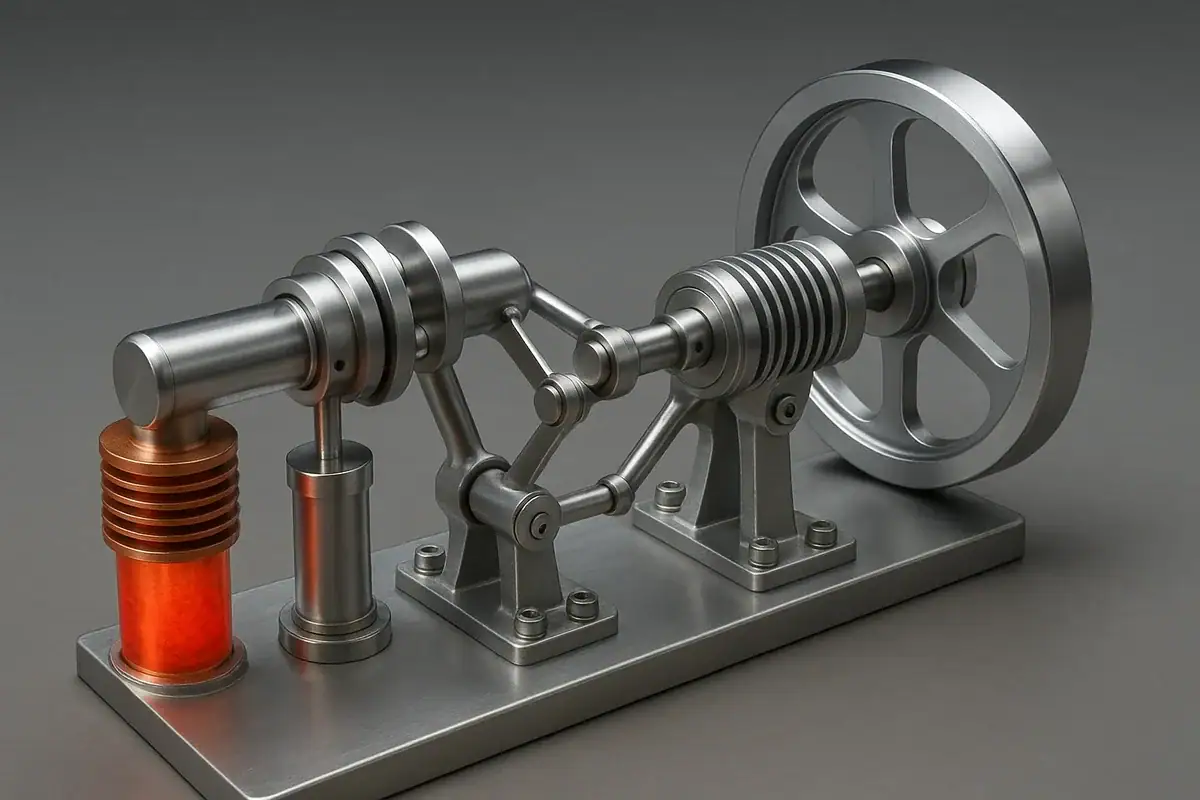
A Stirling engine is a thermal machine capable of converting heat into mechanical energy through a closed gas cycle. What makes it special? It works with almost any heat source, whether it is solar energy, biomass, or traditional combustion.
Contenus
afficher
In this article, we will explain how it works, discover its different types, its advantages and limitations, as well as its concrete applications and the errors to avoid to fully understand its potential.
What is a Stirling engine?
Select options
This product has multiple variants. The options may be chosen on the product page
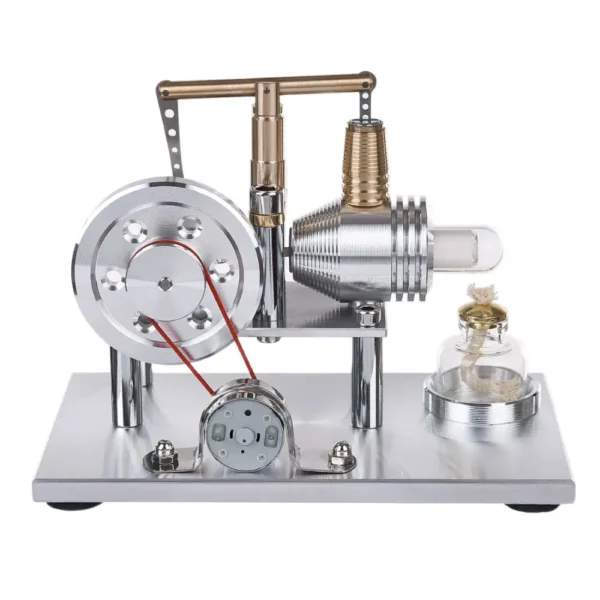
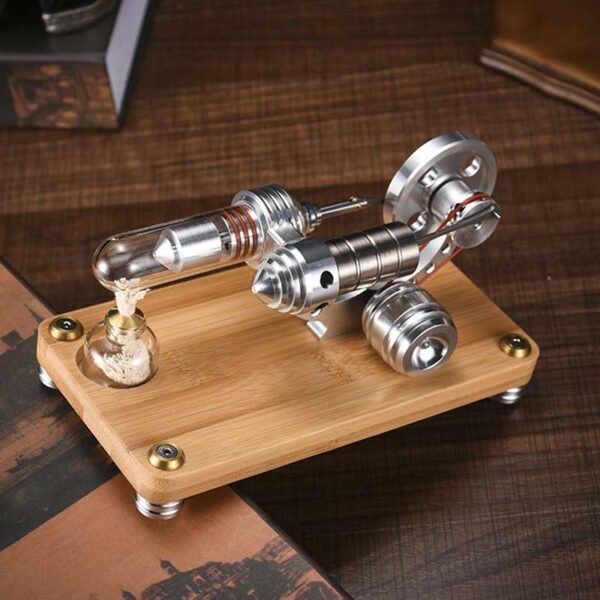
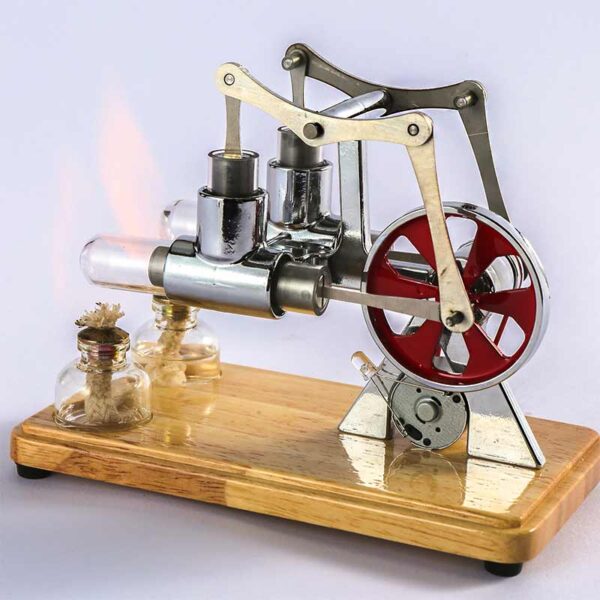
Stirling Engine Wood
$91.99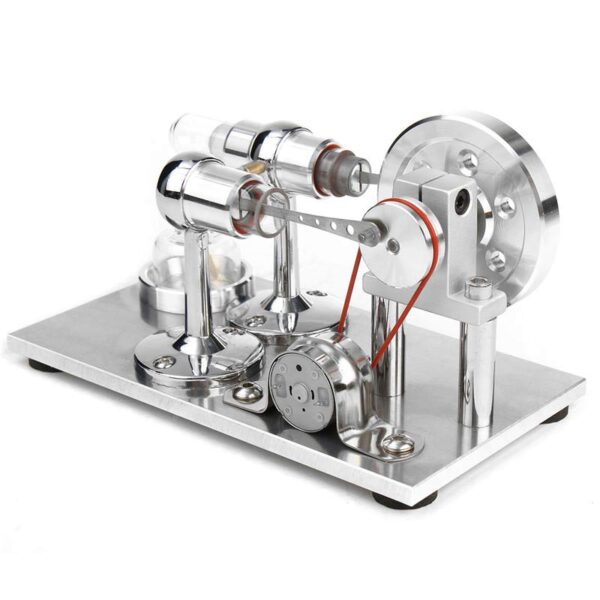
Simple definition and basic principle
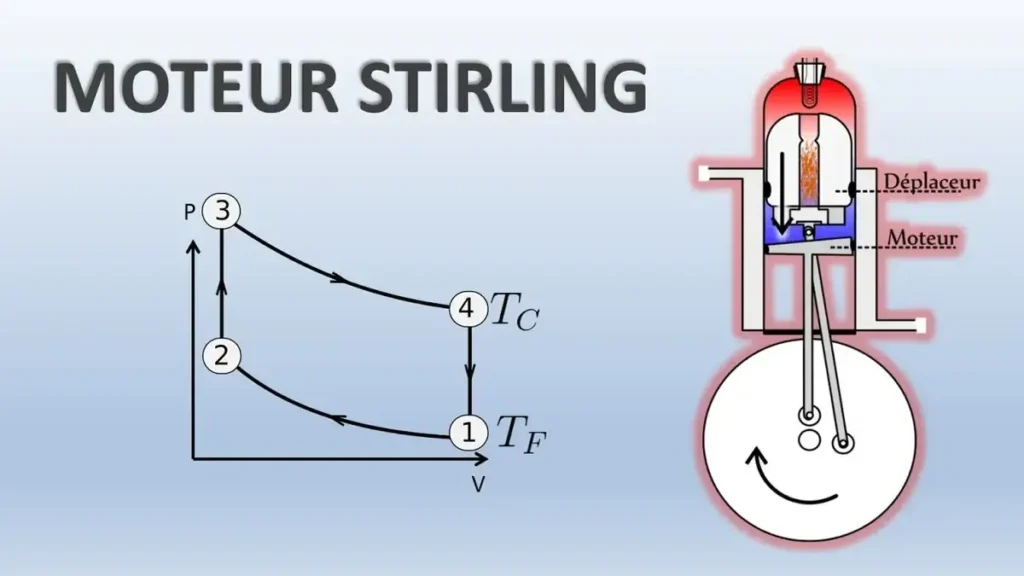
The Stirling engine, invented in 1816 by Scottish engineer Robert Stirling, is a thermal engine that operates on a clear principle: a gas enclosed in a cylinder expands when heated and contracts when cooled. This alternation causes the movement of a piston and allows the production of usable mechanical energy.
Unlike internal combustion engines (like those in cars), the Stirling does not perform combustion inside its cylinder. It is a closed and hermetic engine, where the working gas remains trapped throughout its operation. This grants it a long lifespan and relative simplicity of maintenance.
An external combustion engine: the difference from conventional engines
The uniqueness of the Stirling engine lies in its heating method. It is an external combustion engine: the heat is produced outside the cylinder, then transferred to the gas via walls and heat exchangers. In other words, the energy source does not need to be burned inside the machine, which opens the door to a great variety of fuel sources:
- Fossil fuels: wood, coal, gas, oil.
- Renewable energies: concentrated solar energy, biomass, geothermal energy.
- Unusual sources: waste heat from an industrial process, nuclear heat.
This universal character is one of the major assets of the Stirling engine: as long as there is a temperature difference between a hot source and a cold source, it can operate.
The main components (piston, cylinder, heat exchangers, working gas)
To fully understand its operation, it is essential to know its constituent elements:
- Engine piston: it converts gas pressure into mechanical movement (generally linear or rotary).
- Displacer piston (in some models): it moves the gas between the hot and cold zones of the cylinder.
- Cylinder: it contains the working gas and guides the movement of the pistons.
- Heat exchangers: they ensure the transfer of energy between the hot source, the gas, and the cold source.
- Regenerator (in some advanced engines): a type of thermal sponge that temporarily stores heat and improves overall efficiency.
- Working gas: air, helium, or hydrogen. Helium and hydrogen are preferred in industry for their superior thermal conductivity, although air remains common in educational or experimental engines.
These elements interact in a closed cycle, allowing the Stirling engine to run uninterrupted as long as it has a sufficient heat source and cooling.
The different types of Stirling engines
Alpha Stirling engine
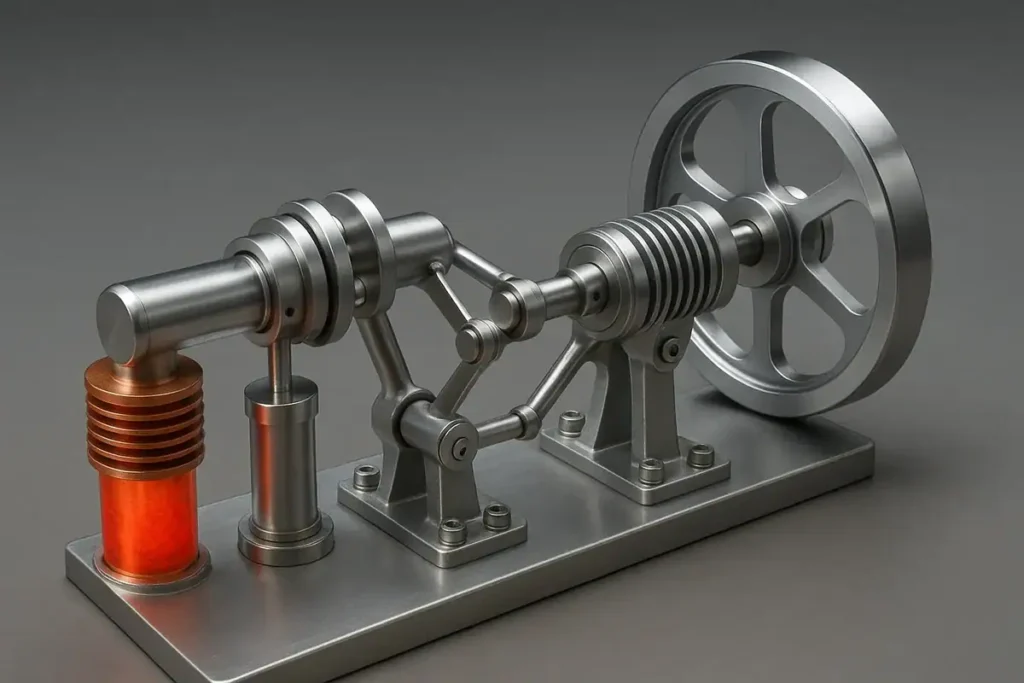
The alpha model consists of two distinct pistons, each in its own cylinder: one is placed on the hot side, and the other on the cold side. The pistons work in opposition and transmit their movement via a crankshaft. This type is the most efficient in terms of power and efficiency, but it requires a robust design capable of withstanding high thermal stresses.
It is found in industrial applications, electricity generation, and certain experimental propulsion projects.
Beta Stirling engine
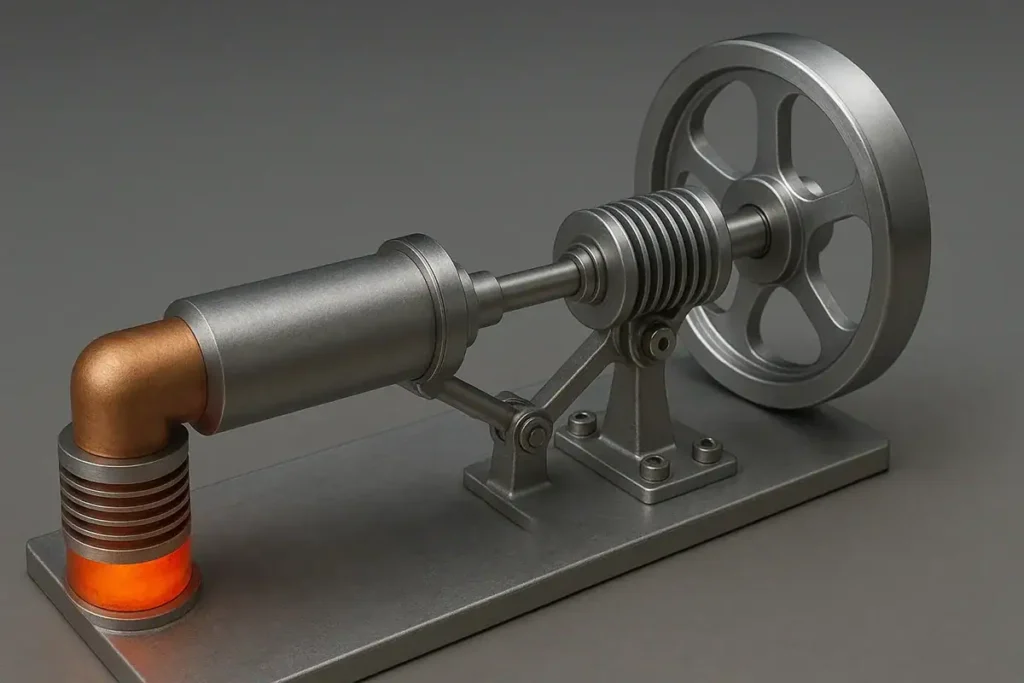
The beta model has a power piston and a displacer combined in a single cylinder. The displacer circulates the gas between the hot and cold areas, while the piston converts pressure variations into mechanical energy. Less efficient than the alpha type, it has the advantage of being more compact and easier to manufacture.
It is mainly used in prototypes, domestic cogeneration systems, and certain research projects.
Gamma Stirling engine
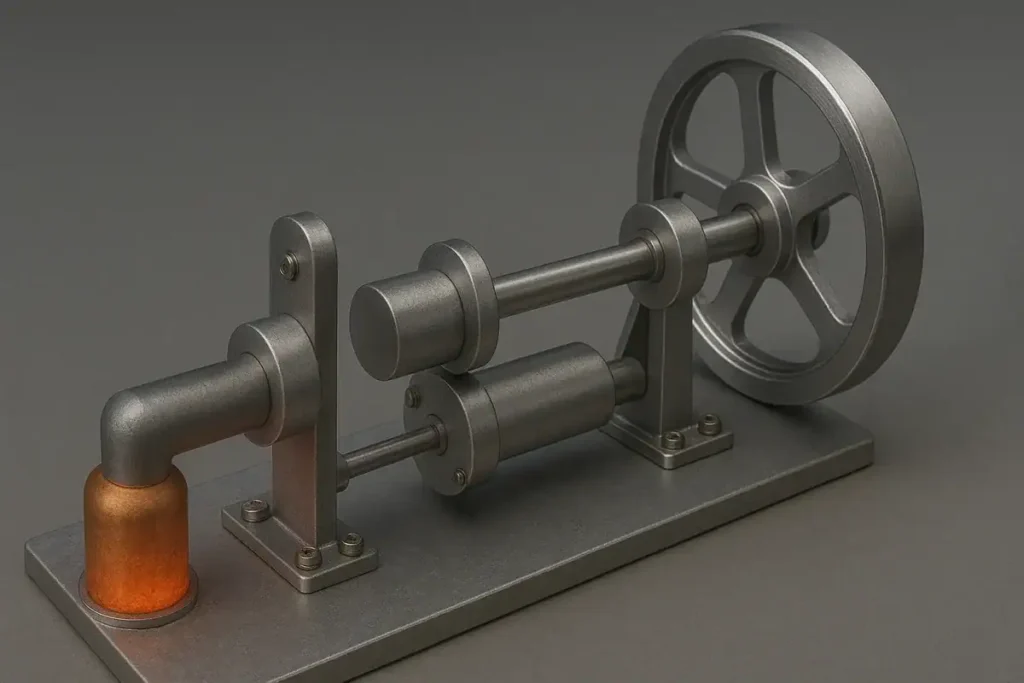
The gamma model is similar to the beta but with two distinct cylinders: one for the power piston and the other for the displacer. The design is simpler and less costly, but the efficiency remains lower than the alpha and beta models. Its main interest lies in its ease of understanding, making it an ideal choice for teaching and educational demonstrations.
Visual and technical comparison
| Type | Structure | Performance | Advantages | Limitations | Common Use |
|---|---|---|---|---|---|
| Alpha | Two separate pistons (hot and cold) | High | High efficiency, significant power output | Complex design, high thermal stress | Industry, power generation |
| Beta | Piston + displacer in a single cylinder | Moderate | Compact, simple, reliable | Lower efficiency than alpha | Prototypes, cogeneration, research |
| Gamma | Piston and displacer separated in two cylinders | Low | Easy to build, educational | Limited power and efficiency | Education, demonstrations |
Advantages and limitations of the Stirling engine
Advantages: efficiency, silence, versatility
- High efficiency: thanks to its thermodynamic cycle close to the Carnot cycle, the Stirling engine can achieve theoretical efficiencies of 30 to 40%, higher than those of internal combustion engines.
- Operating silence: there are no internal explosions or violent vibrations. The Stirling engine is therefore extremely quiet, a major asset in applications such as submarines or domestic systems.
- Energy versatility: it can run on almost any heat source – fossil fuels, biomass, solar energy, residual industrial heat – making it a very flexible technology.
- Longevity: the gas remains confined within the engine, limiting wear and reducing the risk of corrosion or fouling.
- Reduced emissions: since combustion occurs outside and can be perfectly controlled, the Stirling engine generates much less pollution than a conventional internal combustion engine.
Limitations: cost, complexity, startup speed
- High manufacturing cost: materials must withstand high thermal stresses (heat-resistant metals, complex sealing systems), which raises the price.
- Mechanical complexity: development requires precise engineering, and maintenance is more delicate than that of an electric engine.
- Slow startup: the engine must first reach a stable temperature before providing its full power, making it less suitable for uses requiring quick startups (e.g. automotive).
- Limited specific power: despite its overall efficiency, power density remains lower than that of internal combustion engines.
Comparative table: Stirling engine vs internal combustion engines vs electric engines
| Criteria | Stirling Engine | Internal Combustion Engine | Electric Motor |
|---|---|---|---|
| Energy Source | Any heat source (solar, biomass, waste heat…) | Gasoline, diesel, gas | Electricity (grid, batteries, renewables) |
| Efficiency | High (up to 40% in theory) | Moderate (25–30% in practice) | Very high (80–90%) |
| Maintenance | Complex, requires precision parts | Frequent (oil changes, filters, mechanical wear) | Very low, few moving parts |
| Noise | Very quiet | Loud (internal explosions) | Quiet |
| Cost | High (special materials, complex design) | Relatively low (mature technology) | Variable (high battery cost) |
| Ideal Applications | Cogeneration, renewable energy, submarines | Transportation, automotive, industrial machinery | Electric mobility, home appliances, automation |
Concrete applications and practical cases
Electricity generation with renewable energies
The Stirling engine is used in concentrated solar power plants, where mirrors focus light to heat a specific point. The thermal energy obtained powers the engine, which converts it into clean electricity. It is also found in biomass and domestic cogeneration systems, allowing for the simultaneous production of heat and electricity. Its ability to utilize waste heat makes it a promising tool for optimizing energy efficiency.
Marine and submarine applications (submarines, boats)
In the naval field, the Stirling engine is appealing due to its silence and low thermal signature. It has been integrated into certain Swedish military submarines (Gotland class), allowing for extended immersion without being detected. For specialized or scientific vessels, its ability to use different heat sources represents a strategic advantage in extreme conditions.
Domestic and experimental use (heating, scientific demonstrations)
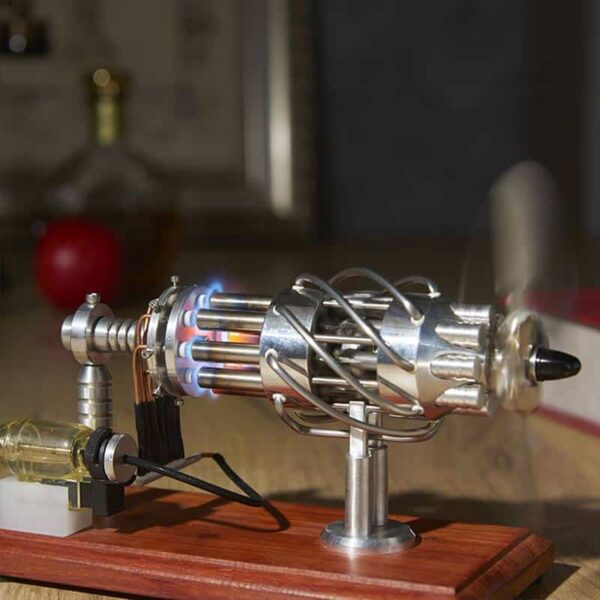
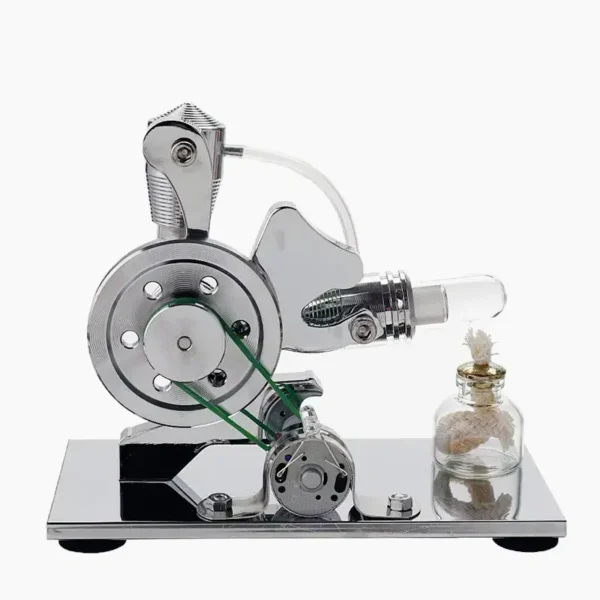
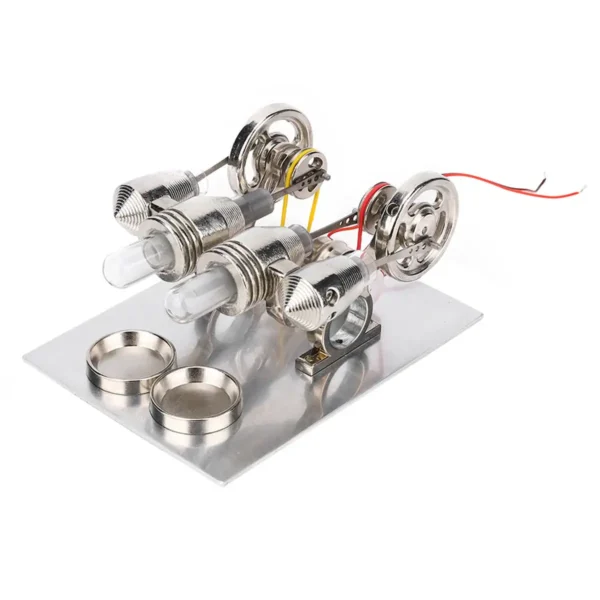
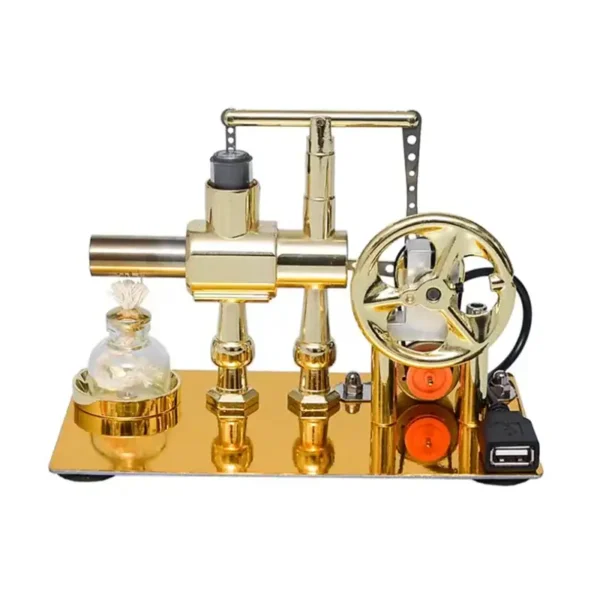
On a small scale, the Stirling engine is used in domestic micro-cogeneration systems, producing electricity while heating a home. In schools, laboratories, and science museums, it serves as an excellent educational tool to illustrate the principles of thermodynamics. Miniature models, often powered by a simple candle, allow for playful demonstrations.
Practical cases: examples of successful use in industry and research
- Space sector: NASA has studied Stirling generators to power space probes using heat released from radioactive sources (isotope Stirling generators).
- Energy industry: pilot projects of hybrid solar power plants combining Stirling engines and thermal storage.
- Research and education: university experiments on cogeneration and recovery of lost heats.
- Educational kits: miniature engines used to learn applied physics and introduce students to energy conversion.
Expert tips for understanding and using a Stirling engine
How to choose the right engine type based on use
The choice of the engine depends on your goals:
- Teaching and outreach: the gamma model, simple and visual, is ideal.
- Research and experimentation: the beta model offers a good compromise between simplicity and efficiency.
- Industrial or energy applications: the alpha model, more complex, but with high efficiency, is the most suitable.
Key parameters to monitor (temperature, maintenance, efficiency)
To ensure the performance of a Stirling engine, it is essential to:
- Maintain a significant temperature difference between the hot and cold sources.
- Monitor the quality of heat exchangers, as they directly influence efficiency.
- Control the state of the working gas (purity, pressure) to avoid efficiency losses.
- Perform regular maintenance of the pistons, seals, and regeneration systems.
Resources for further exploration (educational kits, DIY projects, scientific sources)
For those who wish to delve deeper into the subject, several avenues exist:
Practical applications: follow initiatives in domestic cogeneration or concentrated solar energy to see concrete developments.
DIY kits: available online, they allow you to build a miniature Stirling engine with simple materials.
University projects: numerous scientific publications explore possible improvements (new regenerators, advanced materials).
Common mistakes to avoid
Confusing Stirling engine with steam engine
Unlike steam, the Stirling does not consume external fluid. The gas remains confined in the cylinder.
Underestimating thermal stresses
Materials must withstand extreme temperatures. Poor design drastically reduces the engine’s lifespan.
Thinking efficiency is unlimited
While effective, the Stirling does not exceed the limits imposed by thermodynamics. It cannot reach 100% efficiency.
FAQ about Stirling engines
Can a Stirling engine replace a car engine?
Theoretically yes, but practically no. Its slow startup and bulkiness limit its automotive use.
What is the actual efficiency of a Stirling engine?
It can achieve 30 to 40% under ideal conditions, close to the theoretical Carnot efficiency.
Does a Stirling engine work with any heat source?
Yes, as long as there is a sufficient temperature difference between the hot and cold source.
Can you build a Stirling engine yourself?
Yes, small models exist. They are popular for learning physics and DIY projects.