Free Shipping on Orders Over $50

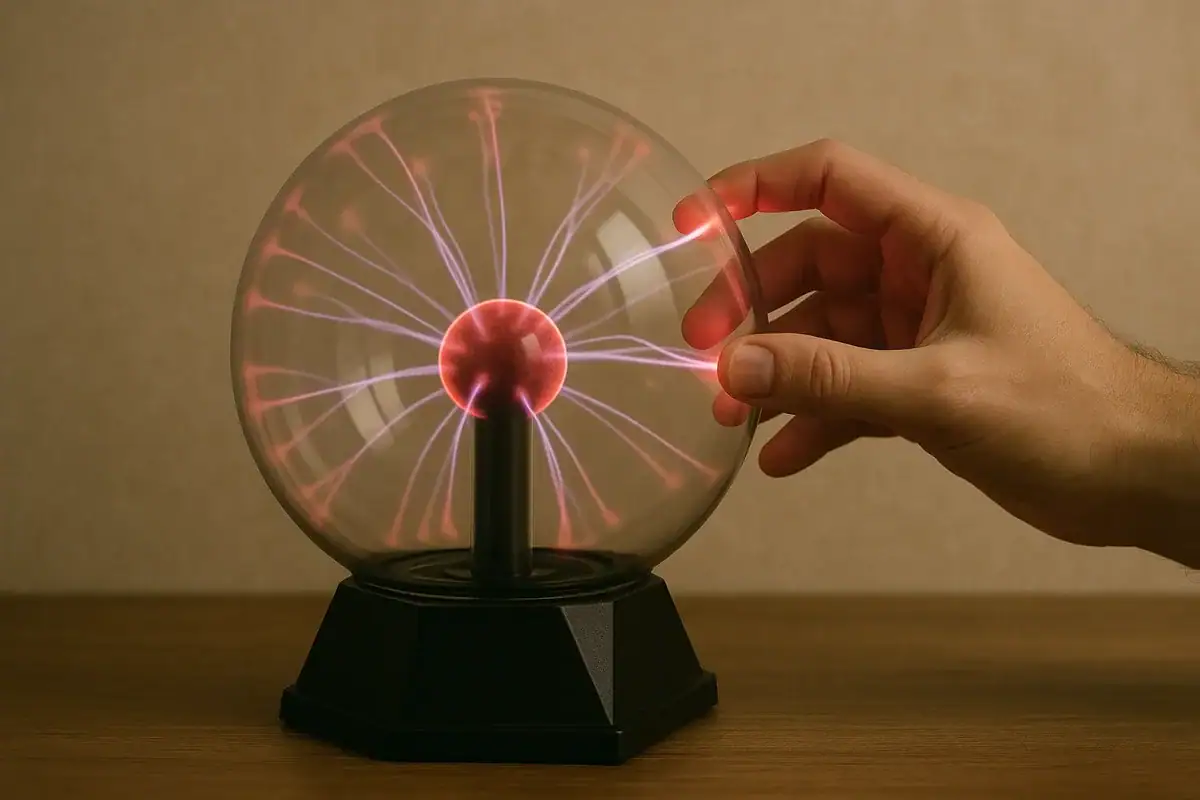
The plasma lamp, also known as plasma globe, catches the eye with its colorful light filaments that react to the slightest touch. Specifically, it is a sphere filled with gas traversed by a high-voltage electric discharge. The result: a mesmerizing display, with no real danger for household use. Let’s explore how it works, its uses, and the precautions to take.
Contenus
afficher
What is a plasma lamp?
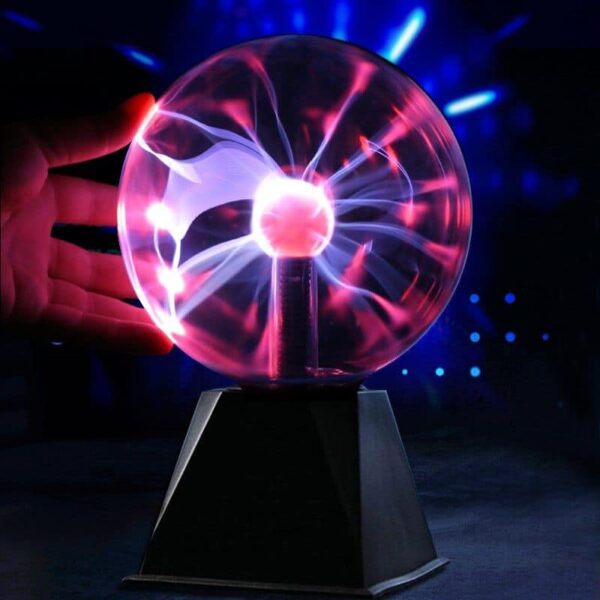
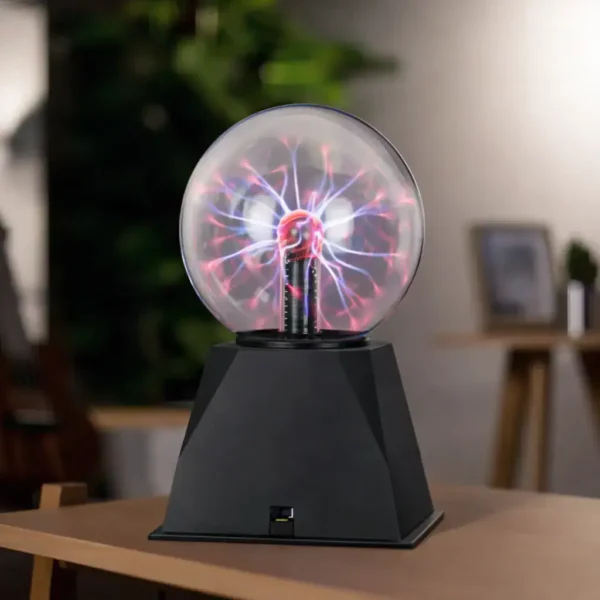
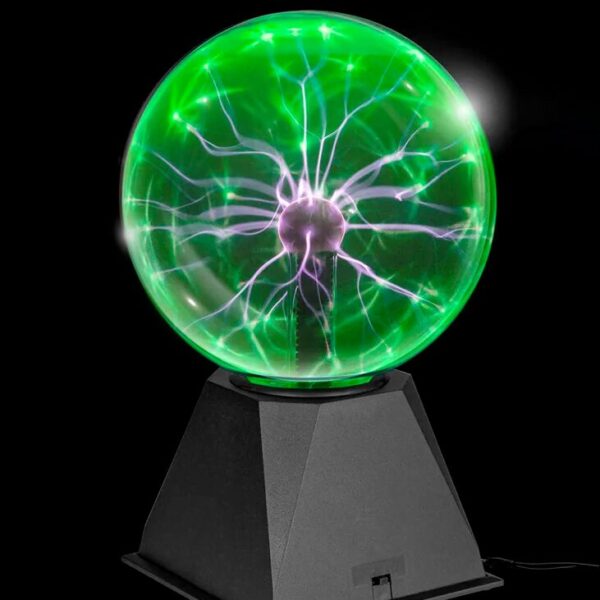
Select options
This product has multiple variants. The options may be chosen on the product page
Green Plasma Lamp
Price range: $45.99 through $68.99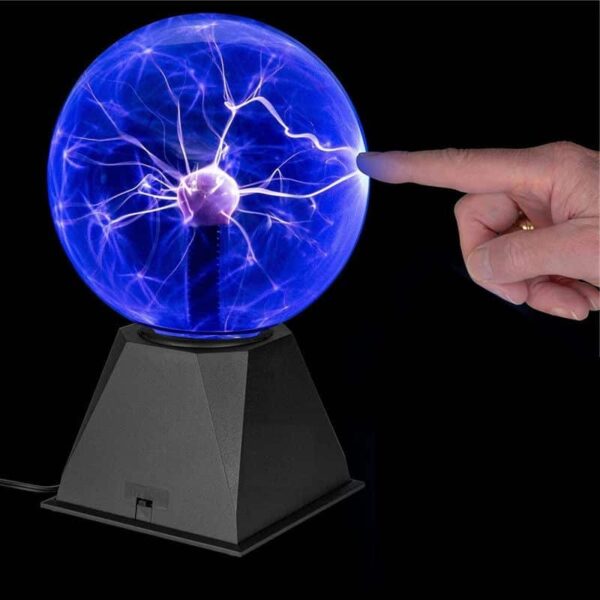
Select options
This product has multiple variants. The options may be chosen on the product page
Blue Plasma Lamp
Price range: $45.99 through $68.99The plasma lamp, also known as plasma globe, is an invention attributed to Nikola Tesla at the end of the 19th century. Initially designed to experiment with high-frequency currents and electricity, it quickly became an object of scientific and artistic fascination. Its principle relies on a mix of rare gases confined in a glass sphere and stimulated by a high-voltage central electrode.
This sphere typically contains gases such as argon, neon, or krypton. Each gas has a characteristic color when ionized: neon produces a reddish-orange light, argon leans toward blue or violet hues, while krypton can generate lighter and whitish shades. Together, they create the famous light filaments that seem to dance inside the globe.
Today, the plasma lamp is primarily used as a decorative object to create a futuristic and captivating atmosphere, but also as a teaching tool to visually illustrate scientific concepts such as ionization, electrical conduction, and the interaction of electromagnetic fields. It is therefore at the crossroads of science, art, and popularization.
How does a plasma lamp work?
The role of the gas inside the sphere
The sphere is filled with a mixture of rare gases under low pressure. These gases are chosen for their ability to emit colorful light when excited by an electric discharge. It is this phenomenon of ionization that transforms the sphere into a true visual spectacle. The variation in the type of gas directly influences the hues observed, which explains the diversity of possible colors in a plasma globe.
The high voltage and its interaction with the gas
At the heart of the lamp is a small electrode connected to a high-frequency transformer. This sends a sufficiently high voltage to create an intense electric field. This field forces electrons to move rapidly through the gas, causing collisions and the excitation of atoms. As they return to their stable state, the atoms release energy in the form of light: these are the colored filaments we observe through the glass.
Why do the filaments follow your fingers?
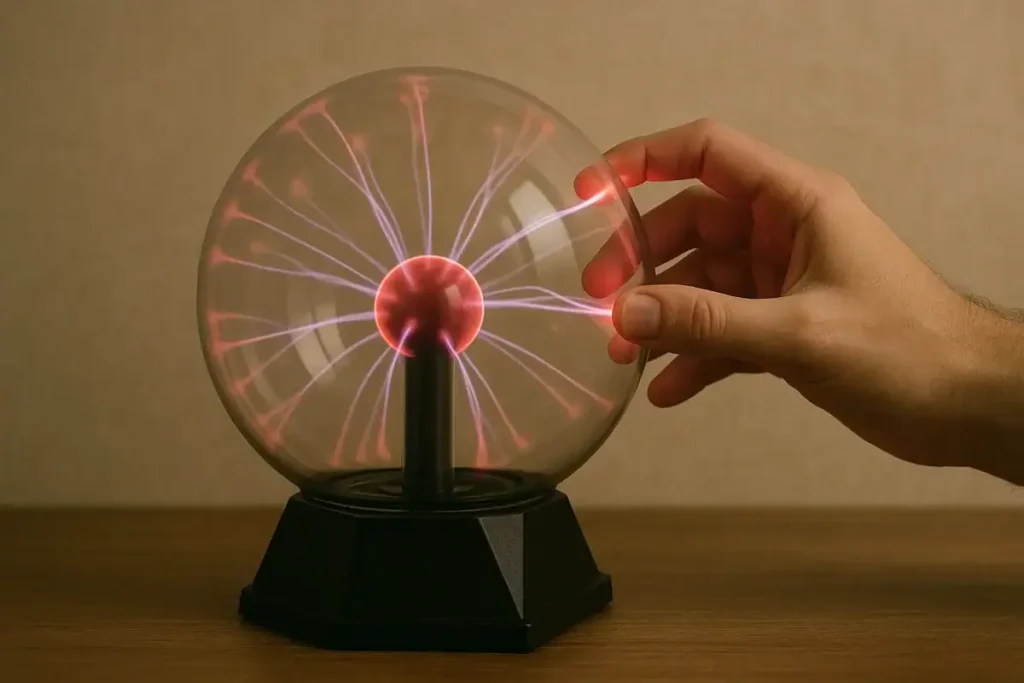
When you touch or bring a finger close to the wall of the sphere, you modify the internal electric field. Your body, being conductive, attracts the charges and provides a path of least resistance. The filaments then concentrate towards this precise point, giving the impression that the light reacts to your movements. This phenomenon is not just aesthetic: it simply illustrates the principles of electrical conduction and charge redistribution.
This blend of science and interactivity is what makes the plasma lamp so popular. It transforms complex concepts into an immediate visual and tactile experience, captivating both science enthusiasts and the curious.
Applications and uses of plasma lamps
A decorative and playful object
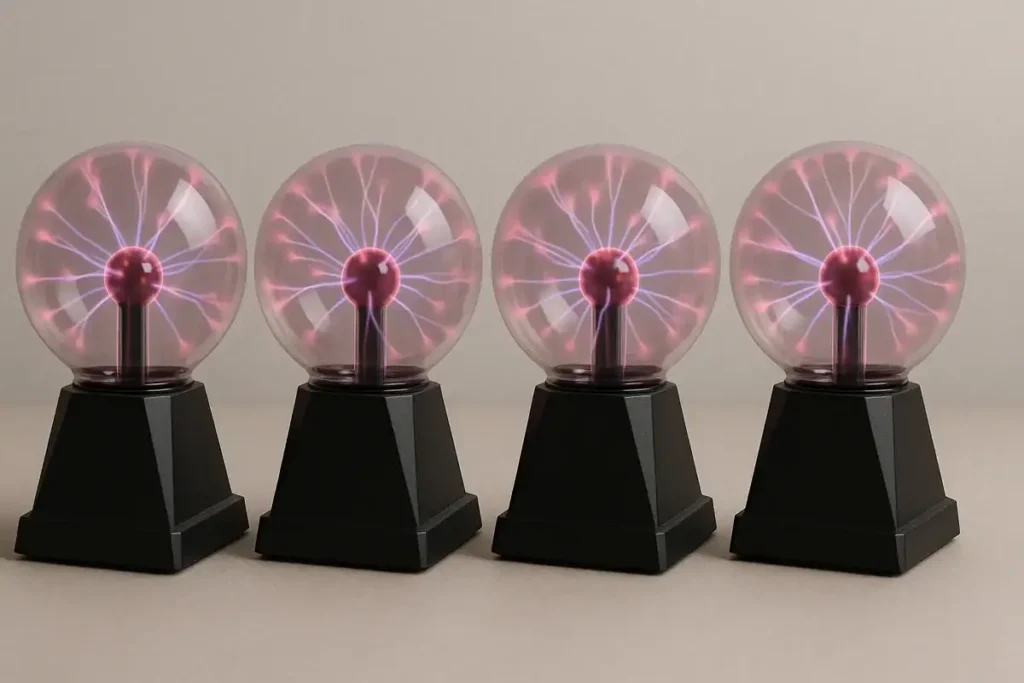
The plasma globe is primarily a decorative object. Its moving light instantly draws attention and creates a futuristic atmosphere, straddling the line between science and art. Placed in a room, an office, or a relaxation space, it becomes an original focal point that sparks guests’ curiosity. Some even use it as an accent lamp to establish a relaxing and hypnotic atmosphere.
An educational tool for explaining electricity
Beyond its aesthetic aspect, the plasma lamp is an excellent educational support. In science museums, schools, or educational workshops, it visually and simply illustrates phenomena such as:
- the electrical conduction through different materials;
- the ionization of gases and the creation of plasma;
- the influence of electromagnetic fields on matter.
It thus enables children and teenagers to understand through experience what would remain abstract in a physics textbook.
Use in scientific demonstrations
During scientific shows or outreach events, the plasma globe is a spectacular tool. Combined with a Tesla coil or other interactive devices, it illustrates the amazing properties of electricity and matter in the plasma state. Its visual and accessible aspect makes it an ideal instrument for capturing the attention of a diverse audience.
The dangers and precautions to take
The real risks (low but to be aware of)
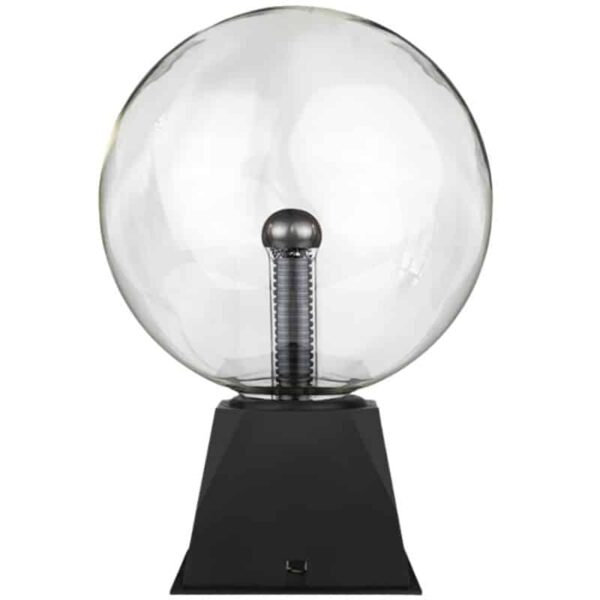
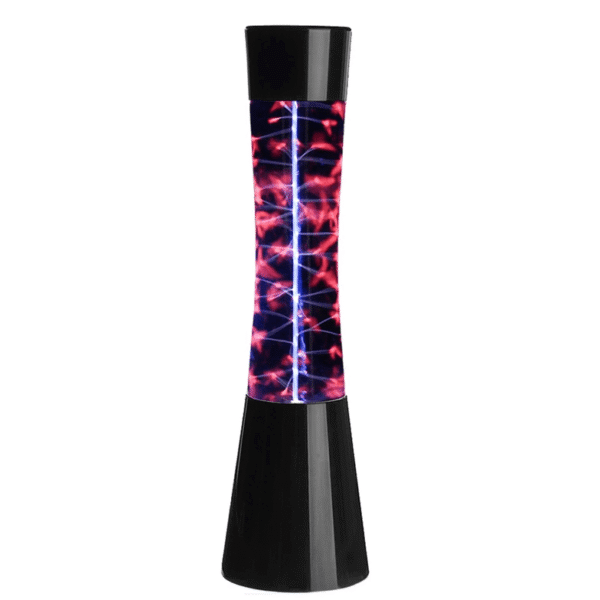
For typical use, the plasma lamp is generally safe. However, there are a few points to be aware of:
- internal electric discharges can produce a small amount of ozone;
- the sphere may heat slightly after prolonged use;
- the internal transformer may wear out prematurely if the lamp remains on too long.
This is why it is advisable to use it in limited sessions rather than leaving it plugged in continuously.
Sensitive individuals: pacemakers, young children
The electromagnetic fields generated by the plasma globe, while weak, may interfere with certain medical devices such as pacemakers. Additionally, young children should avoid handling the lamp unsupervised: they might consider it a toy and risk dropping it.
Safety precautions at home
- Do not leave it on continuously for several hours.
- Avoid any contact with metallic objects directly on the sphere, as this can concentrate the discharge and damage the lamp.
- Place on a stable surface, away from water, moisture, and high-traffic areas.
- Supervise usage by children to prevent any accidental breakage.
By following these simple precautions, the plasma lamp remains a safe, fascinating, and durable object to use at home.
Comparative table: plasma lamp vs other decorative scientific objects
| Object | Scientific Principle | Safety Level | Educational Value | Target Audience | Average Price |
|---|---|---|---|---|---|
| Plasma Lamp (or Plasma Ball) | Ionization of noble gases by a high-frequency electrode | Safe for normal household use (basic precautions) | Introduction to plasma, electricity, and electromagnetic fields | Curious minds, students, science decor enthusiasts | 20 – 50 € |
| Mini Tesla Coil | Production of electric arcs at high frequency | Requires caution: heat, electric arcs, possible interference | Electromagnetism, high-voltage electricity, wireless transmission | Physics enthusiasts, makers, demonstrators | 40 – 100 € |
| Newton's Cradle | Conservation of energy and momentum | Completely safe | Classical mechanics, Newton's laws, kinetic energy | Schools, offices, elegant decor lovers | 15 – 40 € |
| Illuminated Globe | Internal lighting and sometimes mechanical rotation | Safe (operates like a standard lamp) | Learning geography and basic astronomy | Schoolchildren, travel enthusiasts | 20 – 60 € |
👉 This comparison shows that the plasma lamp (or plasma globe) holds a special place: more spectacular than a Newton’s cradle, but safer than a Tesla coil. It combines visual effect, educational value, and safety, which explains its appeal to a wide audience.
👉 This table highlights that the plasma lamp occupies a unique position: more spectacular than a Newton’s cradle, but much safer than a Tesla coil. It thus combines aesthetic, educational, and safety, which explains its success with a wide audience, from science enthusiasts to simply lovers of original decoration.
Practical cases: simple experiments with a plasma lamp
Observe the filaments with different objects
Try bringing a pencil, a key, or even a coin close to it: the filaments change trajectory and concentrate toward the conductive object.
Interaction with a fluorescent bulb
Bring a turned-off compact fluorescent bulb close to the sphere: it lights up thanks to the electric field. A spectacular demonstration with no immediate danger.
What to never test (to avoid risks)
Absolutely avoid:
- Putting a metallic object directly on the sphere.
- Taking apart the plasma lamp.
- Bringing a sensitive electronic device (smartphone, bank card) close to it.
Expert tips for choosing your plasma lamp
Size and design according to usage (decorative or educational)
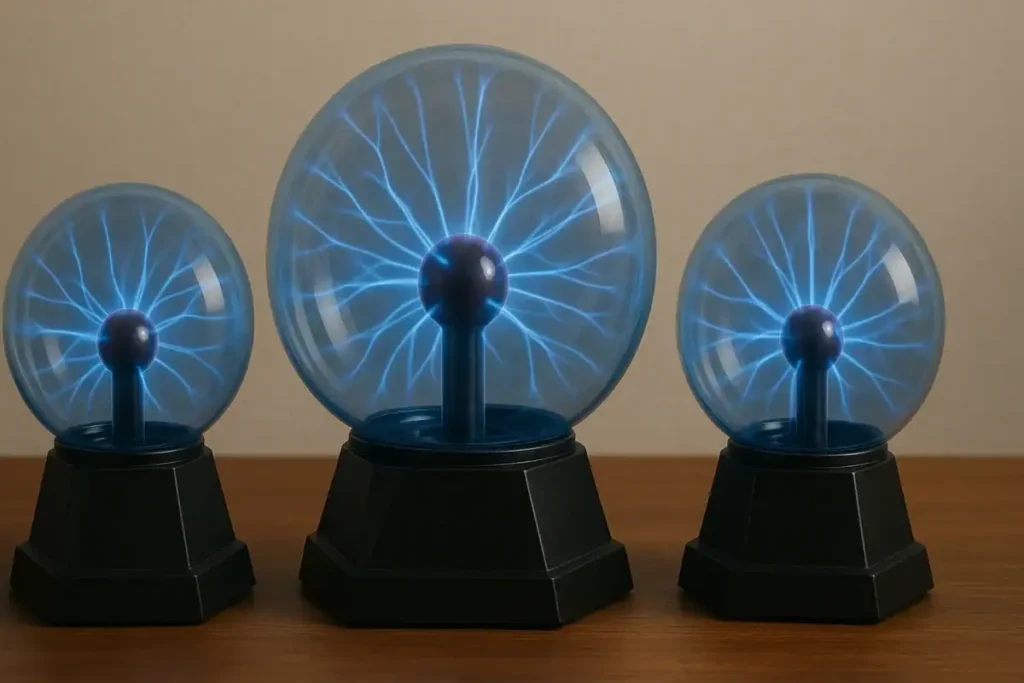
For a room, a small plasma globe of 6 Inch is sufficient. For educational use or a science room, prefer a larger plasma lamp so that the filaments are more visible.
Material quality and electrical safety
Choose a thick glass sphere and a certified CE transformer. Beware of overly cheap versions that may overheat.
Budget and value for money
Entry-level plasma lamps start at around $22, but a robust and aesthetic model generally costs between $44 and $66. It is a sustainable investment for décor or learning.
Mistakes to avoid with a plasma lamp
Leaving it on continuously for too long
Prolonged use can lead to overheating of the transformer and reduce the lamp’s lifespan.
Handling it like a toy for children
Even though it seems harmless, a plasma globe remains a fragile electrical device. It should be used under adult supervision.
Trying to dismantle the sphere
The sphere is hermetically sealed and contains a mixture of gas under partial vacuum. Dismantling it is dangerous and renders the lamp unusable.
FAQ: Frequently asked questions
Is it safe to touch a plasma lamp?
Yes, touching the glass wall is safe since electricity does not escape from the sphere. Only the internal gas is ionized.
Does the plasma lamp consume a lot of electricity?
No, the consumption is low, comparable to that of a small LED bulb (generally between 5 and 15 W).
Can it be left in a child’s room?
Yes, but for occasional use and under supervision. It should not be used as a night light continuously.
Conclusion
The plasma lamp or plasma globe is a fascinating object that combines art and science. Understanding how it works allows for better appreciation and safer enjoyment. Whether as futuristic decoration, educational tool, or scientific curiosity, it continues to amaze both young and old. Provided that a few simple precautions are observed, you can enjoy its luminous spectacle without any risk.