Free Shipping on Orders Over $50

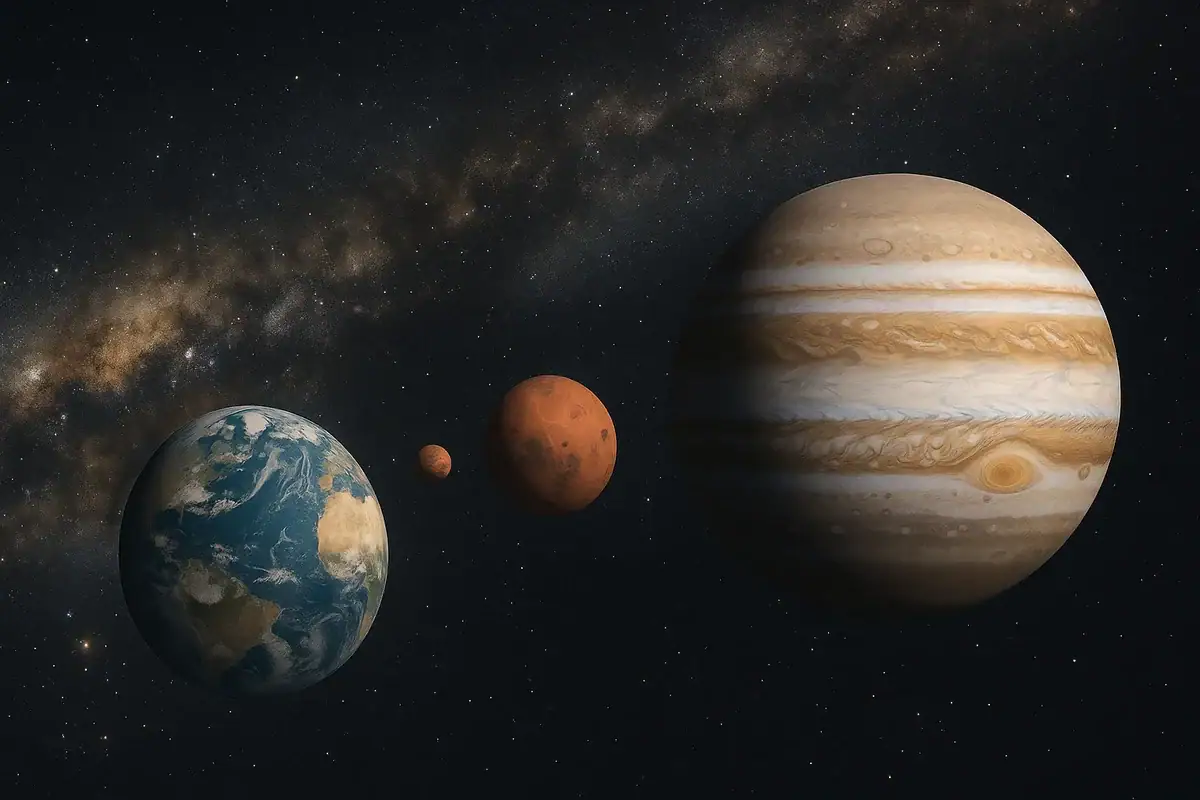
The observable universe is home to billions of planets, far beyond the eight we know in our solar system. Thanks to scientific discoveries, we now know that almost every star can have its own set of planets. In this article, we will define what a planet is, explore our solar system, discover exoplanets, understand how researchers estimate their number, and analyze what this implies for the search for extraterrestrial life.
Contenus
afficher
Defining “planet”
Scientific definition according to the International Astronomical Union
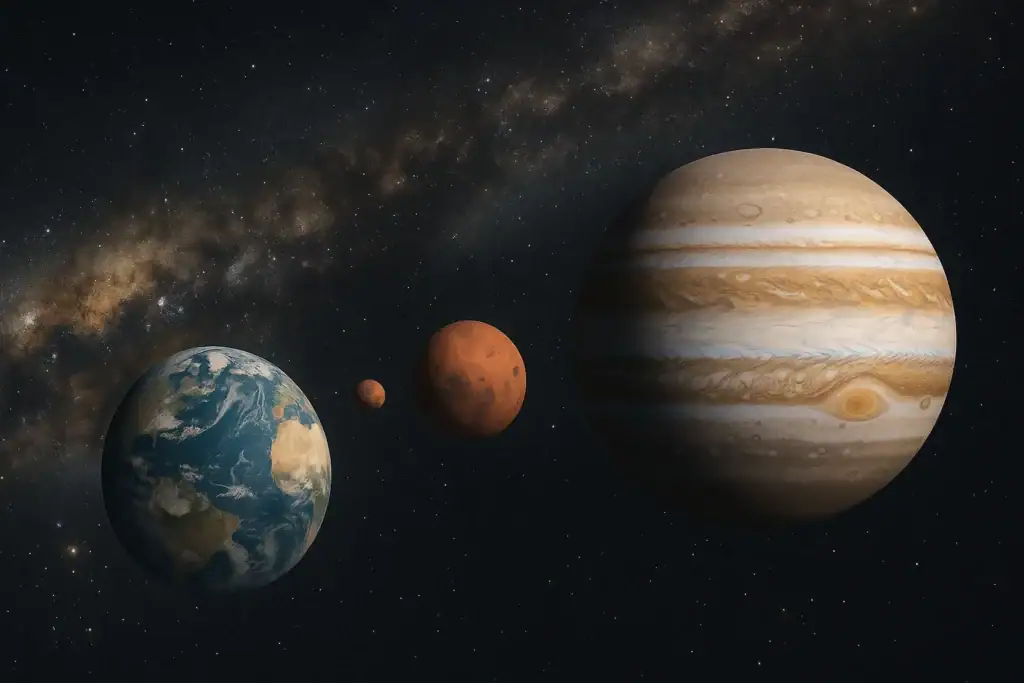
In 2006, the IAU officially redefined the term planet. A planet is a celestial body that orbits the Sun, has sufficient mass to have a spherical shape, and has cleared its orbit of other debris. This definition is essential for distinguishing planets from other celestial objects.
Difference between planet, exoplanet, and dwarf planet
Planets refer to the 8 bodies of our solar system. Exoplanets are planets located outside our system, around other stars. Finally, dwarf planets like Pluto or Ceres have a spherical shape but have not “cleared” their orbit. This distinction influences the count of planets in the universe.
Why does the definition continue to evolve today?
Research is continually progressing: new discoveries such as rogue planets or super-Earths compel astronomers to refine the criteria. Some scientists propose broadening the definition to include more celestial objects.
The planets of our solar system: a starting point

Earth Planet Lamp
$57.99
Select options
This product has multiple variants. The options may be chosen on the product page
Resin Galaxy Space Lamp
Price range: $91.99 through $114.99
Space Design Lamp
$50.99The 8 official planets and their characteristics
Our solar system consists of Mercury, Venus, Earth, Mars, Jupiter, Saturn, Uranus, and Neptune. Each planet has its own features: rocky planets close to the Sun, gas giants, and ice giants on the outskirts.
The special case of Pluto and dwarf planets
Pluto, long considered the ninth planet, was reclassified as a dwarf planet in 2006. This decision remains debated, as Pluto has an atmosphere, moons, and a complex dynamic.
Other celestial bodies included (moons, asteroids)
Moons like Ganymede or Titan are sometimes larger than Mercury. Asteroids and objects from the Kuiper belt complete this diversity but are not officially planets.
Exoplanets: a discovery in full expansion
What is an exoplanet?
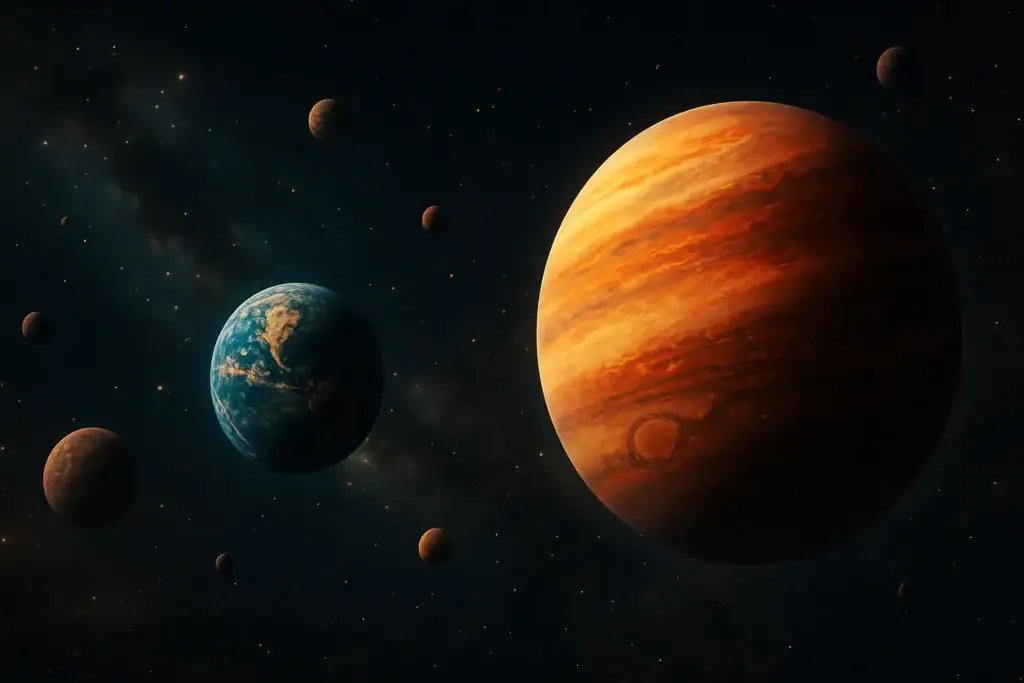
An exoplanet is a planet that orbits a star other than the Sun. These discoveries open a new era of astronomy.
How do scientists detect exoplanets?
The main methods include:
- The transit method: observing the decrease in brightness of a star when a planet passes in front of it.
- The radial velocity method: detecting the movement of the star caused by the gravitational pull of the planet.
- Direct imaging: still rare but possible with powerful instruments.
Some famous exoplanets discovered
Among the most well-known are: 51 Pegasi b (the first exoplanet detected around a sun-like star), Kepler-22b (in the habitable zone), and Proxima Centauri b, located just 4.2 light-years away.
How many planets are in the observable universe?
Estimation of the number of planets in the Milky Way
The Milky Way contains about 100 to 400 billion stars. Observations suggest that at least one planet orbits most of them, which equates to several hundred billion planets in our own galaxy.
Projection at the scale of the observable universe
The observable universe contains nearly 2,000 billion galaxies. If each has hundreds of billions of planets, the potential total is staggering: approximately 10²⁴ planets.
Limits of estimates and scientific uncertainties
These calculations are based on models and extrapolations. The universe is vast, and our current instruments cannot yet confirm these figures.
Comparative table: solar system planets vs discovered exoplanets
| Name | Type | Size | Distance | Notable Feature |
|---|---|---|---|---|
| Earth | Rocky | 1 Earth | 0 UA | Inhabited |
| Jupiter | Gas giant | 11 Earths | 5,2 UA | Largest planet |
| Kepler-22b | Exoplanet | 2.4 Earths | 600 ly | Habitable zone |
| Proxima b | Exoplanet | 1.2 Earths | 4.2 ly | Closest to our solar system |
Expert advice: how to interpret these numbers?
It is essential to understand that the numbers presented are estimates and not certainties. Each new space mission (Kepler, TESS, James Webb) refines our understanding and corrects our approximations. In astronomy, knowledge evolves at the pace of discoveries.
Mistakes to avoid regarding the number of planets
Among the common misconceptions:
- Confusing confirmed and estimated planet numbers.
- Assuming all planets are similar to Earth.
- Forgetting that the notion of “planet” can vary based on scientific criteria.
Practical cases: what this implies for the search for life
The probability of habitable planets
If every star has one or more planets, then the probability that some are habitable is very high.
The habitable zones around stars
The habitable zone corresponds to the distance from a star where water can remain liquid. This is a critical criterion for searching for potentially habitable planets.
Impact on the search for extraterrestrials
With so many planets, it is mathematically probable that life has emerged elsewhere. This drives programs like SETI and space exploration.
FAQ: frequently asked questions about the number of planets
How many exoplanets have been confirmed to date?
More than 5,000 confirmed exoplanets, with thousands awaiting validation.
Are there more planets than stars?
Yes, the majority of stars host at least one planet, making planets more numerous than stars.
Are there rogue planets without a star?
Yes, planets floating freely in space, without orbiting a star, have been detected.
What is the difference between a habitable planet and an inhabited planet?
A habitable planet has the theoretical conditions for life, while an inhabited planet actually hosts life. To date, Earth is the only known inhabited planet.
Also, check out our planet lamps