Free Shipping on Orders Over $50

The Klein Bottle is a fascinating mathematical object: a surface that has no inside or outside. In other words, it defies our intuition and challenges our way of thinking about space. Discovered at the end of the 19th century, it still intrigues scientists, teachers, and even artists.
Contenus
afficher
In this article, discover what a Klein Bottle is, its history, its strange properties, its applications, and where to find a tangible version.
What is a Klein Bottle?
Select options
This product has multiple variants. The options may be chosen on the product page
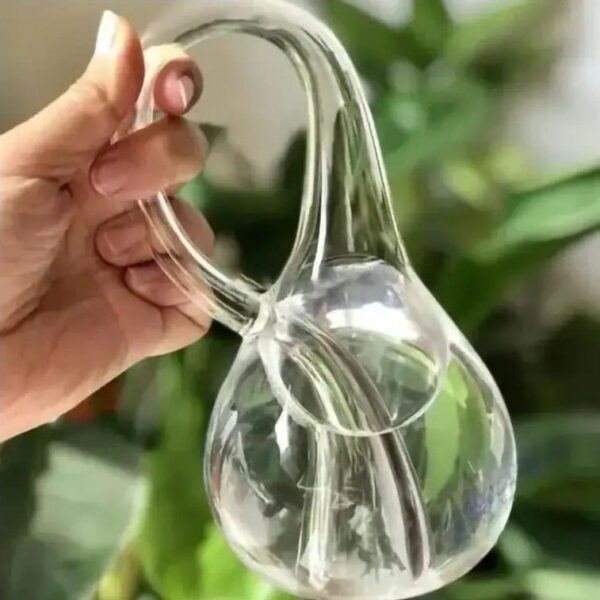
Klein Bottle
Price range: $28.99 through $35.99A Klein Bottle is a non-orientable surface invented by the German mathematician Felix Klein in 1882. Unlike everyday objects, it has no clear distinction between inside and outside.
- Non-orientable surface: it is impossible to distinguish an inner face from an outer face.
- Difference from a classic bottle: no wall separating the inside from the outside.
History and Origin of the Klein Bottle
The Klein Bottle was introduced in 1882 by Felix Klein, a German mathematics professor. Topology — a branch of mathematics that studies shapes independently of their size or curvature — was then experiencing rapid growth.
Fun fact: Klein used the German word “Fläche” (surface), but a translation error turned it into “Flasche” (bottle). Thus, the term Klein Bottle was born.
The Fascinating Properties of the Klein Bottle
A Surface with No Inside or Outside
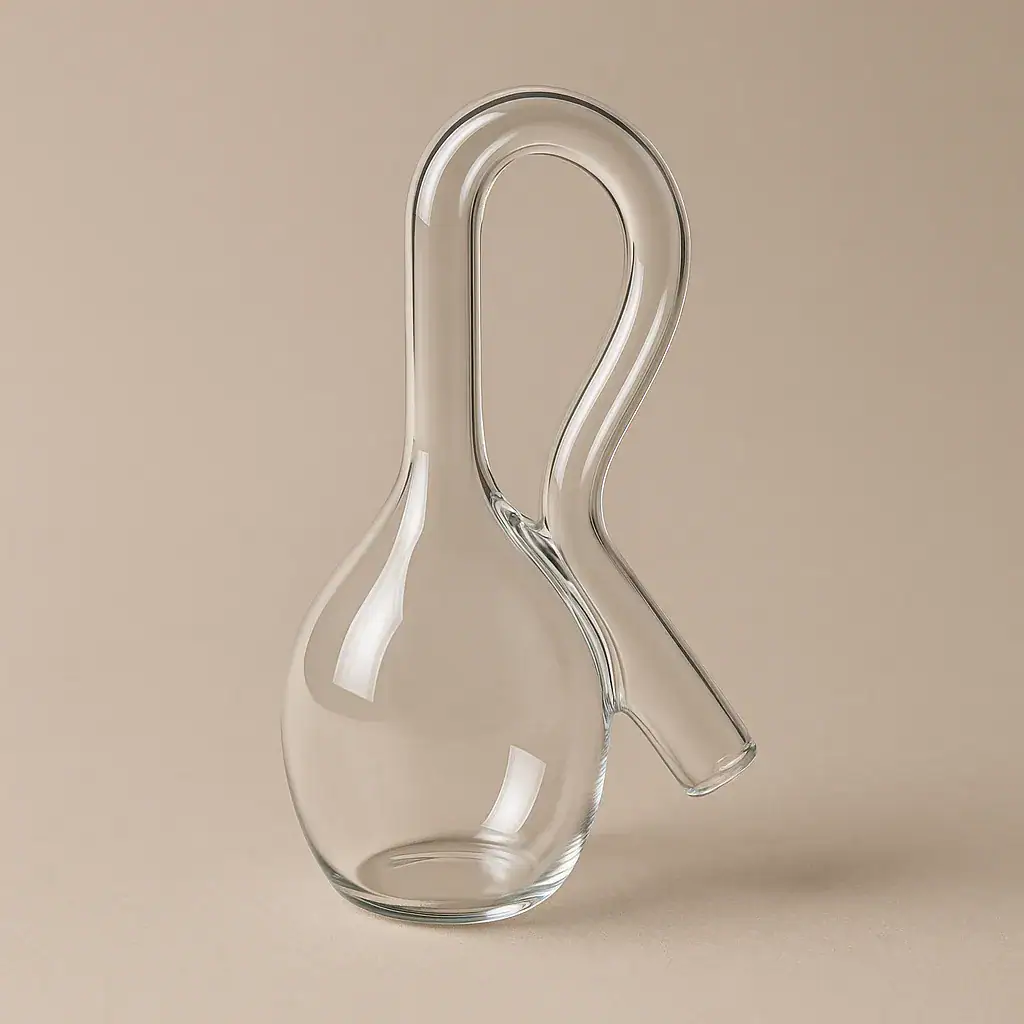
Imagine a bottle whose neck melts back into the wall: there is no longer any distinction between the inside and the outside.
👉 Comparison: the Möbius strip has one face and one edge; the Klein Bottle is its more complex cousin, extended in 3D.
Non-orientability Concept
In mathematics, a surface is said to be non-orientable if you can traverse its “outside” and return to your starting point inverted, without ever crossing a boundary.
Example: an ant walking on a Klein Bottle could return to its starting point having “changed sides”.
Impossibility in Our 3D World
A true Klein Bottle can only exist in four dimensions. The glass or plastic models that are made are therefore approximations, as the neck passes through the wall to connect to the inside.
Applications and Interest of the Klein Bottle
In Mathematics and Topology
- Study of non-orientable surfaces
- Teaching tool to illustrate topology
- Basis for reflection on the classification of surfaces
In Physics and Cosmology
- Theoretical hypotheses in cosmology
- Complex space-time models
- Applications in field physics
In Art and Design
- Intriguing sculptures and decorative objects
- Geeky or scientific gift greatly appreciated
- Symbol of infinity and duality
Comparison with Other Mathematical Objects
| Object | Key Characteristic | Example Use |
|---|---|---|
| Möbius Strip | A single face and a single edge | Science education, design |
| Klein Bottle | No inside/outside, closed non-orientable surface | Mathematics, decorative objects |
| Torus | Donut-shaped surface, orientable | Physics modeling |
| Hypercube (Tesseract) | 4D cube | Theoretical geometry, science fiction |
Where to Buy a Klein Bottle?
Today, the Klein Bottle has become a highly sought-after decorative scientific object.
- Made of blown glass, as a display object
- Made of plastic or resin, for classroom demonstrations
- As a unique gift for science enthusiasts
👉 Also discover our other fascinating objects like the gyroscope, the Newton’s pendulum, or even the ferrofluid.
FAQ about the Klein Bottle
Can you really make a true Klein Bottle?
No, because it requires four dimensions. Physical versions are imperfect representations.
Why is it so popular in scientific shops?
Because it embodies a paradoxical object, both decorative and educational.
What is the difference from a Möbius strip?
The Möbius strip is a twisted 2D band; the Klein Bottle is a more complex closed surface.
Is it an object solely theoretical or also practical?
Primarily theoretical, but with great educational and artistic value.
Conclusion
The Klein Bottle is much more than a strange mathematical object: it is a gateway to another way of understanding space and surfaces. It connects the worlds of science, pedagogy, and art.
Owning a tangible version is bringing home a piece of topology and scientific poetry.