Free Shipping on Orders Over $50

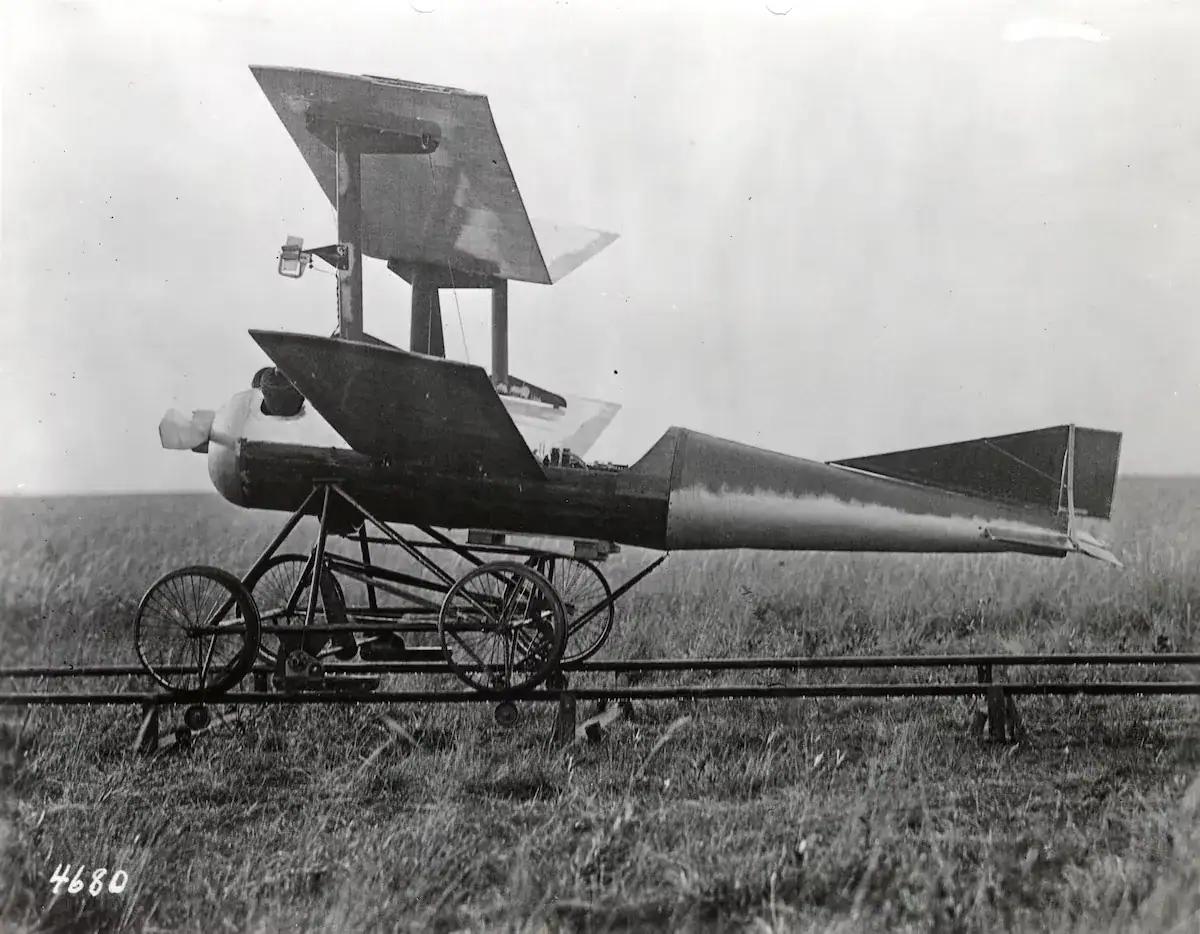
The question of who invented the drone is more complex than it seems. Rather than finding a single inventor, the history of the drone is the result of a series of technological innovations and military and civilian applications. The concept of “unmanned aerial vehicle” dates back to World War I, but it is over the decades that drones have taken different forms and functions, shaping our current understanding of these devices.
Contenus
afficher
It is therefore essential to understand that the invention of the drone cannot be attributed to a single person or a single moment. Various actors have contributed to its development, each bringing a decisive innovation: from the automatic flight of Max Boucher in 1917 to the American Kettering Bug in 1918, to contemporary Israeli and American drones. This plurality of contributions highlights the richness of drone history and the interconnection between technological progress and strategic needs.
Before Modern Drones: The Beginnings of Remote Control
As early as the beginning of the 20th century, scientists and engineers sought to control unmanned devices. These early trials, often experimental, primarily aimed at military uses: the ability to send a vehicle on a dangerous mission without risking human life represented a major strategic advantage. These attempts laid the groundwork for the remote control and aerial robotics that we know today.
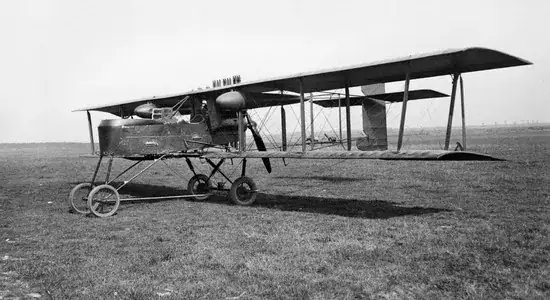
A significant precursor is Max Boucher, a French officer, who achieved an automatic flight of about 31 Inch in October 1917 using a programmed control system. His work is recognized as one of the very first concrete examples of unmanned flight, even though it did not lead immediately to a massive military application.
World War I: The First Prototypes of Unmanned Aerial Vehicles
During the war, engineers designed rudimentary devices intended to serve as targets for anti-aircraft training. The most famous project is the Kettering Bug, designed in 1918 by Charles Kettering in the United States. This small unmanned aircraft, conceived as a “flying torpedo,” could carry explosives over a predetermined distance. Although its accuracy was limited, it marked a major advance by proving that a flying vehicle could be programmed to reach a target without a pilot on board.
Between the Wars: Towards Radio-Controlled Drones
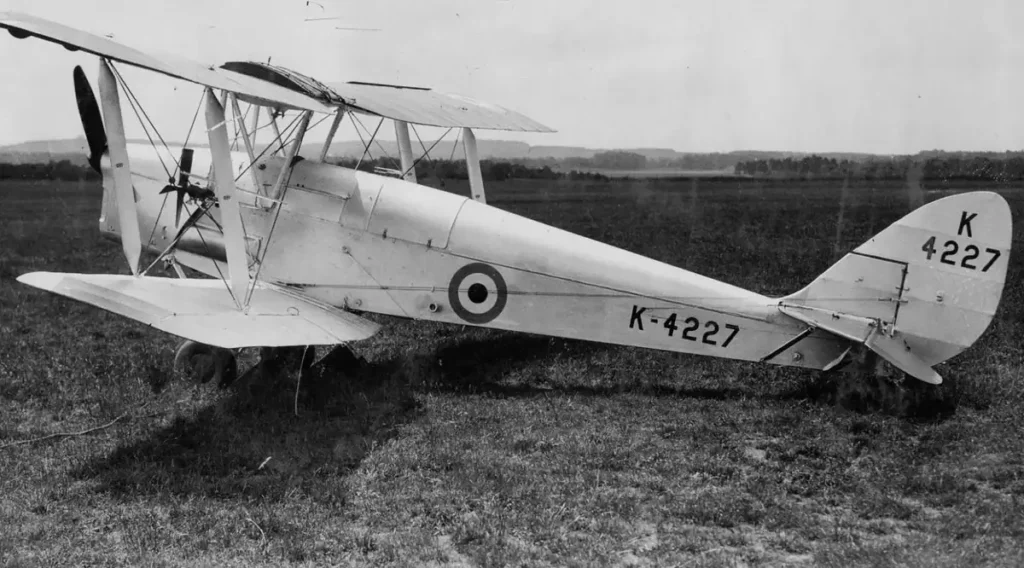
The interwar period saw the emergence of the first real radio-controlled drones. In the United Kingdom, the development of the Queen Bee in the 1930s was decisive: it served as a radio-guided flying target for artillery training. It is indeed from this model that the term “drone” would later come, relating to the buzzing of the bee. This type of project demonstrated that remote control was now reliable enough to pilot an unmanned aircraft.
World War II: Acceleration and Tactical Uses
During World War II, research on drones experienced a significant acceleration. Major powers invested in drone projects for reconnaissance, bombing, or as training targets. Innovations in propulsion, guidance, and communication paved the way for more complex missions and reinforced the idea that drones could play a decisive role in modern conflicts.
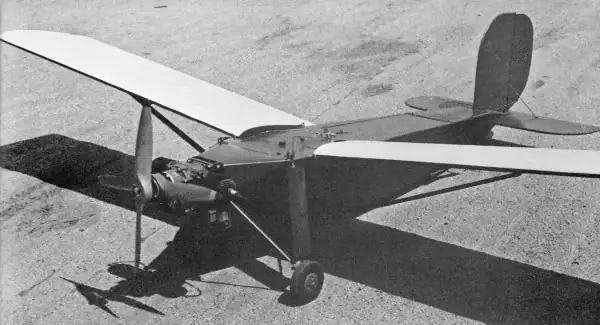
Cold War: The Era of Target Drones and Reconnaissance
The Cold War marked a strategic turning point: drones were used as training targets, but especially for reconnaissance. Models like the Ryan Firebee in the United States provided valuable intelligence at the height of international tensions. The integration of advanced sensors and communication systems made them essential surveillance tools.
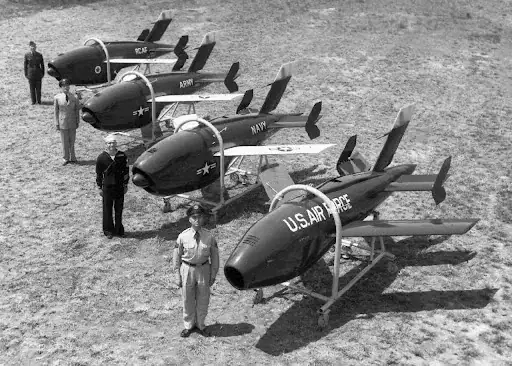
1970s–1980s: The Genesis of the Modern Drone
Starting in the 1970s, improvements in electronics, miniaturization, and inertial navigation systems led to the creation of more autonomous and accurate drones. Israel played a key role in this area, using tactical surveillance drones that would inspire many countries. Engineer Abraham Karem, considered the “father of the modern drone,” developed in California the lineage Albatross → Gnat → Predator, which would become an international military standard.
1990s: GPS, Data Links, and Operational Maturity
In the 1990s, the integration of GPS and data links allowed drones to achieve unprecedented precision and autonomy. Now capable of navigating alone, transmitting images in real time, and remaining in flight for long durations, they became true platforms for strategic surveillance and intelligence.
2000s: MALE Drones and Rising Power
The MALE (Medium Altitude Long Endurance) drones such as the Predator and the Reaper became central to military operations. Capable of flying for dozens of hours and carrying various payloads, they became essential for surveillance and remote targeting. Their extensive use in the conflicts of the 2000s solidified their central role in modern warfare.
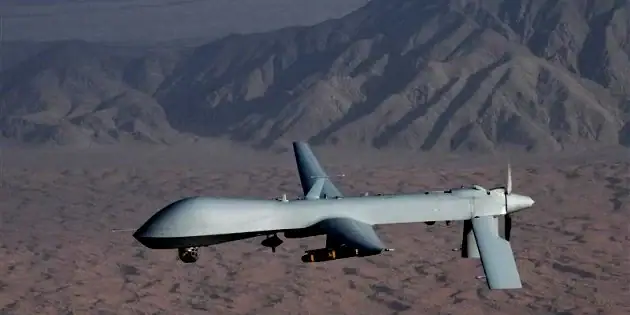
2010s: Democratization and the Consumer Market
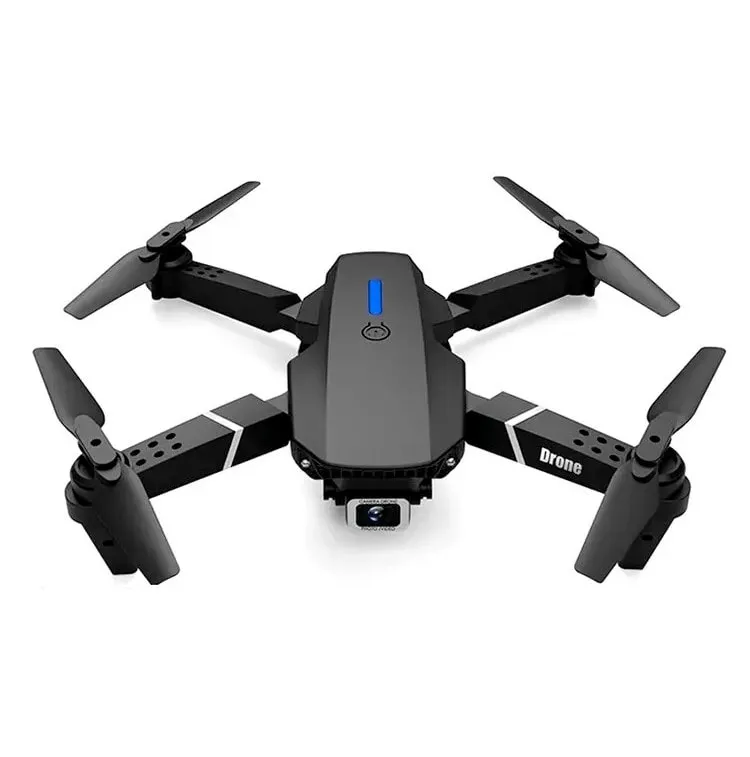
The 2010s saw the democratization of drones. Thanks to the miniaturization of sensors, brushless electric motors, and LiPo batteries, drones became accessible to the general public. Aerial photography, precision agriculture, logistics, or simple leisure: the drone moved from the battlefield to the everyday lives of individuals and businesses. This democratization was accompanied by new regulations to govern their use and protect privacy.
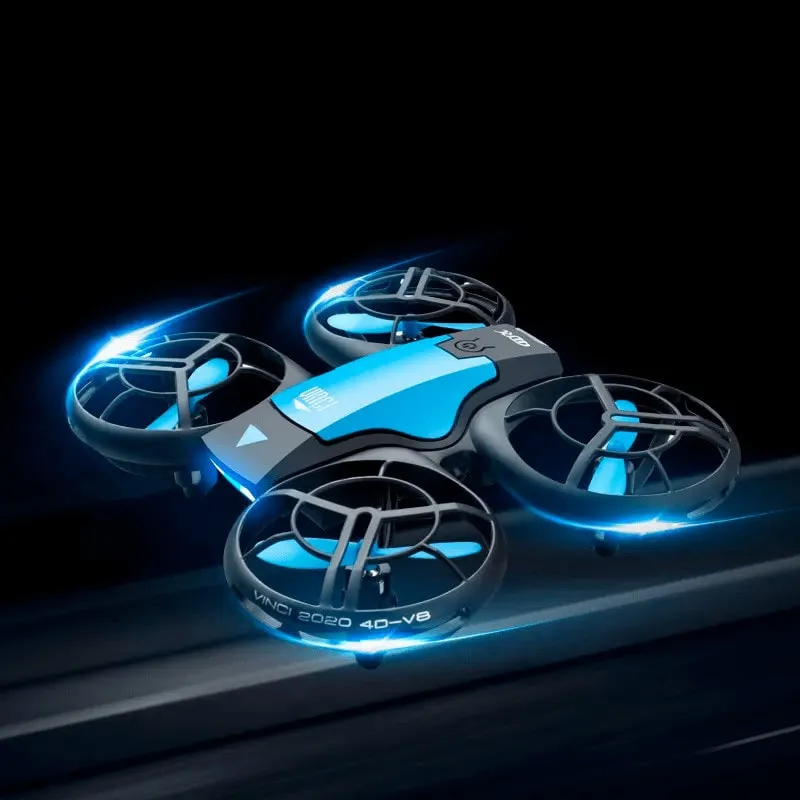
Who invented the drone? A Collective Answer
Rather than a unique inventor, the drone is the product of successive innovations, driven by several actors across time and different countries. Each pioneer made a decisive technological or conceptual advancement, contributing to the gradual emergence of modern drones.
- Max Boucher (France, 1917): a French army officer, he succeeded on July 2, 1917, in launching a Voisin 150 HP aircraft without a pilot. The device covered 1,640 feet at 164 feet altitude before running out of fuel. A few months later, Boucher managed a programmed flight of nearly 31 Inch, demonstrating the feasibility of automatic control. Although he is not the “official inventor of the drone,” he is considered one of the very first to have proven that an aircraft could fly without a pilot.
- Charles Kettering (United States, 1918): inventor of the famous “Kettering Bug,” sometimes referred to as the first flying torpedo. This device, developed at the end of World War I, was programmed to carry 176 lbs of explosives over about 75 miles before diving onto its target. Despite mixed results, it remains the first operational prototype of an unmanned “torpedo plane” and inspired later developments of missiles and military drones.
- British Engineers (United Kingdom, 1930s): with the Queen Bee, a radio-controlled version of the De Havilland Tiger Moth biplane, the British army developed a flying target intended for anti-aircraft artillery training. Produced in several hundred units, this model is often cited as the direct ancestor of modern drones. This name actually inspired the term “drone,” referring to the buzzing of the bee.
- Radioplane OQ-2 (United States, 1939): designed by Reginald Denny, an actor and aviation enthusiast, this small radio-controlled plane was massively used as a training target during World War II. More than 15,000 units were produced, marking the first industrial production of drones. Notably, Norma Jeane, the future Marilyn Monroe, worked on assembling these drones in the Radioplane factory.
- Abraham Karem (Israel/United States, 1970s–1980s): an Israeli engineer later based in the United States, he is dubbed the “father of the modern drone.” Founder of Leading Systems Inc., he developed the Albatross and then Gnat drones, which gave rise to the famous Predator. His work significantly extended the autonomy and reliability of drones, paving the way for long-duration surveillance and attack devices used worldwide.
These figures show that the drone is a progressive and collective invention, born from cross-innovations across various eras and countries. From the military experimentation of Max Boucher to the mass production of Radioplane, through the Kettering Bug and the Queen Bee, each step laid a stone in the edifice that would lead to modern civilian and military drones.
Synthetic Chronology (Major Milestones)
- 1917: Max Boucher achieves the first documented automatic flight in France.
- 1918: Charles Kettering designs the Kettering Bug in the United States.
- 1930s: Development of the Queen Bee in the United Kingdom.
- World War II: Industrial production with the Radioplane OQ-2 (United States).
- Cold War: Reconnaissance drones and flying targets (Ryan Firebee, etc.).
- 1970s–1980s: Abraham Karem lays the foundations for modern drones (Albatross, Gnat, Predator).
- 1990s: GPS and data links enable operational maturity.
- 2000s: Rise of MALE drones (Predator, Reaper).
- 2010s: Democratization and explosion of the consumer market.
⚡ Conclusion:
- If we seek “the first man to fly an unmanned aircraft” → Max Boucher.
- If we talk about the first operational military drone → Charles Kettering.
- If we talk about the first mass-produced radio-controlled drone → Queen Bee and Radioplane.
- If we talk about the father of the modern drone (as we know it today) → Abraham Karem.
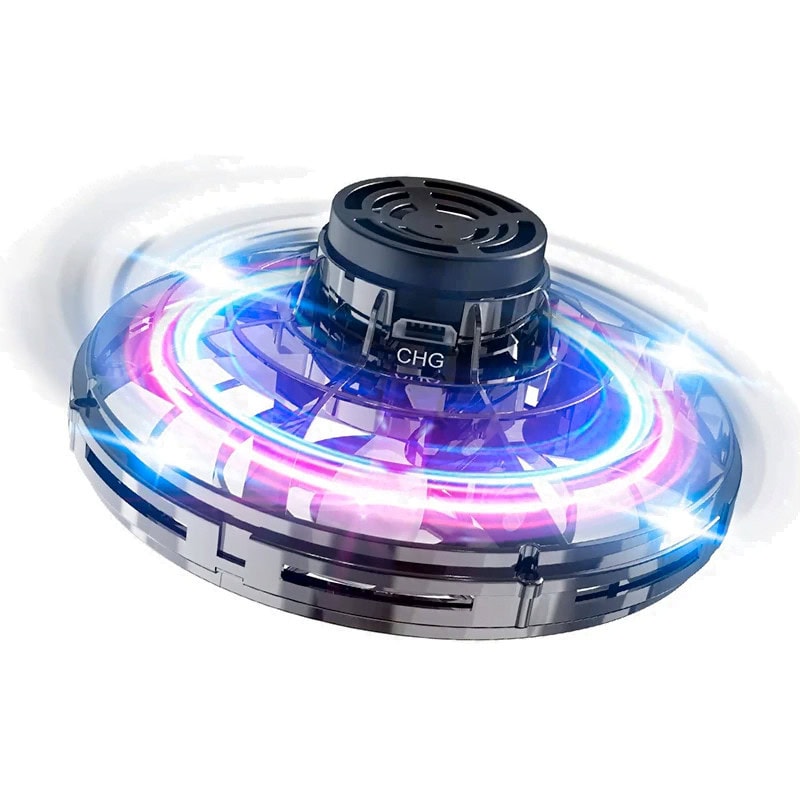
If this fascinating history of drones has pleased you, why not pass this curiosity on to your loved ones? Giving a kids’ drone is a great way to introduce the youngest to piloting while stimulating their imagination.
And if you are still unsure about which model to choose, discover our guide to choosing a drone, designed to help you find the device best suited to your needs.