Free Shipping on Orders Over $50


Giving a microscope to a child is giving them the key to an invisible universe: cells, insects, natural structures… But not all microscopes are created equal, especially depending on age, level or use. Here is a complete guide to making the right choice, with comparisons and concrete examples.
Contenus
afficher

1. Why a good microscope from the start?
- Stimulate scientific curiosity, observation, and rigor.
- Improve understanding of science classes (biology, life sciences).
- Allow practicing at home, with pleasure, and see progress.
2. Essential criteria to consider
- The child’s age: motor skills, patience, and understanding evolve significantly between 6 and 12 years old.
- Level of use: simple playful observation vs serious exploration vs digital use.
- Magnification: a microscope for children should offer suitable magnifications, but not always maximum — optical quality matters as much as power.
- Lighting: built-in LED is almost essential to illuminate samples, even indoors.
- Materials & durability: ABS plastic vs metal parts, stability, shock resistance.
- Ergonomics: appropriate size, easy focusing, simple parts to handle.
- Included accessories: slides, samples, tweezers, carrying case… this allows for immediate start.
- Digital functionality (optional but useful): connectivity, photo/video capture, display on screen, etc.
3. Which microscope for which age/use?

Here are some general recommendations based on age and interests:
- 6-7 years: toy microscope or mini portable. Simple observation, outdoor use possible.
- 8-10 years: beginner or junior microscope. More magnification, better optical quality, ability to prepare their own samples.
- 10 years and older / teens: digital or electronic microscope if interested in technology or more advanced projects.
4. Comparison table of available models
| Model | Magnification | Recommended Age | Key Strengths | Things to Consider |
|---|---|---|---|---|
| Kids Scientific Microscope | 100× to 1,200× | 8 and up | Included accessories (slides, tools), built-in LED, good optical quality | Bulky, requires a stable surface |
| Kids Microscope Junior | Up to 1,600× | 8 – 12 | Sturdy build, LED lighting, serious optics, ideal for school use | Adult supervision needed for handling slides |
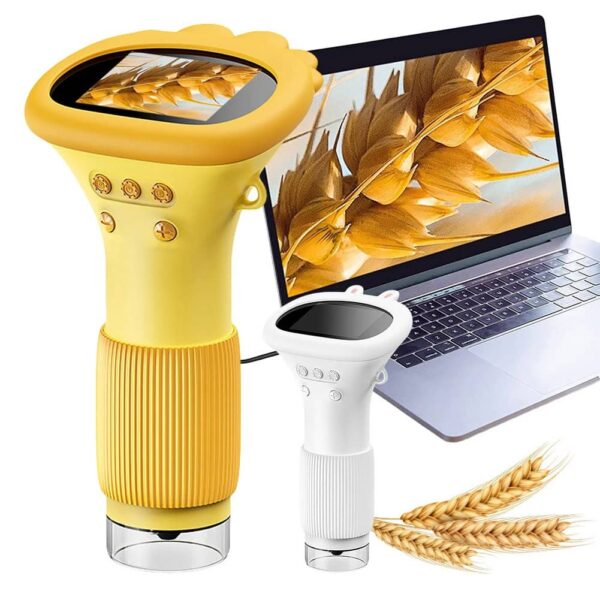
| Kids Electronic Microscope | Up to 1,000×, 2 MP camera | 6 – 10 | Built-in camera (1080p), adjustable LED, video/photo capture, highly engaging | Limited battery life |
| Kids Toy Microscope | 100× / 400× / 1,200× | 6 – 8 | Affordable price, ergonomic design, perfect for discovering science | Optics limited at high magnification, less durable |
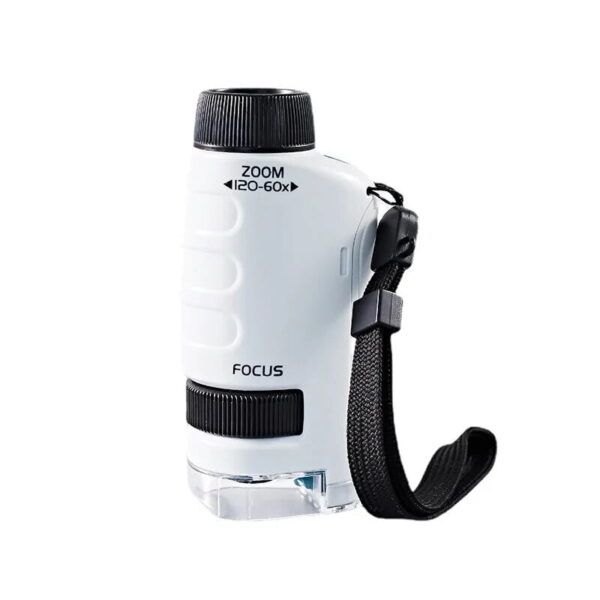
| Mini Portable Microscope | 60× to 120× | 6 – 9 | Compact, lightweight, great for outdoor use, built-in LED | Not suited for detailed biological observation |
| Beginner Microscope | 64× to 2,400× | 8 – 12 | Very wide magnification range, robust metal body, powerful LED lighting | Guidance needed to master focusing |
| Digital Microscope | 50× to 2,000× (Wi-Fi, 5 MP) | 10 and up | Smartphone/PC connectivity, photo and video capture, fun and interactive | Higher price point, depends on battery and connectivity |
5. Focus on flagship models: concrete examples
Here are some of the most interesting models — for different uses and budgets — with their strengths.
Toy Microscope
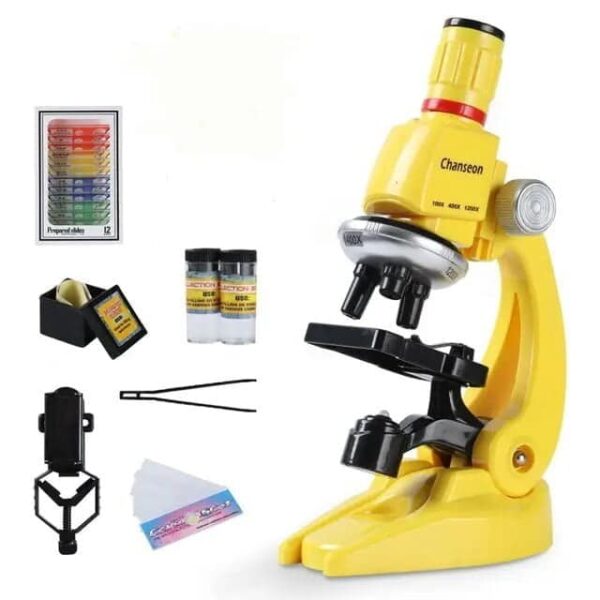
Toy Microscope
$40.99Perfect for starting from age 6, this model is fun, ergonomic, and allows easy exploration of visible structures (insects, leaves, etc.). The 100×-400×-1200× magnification allows observing simple details without optical complications. Its durable ABS plastic limits costs, making it accessible as a first microscope.
Mini Portable Microscope
Select options
This product has multiple variants. The options may be chosen on the product page
Mini Portable Microscope
$22.99For outdoor explorations, during hikes, or simply at school: lightweight, compact, easy to put in a bag. The built-in LED ensures that even in shade or low light, the child can observe without frustration.
Beginner Microscope
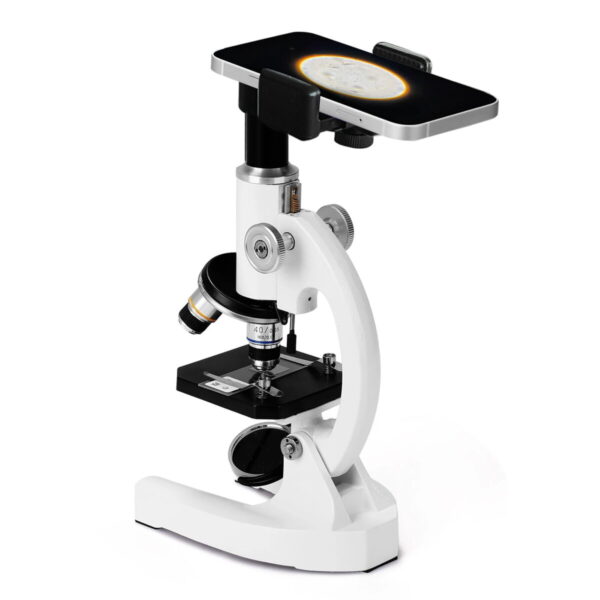
For more serious or motivated children (around 8-10 years). This model offers high magnification (up to 2400×), various eyepieces, robust metal construction, and efficient LED lighting. Excellent value for those who really want to explore.
Digital Microscope
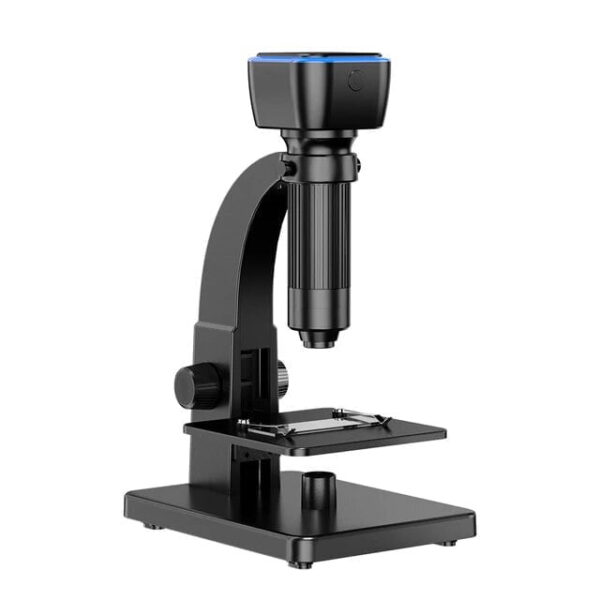
Digital Microscope
$172.99Ideal for “digital natives”: Wifi connectivity, HD camera (5 MP), ability to capture videos/photos of observations, share or review on screen. Perfect for school projects or for those who love to mix science & technology.
Junior Microscope
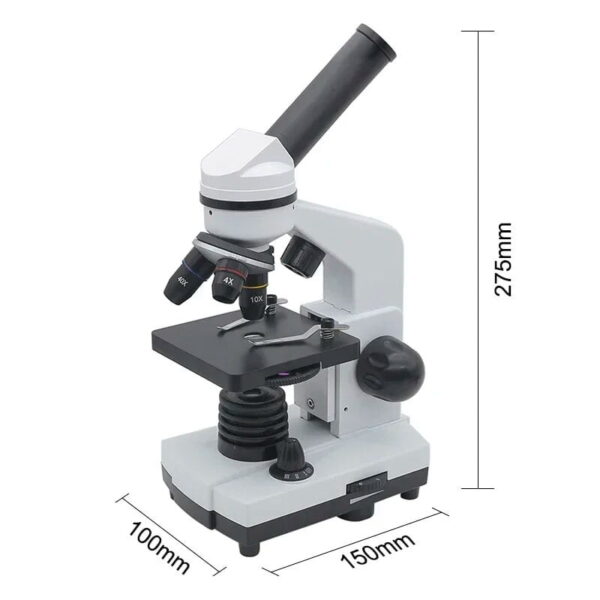
A very good compromise between power, durability, and safety. This model is well-suited for children who have already made their first observations and want to step up with a more serious microscope without becoming complex.
Electronic Microscope for Kids
Select options
This product has multiple variants. The options may be chosen on the product page
Kids Electronic Microscope
$57.99Combines powerful zoom, integrated camera (2 MP, HD video), adjustable LED lighting. Very fun when the child can see their discoveries live on screen. A good choice for playful home or school use.
Small Scientific Microscope
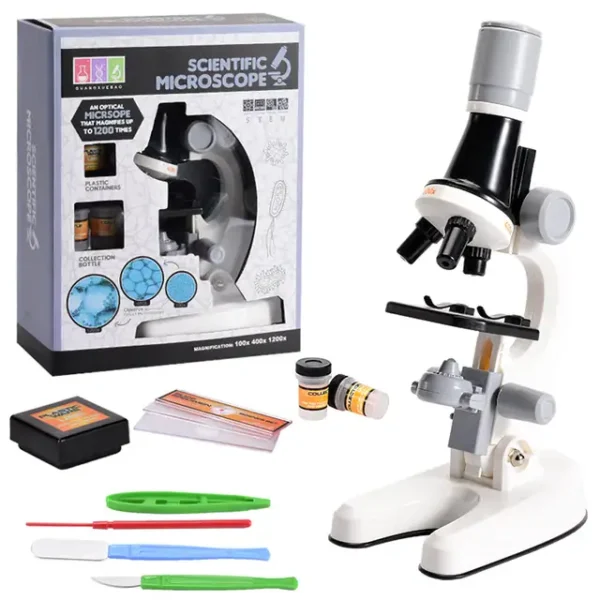
This model stands out for its excellent optical quality at high magnification (≈1200×), complete accessories, and durability. Ideal if your child is already passionate and wants to go beyond initiation.
6. Practical usage tips
- Start with simple samples: leaves, insects, rainwater, small particles — this allows understanding how it works without frustration.
- Show how to prepare a slide, use the focus, adjust the light, etc.
- Protect the lenses: always clean them with a soft cloth or suitable fabric; do not touch the glass surfaces with fingers.
- Store the microscope in a stable place. If you move a lot or observe outdoors, choose portable models or those with a good protective case.
- Manage the power: check the type of batteries or rechargeable battery, have backups or spare batteries, remove batteries if unused for a long time.
- Encourage curiosity: do small projects (identifying garden insects, observing pollen, tracking plant growth, etc.).
7. Frequently Asked Questions (FAQ)
Is higher magnification always better?
Not necessarily. Beyond a certain threshold, the image can become blurry, the light insufficient, or handling too delicate. Stability, optical quality, and lighting matter more than brute power.
Is a digital or electronic microscope for kids useful?
Yes, if the child likes technology, wants to share their discoveries, record them or observe in groups or via screen. Otherwise, it remains a luxury: it adds cost, battery or power needs, and sometimes complexity.
What maintenance is required?
Cleaning the lenses, storing them away from dust/moisture, checking the lighting, replacing batteries or regular recharging. Always use clean samples to avoid damaging the optics.