Free Shipping on Orders Over $50

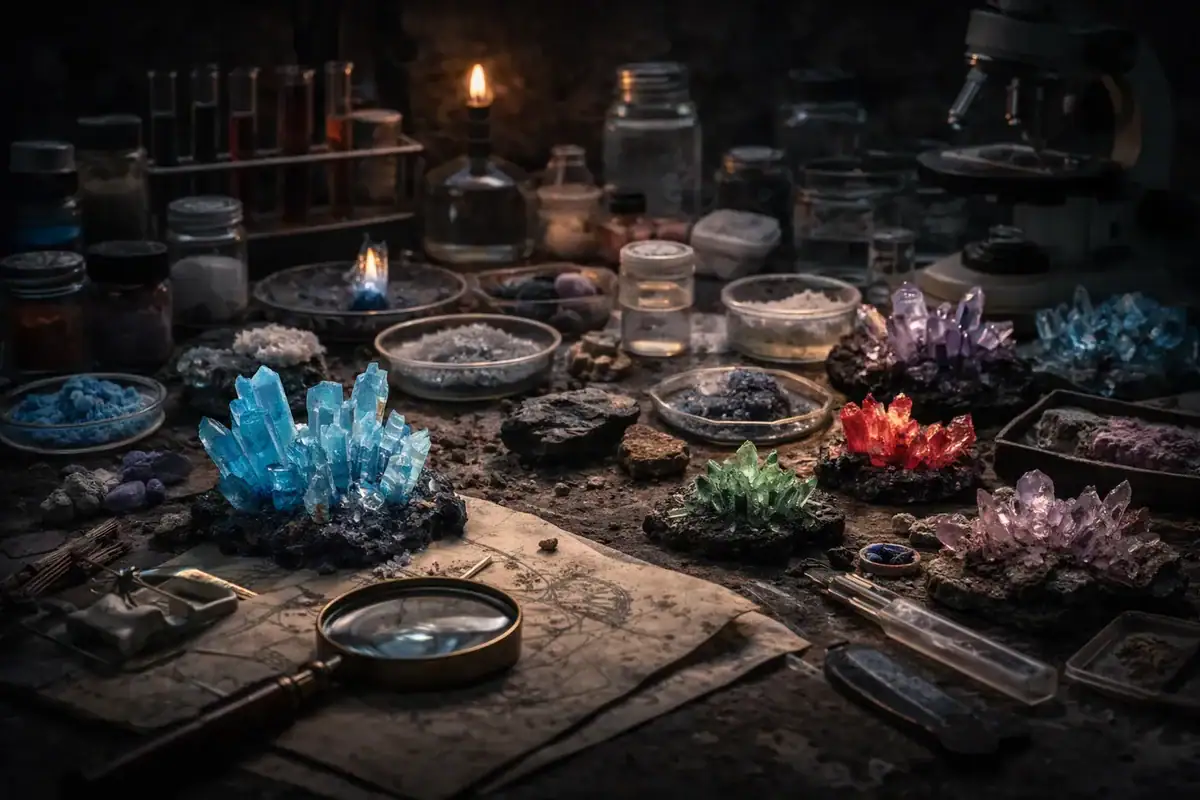
Crystal Growing Kits
Select options
This product has multiple variants. The options may be chosen on the product page
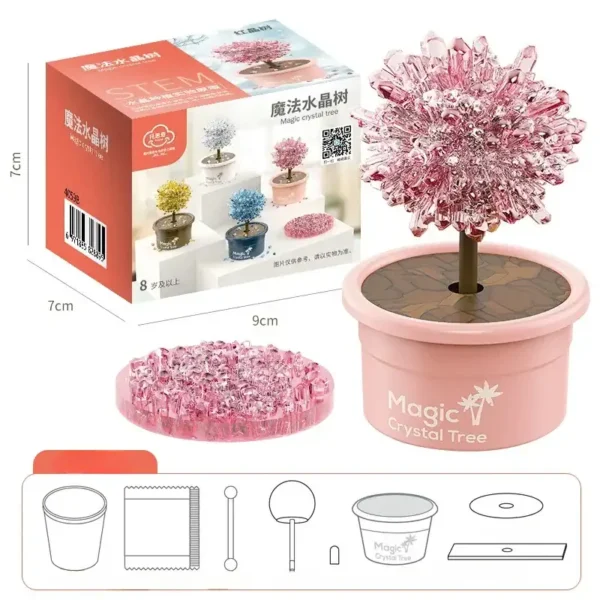
Crystal Tree Growing Kit
$20.99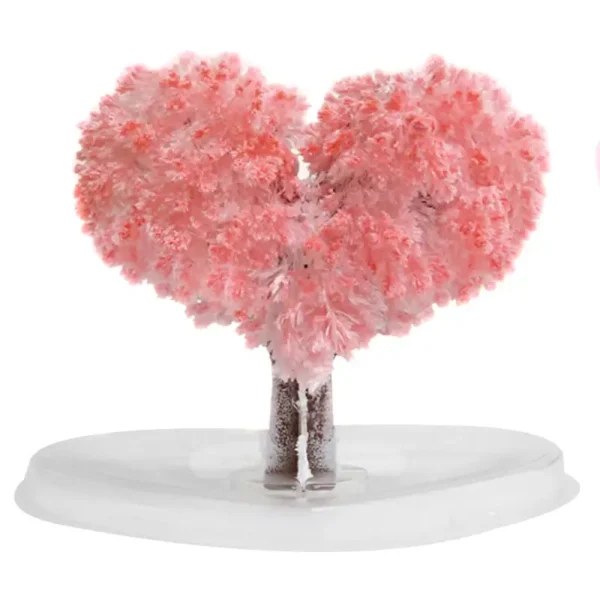
Crystal Growing Tree
$12.99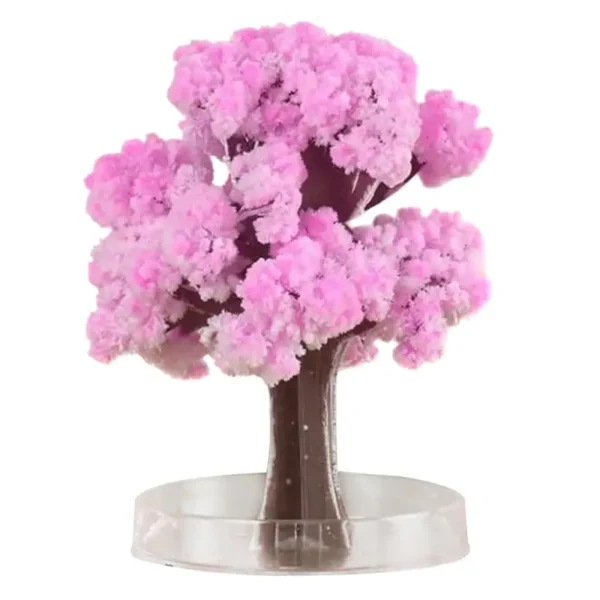
Select options
This product has multiple variants. The options may be chosen on the product page
What does a crystal growing kit contain?
A good kit brings together everything needed to go from a chemical solution to a visible crystal. The goal: to understand how molecules dissolved in a solvent assemble into an ordered crystalline structure – like in natural minerals (quartz, gypsum, etc.).
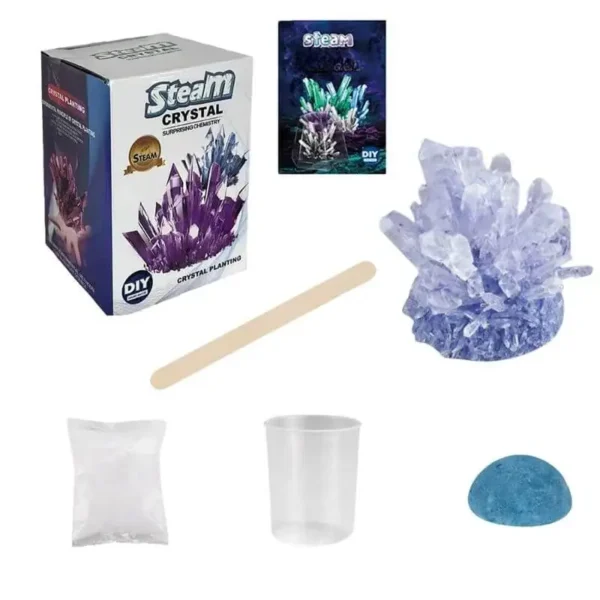
- Pouches of salts (e.g. potassium alum, copper sulfate, sometimes sodium) to start crystallization.
- Containers (jar, cups), stirrers, and supports serving as substrate for the seeds.
- Illustrated instructions explaining step by step the growth of crystals (preparation, saturation / supersaturation, precipitation, evaporation).
- Dyes and sometimes glitter to enhance the crystalline appearance (without altering the crystalline structure).
- Safety items (gloves, goggles) and usage tips.
Why choose a kit to grow crystals?
- Learn by doing: ideal for connecting chemistry, mineralogy, and crystallography (shapes like cubic or hexagonal, crystal size, role of ions).
- Stimulate curiosity and patience: observe evaporation day by day, spot the birth of the seeds, and the crystalline formation.
- Create a decorative item: colorful and transparent crystals to display (a great introduction to the concepts of diffraction and light).
- Educational gift: perfect for creative hobbies and science projects at home or in class.
What age are crystal kits suitable for?
- From 8 years old, with adult supervision (reading symbols, respecting dosages).
- Middle & high school students: practical application of concepts learned in class (solutions, oxides, silica, calcium, rock forms).
- Enthusiastic adults: excellent introduction before delving into natural stones and minerals (geodes of amethyst, sapphire, ruby, emerald).
Comparison table — salts & results
| Salt / Compound (examples) | Typical Color | Common Shape | Time* | Educational Notes |
|---|---|---|---|---|
| Potassium alum | Colorless / dyeable | Octahedra, clear crystals | 1–3 days | Ideal for discussing supersaturation and germination. |
| Copper sulfate | Blue | Needles / plates | 3–7 days | Shows the influence of temperature on growth. |
| Sodium chloride (salt crystals) | Transparent | Cubic | 1–4 days | Perfect for explaining simple atomic stacking. |
| Gypsum (prepared solutions) | Milky white | Fine needles | 2–5 days | Useful for comparing artificial vs. natural mineral. |
*Indicative times: vary according to volume, temperature, and rate of evaporation.
Expert tips
- Safety: follow the instructions, wear gloves/goggles, no ingestion or prolonged skin contact.
- Top results: prepare a saturated solution, suspend a seeder (string, rod), avoid impurities that disturb the crystalline lattice.
- Patience = big crystals: less agitation, slow cooling, and do not move the jar during growth.
- To go further: compare your forms with natural specimens in our selection of Minerals & Crystals.
FAQ – Everything about crystal kits
How long does it take to grow crystals?
From 24 hours to one week depending on the compound, temperature, degree of saturation, and stability of the setup. A calm environment favors larger, more regular crystals.
Are the obtained crystals natural or artificial?
They are artificial (created in a controlled environment), but obey the same laws as mineral crystals (crystalline lattice, cubic/hexagonal shapes). It’s a great analogy for understanding nature.
Are there any special precautions to use a kit?
Yes: protected surface, properly dissolve the salts, wash hands after the activity, and supervise children. Avoid proximity to food and label your solutions.
Can the crystals be used as decorative objects?
Yes, once dry. Place them away from moisture and direct light. Some compounds may tarnish over time; a display case helps to decorate and preserve the crystalline appearance.
In short: a crystal formation kit connects chemistry, mineralogy, and visual creation. By following a simple method (saturated solution, clean seeds, slow evaporation), you obtain spectacular small crystals while building solid and fun scientific knowledge.