Free Shipping on Orders Over $50

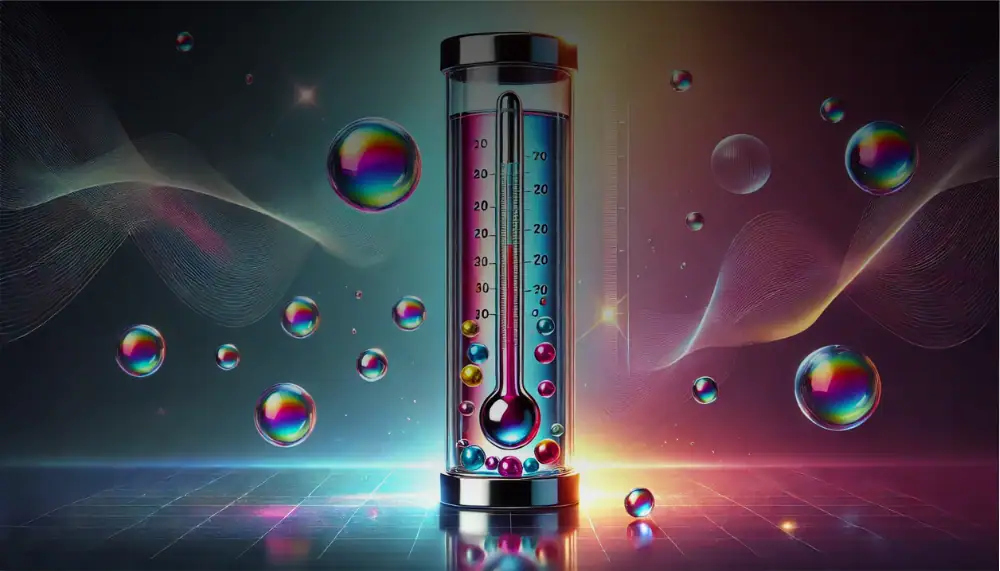
Galileo Thermometer
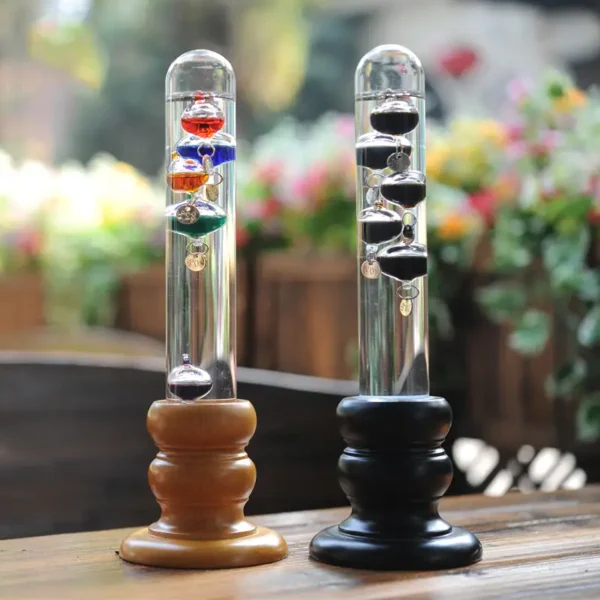
Original Galileo Thermometer
$114.99
Select options
This product has multiple variants. The options may be chosen on the product page

Galileo Glass Thermometer
Price range: $68.99 through $103.99
Select options
This product has multiple variants. The options may be chosen on the product page

Galileo Thermometer Water Drop
Price range: $86.99 through $126.99
Select options
This product has multiple variants. The options may be chosen on the product page
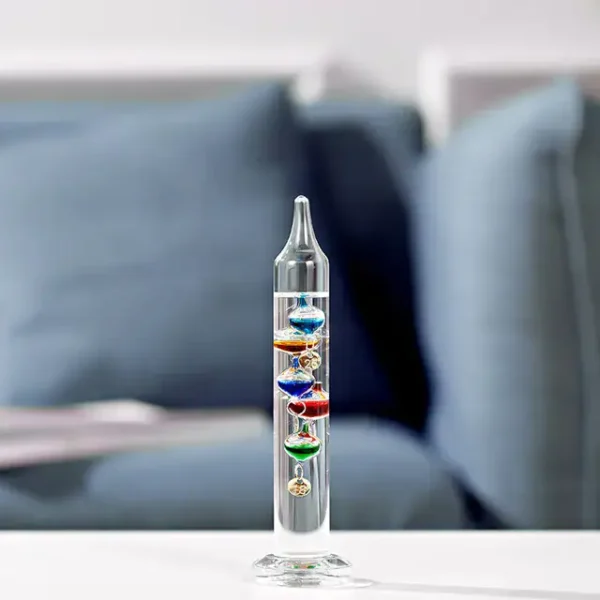

Galileo Thermometer is a decorative scientific object that indicates the ambient temperature through spheres that rise or fall in a glass tube. Each bubble is calibrated and reacts to changes in the density of the liquid (the dilation effect). You get a reading in degrees Celsius (sometimes also in Fahrenheit) while enjoying a beautiful instrument to display on a shelf, desk, or console.
Galileo Thermometer: Temperature in “Fun Science” Version
How It Works (Simple but Accurate)
Inside, several colored bubbles contain a small weight and a temperature label. When the air in the room warms up or cools down, the density of the liquids varies: some spheres float, others sink. It is this movement that allows you to measure the temperature of a room… just by looking at it.
The reading is intuitive: on most models, look at the lowest floating bubble (or the one closest to equilibrium) and read the associated value. It’s a pleasant and coherent internal marker, without aiming for the precision of a laboratory sensor.
Why It’s Different from a Regular Thermometer
A digital thermometer gives a value quickly. The Galileo, however, offers something else: it makes temperatures visual, integrates into the decor, and encourages understanding the measurement rather than just reading a number.
Note: this is not a thermometer for body temperature (fever, temperature taking). It is designed for indoor use and to measure room temperature.
How to Choose?
To choose the right model, think “readability + space + style”.
- Readability: the larger the tube, the easier the labels are to read from a distance.
- Measurement Range: favor a range suitable for an indoor setting (living room, office, bedroom) to maintain a useful reading for daily use.
- Design: sleek column for an office, more sculptural shape if you want a central decorative object.
- Environment: if the room experiences significant fluctuations (strong air conditioning, direct sunlight), place it in a stable area to avoid “agitated” readings.
How to Use It Properly (For a More Stable Reading)
The Galileo thermometer is not instant: it has a slight inertia, which is normal for an instrument based on buoyancy. To get the best results:
- Avoid direct sunlight behind a window, radiators, and air conditioning flows.
- After moving it, give it time to stabilize before concluding.
- Use it as a comfort reference: “cool room”, “overheated room”, “difference between two spaces”.
Quick Comparison: Choose Based on Format
| Format | Reading | Decorative Presence | Footprint | Ideal For |
|---|---|---|---|---|
| Large “Column” Model | Very Comfortable | Strong | Medium | Living room, entryway, office where a beautiful visible object is desired |
| Compact Model | Good | Discreet | Low | Small spaces, shelves, easy gift |
| “Drop” Shape | Good | Very Decorative | Medium | Premium decor, design room |
| “Bubble” Version | Average to Good | Playful | Low | Office, teenager’s room, initial discovery |
| With Barometric Element | Good | “Instrument” Spirit | Medium | Science object enthusiasts and curiosity cabinet atmosphere |
Gift Idea: 3 Profiles
14-Year-Old Curious Kid: a readable format to understand temperature without a screen and observe the bubbles evolve.
Decor Enthusiast: a “drop” silhouette or an elegant large tube that makes an immediate impact on a shelf.
Science Buff: an instrument-style model, perfect for discussing Galileo, density, and thermometry.
FAQ
What temperature does it indicate?
It indicates the ambient temperature of a room. It’s a reliable internal marker for daily life, without pretending to the precision of a high-end electronic thermometer.
How to read the value on a Galileo thermometer?
In general, you read the label of the lowest floating bubble. Depending on the models, the exact rule may vary, but reading remains quick once you get the hang of it.
Does it contain mercury?
No. This type of thermometer relies on calibrated spheres and a sealed liquid. It is not a mercury thermometer.
Does it react immediately when the room changes?
It reacts with a slight delay: this is normal. Give it a little time after a change in the room or after airing out to get a stable reading.
Are there any special precautions?
It’s a glass object: avoid drops and keep it out of reach of young children. For independent use, it’s generally more suitable from 14 years old.